Robert Koester and the 2000 Colgate University Vehicular Homicides
Overview
In the pre-dawn hours of November 11, 2000, a night of visiting and socializing on the campus of Colgate University in Hamilton, New York, ended in a devastating tragedy. Robert Koester, a 20-year-old Colgate junior, got behind the wheel of a Jeep Cherokee while severely intoxicated. With six passengers crowded into the vehicle, he lost control just seconds after starting to drive, slamming into trees along Oak Drive. The violent crash killed four young people and left two others seriously injured. The incident, which was not a deliberate act of violence but one of gross negligence, sent shockwaves through the small university community, leading to criminal convictions and a painful re-examination of the campus culture around alcohol.
The Crash on Oak Drive
The night was cold and rainy. Sometime before 2:00 a.m., Colgate first-year student Katherine "Katie" Almeter was walking with two high school friends, Emily Collins and Rachel Nargiso, who were visiting for the weekend. The three young women were trying to get up the steep hill on campus when Koester stopped and offered them a ride.
Already in the 1999 Jeep Cherokee were Koester and two of his friends from the Troy, New York, area: Kevin King and Christopher Rea. The vehicle, which belonged to a member of King's family, now held seven people. Koester started driving up Oak Drive, a road lined with large, mature oak trees. He had traveled only about 150 feet when he lost control.
The Jeep veered off the road and struck a large tree on the south side of the drive. The force of the impact was immense. The vehicle spun 180 degrees and skidded another 37 feet before hitting a second tree on the opposite side of the road. During the violent sequence, three passengers were ejected from the vehicle. An initial investigation suggested that the passengers were not wearing seatbelts. Four of them were killed instantly or died at the scene.
The Victims
The crash claimed four vibrant young lives, devastating families in Norwich and the Troy area.
- Katherine "Katie" Almeter, 18 — A first-year student and track runner at Colgate University from Norwich, New York. Described as a wonderful, sensible person who was at the top of her high school class, she was known as a delightful, talented, and beloved person with good friends.
- Emily Collins, 18 — A student at Hobart and William Smith Colleges in Geneva, New York. She was a high school friend of Katie Almeter's and was visiting Colgate for the weekend from their shared hometown of Norwich. Her sister later became an advocate for Students Against Destructive Decisions (SADD).
- Rachel Nargiso, 18 — Also a student at Hobart and William Smith Colleges and a close friend of Katie Almeter and Emily Collins from Norwich. She was visiting the Colgate campus with Collins for the weekend.
- Kevin E. King, 20 — A student at Hudson Valley Community College from Troy, New York. A graduate of La Salle Institute, he was described as Koester's best friend from home and was visiting him at Colgate for the weekend.
Two other passengers survived with significant injuries. Christopher Rea, 20, from Menands, was treated for minor injuries and released from a local hospital. Elke Wagle, an 18-year-old Colgate first-year from Glenmont, suffered multiple fractures to her hip, pelvis, ankle, and arm and was transferred to Albany Medical Center Hospital. The driver, Robert Koester, sustained only minor injuries.
The Driver
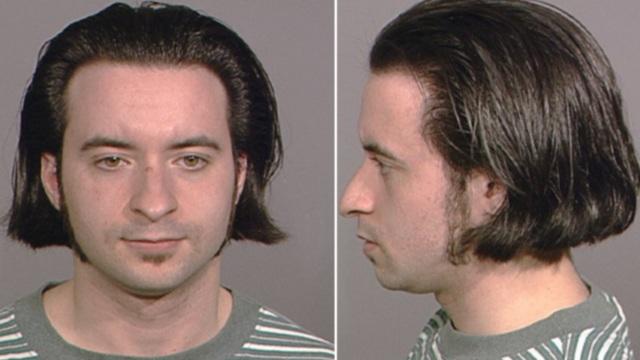
Robert Koester was a 20-year-old junior at Colgate University from Troy, New York. On the night of the crash, he had been drinking with his friends. College officials and police investigated reports that Koester, a member of the Delta Kappa Epsilon fraternity, had spent hours drinking at the fraternity house before the crash. A subsequent investigation by New York State Police determined that his blood alcohol content (BAC) was 0.17, more than double the legal limit at the time. He was arrested at the scene.
Investigation and Legal Proceedings
The investigation by the New York State Police was complicated initially because several victims were not carrying identification, while others had false IDs. However, it quickly became clear that the crash was alcohol-related. Koester was taken into custody and held at the Madison County jail on $50,000 bail.
He was initially charged with four counts of criminally negligent homicide and driving while intoxicated. As the investigation progressed, the charges were upgraded. A grand jury indicted Koester on 22 counts, including four counts of second-degree manslaughter, four counts of second-degree vehicular manslaughter, and four counts of criminally negligent homicide—one for each person killed—in addition to DWI and speeding charges. The most severe charge, second-degree manslaughter, carried a maximum sentence of 15 years in prison.
During legal proceedings in the summer of 2001, Koester's attorney, Emil Rossi, challenged the indictment, arguing that the grand jury had not been properly instructed on the legal definitions of "criminal negligence" and "recklessness." Madison County Judge Biagio DiStefano considered dismissing 18 of the 22 counts over the issue, which the District Attorney's office claimed was merely a stenographic error in the transcripts.
Ultimately, Koester accepted a plea deal. He pleaded guilty and was sentenced to a term of one and one-third to four years in state prison. He ended up serving two and a half years before being released. At his hearing, when asked by the judge what happened, Koester reportedly said, "I was at a party and I got drunk I guess, and when I left I was driving, I guess."
Aftermath and Legacy at Colgate
The crash was a profound trauma for the tight-knit Colgate community. In the immediate aftermath, the university mobilized to support its students. Counselors from psychological services worked around the clock, and the Memorial Chapel became a gathering place for reflection and mourning. On the Tuesday following the accident, the chapel bells tolled at 1:00 p.m. as Katie Almeter's funeral began in her hometown.
The tragedy forced the university to confront its campus culture around alcohol. A task force was assembled to re-examine policies and attitudes. According to university staff, two significant and lasting changes emerged directly from the incident: the creation of the "Cruiser" campus shuttle system to provide safe transportation for students, and the implementation of a zero-tolerance policy for drunk driving.
For years, the memory of the crash remained vivid. Memorial services were held, and in 2007, photo-engraved plaques were installed at the base of the oak tree that the Jeep first struck. The memorial was created to emphasize the youth and promise of the lives that were lost. A memorial garden for Katie Almeter was also established outside of West Hall.
While the institutional memory has faded as students and staff have moved on, the pain remains for those who were there and, most of all, for the victims' families. Kelly Collins-Colosi, the sister of Emily Collins, has shared her family's story with student drivers, emphasizing the devastating and real consequences of a few bad choices. "Four people were killed in less than 30 seconds," she explained, noting that the fatal crash happened just a quarter-mile from where Koester had picked the girls up. "It's hell," she said, "to lose someone because of choices that they made."