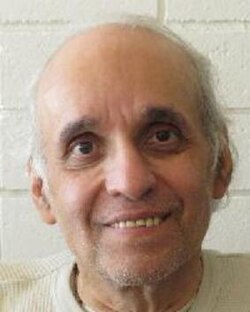
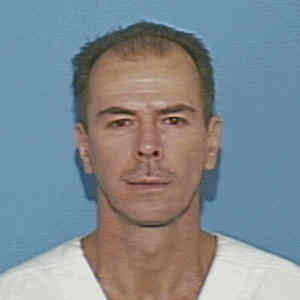
Cody Legebokoff: The Country Boy Killer
Overview
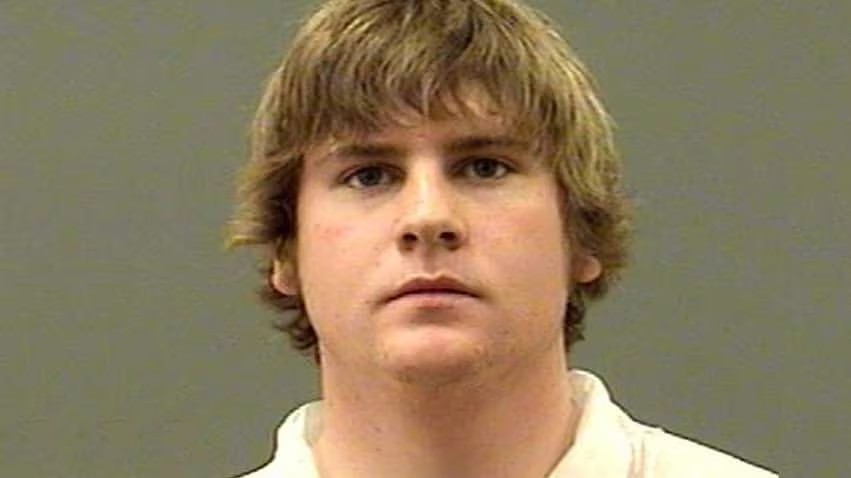
Cody Alan Legebokoff, a seemingly popular and sociable young man from rural British Columbia, became one of Canada's youngest convicted serial killers. Between October 2009 and November 2010, while still a teenager, he murdered three women and a 15-year-old girl in and around Prince George. His crimes were brutal, characterized by blunt-force trauma, and his victims were often vulnerable individuals. Legebokoff's reign of terror ended unexpectedly with a routine traffic stop on a remote highway, an encounter that unraveled his dark secrets. The investigation culminated in a high-profile trial where he was convicted on four counts of first-degree murder and sentenced to life in prison. The case drew national attention, not only for the killer's youth but also for its connection to the tragic phenomenon of missing and murdered women along British Columbia's "Highway of Tears."
Early Life and Background
Born on January 21, 1990, Cody Legebokoff was raised in Fort St. James, a small district municipality in northern British Columbia. By all outward appearances, he had a normal upbringing. Friends and family described him as a popular and friendly young man who enjoyed typical rural Canadian pursuits like ice hockey, hunting, and fishing. He was not known for violence and had only a minor criminal record that did not put him on the radar of local police.
After graduating from Fort St. James Secondary School, Legebokoff briefly moved to Lethbridge, Alberta, before settling in Prince George, British Columbia. There, he worked at a Ford dealership and shared an apartment with female friends. He was active on social media, using the handle "1CountryBoy" on the Canadian networking site Nexopia, a platform he would later use to connect with his youngest victim. Despite this seemingly conventional life, Legebokoff developed a crack cocaine addiction, which prosecutors later argued was intertwined with his violent crimes.
The Murders
Legebokoff's killing spree began when he was just 19 years old. His first victim was 35-year-old Jill Stacey Stuchenko. She was last seen on October 9, 2009. Her badly beaten body was discovered over two weeks later, partially buried in a gravel pit on the outskirts of Prince George.
Nearly a year passed before his next known murder. In the late summer of 2010, Legebokoff killed two more women in quick succession. Natasha Lynn Montgomery, 23, was last seen around September 1, 2010. Just days later, on September 10, 35-year-old Cynthia Frances Maas disappeared. Maas's body was found the following month in a wooded park in Prince George; she had died from blunt-force trauma to the head and penetrating wounds. Montgomery's body has never been found, a source of unending pain for her family.
The final murder occurred on November 27, 2010. Legebokoff connected with 15-year-old Loren Donn Leslie online. He met her that night and drove her to a remote, snow-covered logging road off Highway 27 near Vanderhoof. There, he bludgeoned and stabbed her to death. It was his hasty departure from this secluded crime scene that would lead directly to his downfall.
The Victims
The four lives taken by Cody Legebokoff were mothers, daughters, sisters, and friends. Their families used the trial as an opportunity to speak about the women they lost, beyond the court's portrayal of them as vulnerable individuals struggling with addiction and poverty.
- Jill Stacey Stuchenko, 35 — last seen October 9, 2009, in Prince George. A mother of six, Jill was described as a "happy and bubbly" person who dreamed of being a famous singer. A social worker who knew her emphasized her love for her children, stating, "the good choices she made were for them."
- Natasha Lynn Montgomery, 23 — last seen around September 1, 2010, in Prince George. A mother of two young children, Natasha was remembered by her mother as a "beautiful person, inside and out," with a "huge bubbly personality" and a smile that could light up a room. Her body has never been recovered, leaving her family without closure.
- Cynthia Frances Maas, 35 — last seen September 10, 2010, in Prince George. Her sister described "Cindy" as a trusting and innocent person who graduated from a private school against all odds. Though she struggled with addiction, she remained in contact with her family and desperately wanted to change her life, once texting her niece to apologize for not being the aunt she wanted to be.
- Loren Donn Leslie, 15 — killed on November 27, 2010, near Vanderhoof. Loren was a legally blind teenager with a compassionate heart who stood up for others. Her father described her as a "fun-loving, innocent little girl" who treated people with "dignity, compassion and respect." She wrote about her empathy for others, saying, "I hear tears on people's faces who aren't accepted... But I hear them."
Investigation and Capture
The end for Cody Legebokoff came by chance on the night of November 27, 2010. At approximately 9:45 p.m., a rookie Royal Canadian Mounted Police (RCMP) officer, Constable Aaron Kehler, was on patrol when he saw a pickup truck speeding erratically from a remote logging road onto Highway 27. Acting on what he later described as a hunch, Kehler pulled the truck over.
The driver was 20-year-old Cody Legebokoff. Kehler immediately noticed what appeared to be blood on Legebokoff's face and legs, and more blood inside the truck's cab. When questioned, Legebokoff claimed he had been poaching and had clubbed a deer to death, telling the officer, "I'm a redneck, that's what we do for fun." Suspicious, Kehler and another officer searched the vehicle, finding a blood-stained pipe wrench and a backpack belonging to 15-year-old Loren Leslie.
The officers arrested Legebokoff under the Canada Wildlife Act and called in a conservation officer with tracking skills. The conservation officer followed the tire tracks from Legebokoff's truck up the logging road into the fresh snow. The tracks led to a gruesome discovery: the recently deceased body of Loren Leslie. Legebokoff was then arrested for murder.
The arrest for Leslie's murder was the key that unlocked the other cases. A massive police investigation followed, involving thousands of hours of police work. Forensic evidence became the cornerstone of the case against him. DNA analysis linked Legebokoff to the murders of Stuchenko, Maas, and Montgomery. Stuchenko's DNA was found on a couch in Legebokoff's apartment. Maas's DNA was found on a pickaroon (a logging tool) and on clothing in his truck. Most damningly, blood and DNA from Natasha Montgomery, the missing victim, were found throughout his apartment, including on an axe and on the floor where he had left a bloody footprint.
Trial and Sentence
Cody Legebokoff's trial for four counts of first-degree murder began in June 2014 in the Supreme Court of British Columbia. He pleaded not guilty. The prosecution presented an overwhelming case built on forensic evidence, connecting him to each of the four victims through DNA found in his apartment, on his clothes, and on several weapons.
When Legebokoff took the stand in his own defense, he admitted to being present at all four deaths but denied being the killer. He concocted a story about being involved with a drug dealer and two accomplices, whom he would only identify as "X, Y, and Z." He claimed these unnamed individuals were the real murderers, and that he only helped dispose of the bodies out of fear. He refused to name them, telling the court he did not want to be labeled a "rat" in prison. For the murder of Loren Leslie, where he was caught red-handed, he offered a different, equally unbelievable story, claiming the teen had "freaked out" and inflicted the fatal injuries upon herself with a knife and a pipe wrench. He later admitted to striking her out of "anger, frustration, panic."
On September 11, 2014, after hearing testimony from 93 Crown witnesses and Legebokoff himself, the jury found his stories incredible and convicted him on all four counts of first-degree murder.
Five days later, on September 16, 2014, Justice Glen Parrett sentenced Legebokoff to the mandatory sentence of life in prison with no possibility of parole for 25 years. During sentencing, Justice Parrett described Legebokoff's actions as "wanton and cavalier" and noted his complete lack of empathy or remorse. "He should never be allowed to walk among us again," the judge stated, adding him to the national sex offender registry.
Aftermath and Legacy
Following his conviction, Cody Legebokoff sought to have his verdict overturned. In February 2015, he filed an appeal, arguing that the trial judge had shown bias and should have granted a change of venue. The British Columbia Court of Appeal heard and dismissed the appeal in September 2016, finding no miscarriage of justice. His final legal attempt, an application to appeal to the Supreme Court of Canada, was dismissed in February 2017, cementing his four life sentences.
Legebokoff was initially imprisoned at the maximum-security Kent Institution but was later transferred to the medium-security Warkworth Institution in Ontario, a move that angered his victims' families.
The case of Cody Legebokoff left a scar on the communities of northern British Columbia. His youth and the seemingly normal facade he presented served as a chilling reminder that monsters can hide in plain sight. The murders are also inextricably linked to the Highway of Tears, the notorious stretch of Highway 16 where many women, a significant number of them Indigenous, have disappeared or been found murdered over several decades. While not all of Legebokoff's victims were Indigenous, his crimes added to the region's climate of fear and loss, highlighting the extreme dangers faced by vulnerable women in the area.