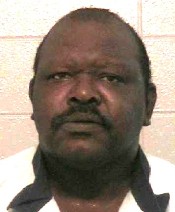
Reginald Lively: The Baltimore Serial Killer
Overview
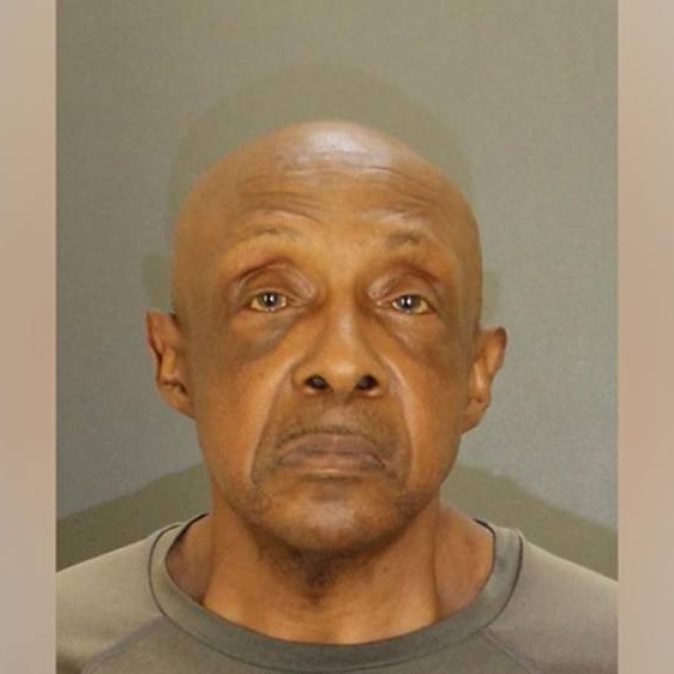
Reginald Lively is a convicted American serial killer whose violent criminal career spanned nearly four decades and two states. He murdered at least three people between 1983 and 2021, brutally killing them for what appeared to be small amounts of money. Lively's case is a chilling illustration of a justice system's repeated failures, as he was twice convicted of murder and twice released from prison after serving only a fraction of his sentences.
After his first two convictions for second-degree murder in Maryland and North Carolina, lenient sentencing and early parole allowed him to return to society and kill again. It was not until his third murder—the savage 2021 slaying of his 68-year-old neighbor in Baltimore—that the full scope of his violent history was brought to light. The final investigation, spearheaded by a dedicated cold case unit, led to a first-degree murder conviction and a sentence of life in prison without the possibility of parole, finally ensuring he would not be free to harm again. Prosecutors have since labeled him a "serial killer" who exploited the system's leniency with deadly consequences.
First Murder: Eleanor Williams
Reginald Lively's documented history of murder began in May 1983 in Annapolis, Maryland. The victim was Eleanor Williams. Her body was discovered in a wooded area, where it was determined she had been bludgeoned and stabbed to death. The investigation into her death eventually pointed to Lively. After the killing, he fled the state to evade capture.
His time as a fugitive was temporary. The FBI located and arrested him in North Carolina. Despite the violent nature of the crime, Lively managed to avoid a trial for first-degree murder. In 1986, he appeared in court in Anne Arundel County and pleaded guilty to a lesser charge of second-degree murder for killing Williams. He received a 20-year prison sentence. In a decision that would prove fatal for his future victims, Lively was granted parole after serving just eight years of that sentence. His release placed him back on the streets, free to cross state lines and continue his violent path.
Second Murder: Willy Mae Arrington
After his release from a Maryland prison, Lively relocated to North Carolina. There, his pattern of violence repeated itself. In 2000, he was charged with the murder of Willy Mae Arrington in Sharpsburg. Like his first victim, Arrington was stabbed to death.
Once again, Lively manipulated the legal system to his advantage. He pleaded guilty to second-degree murder, avoiding the risk of a more severe sentence that a first-degree murder trial could bring. For the murder of Arrington, he was sentenced to 30 years in prison. In what became a tragic recurring theme, the North Carolina justice system granted him early release. After serving approximately 12 years of his 30-year sentence, Reginald Lively was paroled again and allowed to return to Maryland.
Third Murder: John Hall III
By 2021, a 60-something Reginald Lively was living at the Embassy Apartments on Clarks Lane in Northwest Baltimore. One of his neighbors in the building was 68-year-old John Hall III. Hall was described as a relatively introverted man who enjoyed trips to the casino and was a recovering alcoholic, diligently attending Alcoholics Anonymous meetings to maintain his sobriety. His life was physically challenging; he suffered from severe gout, which caused painful crystallization in his hands and made walking an excruciating task. His daughter served as his primary caregiver. Because of his limited mobility, Hall had a habit of leaving his apartment door unlocked during the day to avoid the painful effort of getting up to answer it.
Investigators later learned that Hall had recently won about $1,000 at a local casino. It also came to light that Hall had previously accused Lively of attempting to steal money from him, suggesting a history of conflict between the two neighbors.
On the morning of May 28, 2021, residents on the first and second floors of the Embassy Apartments began complaining about water leaking from their ceilings. The first call to building maintenance was logged at 7:49 a.m. A maintenance worker traced the leak to John Hall's third-floor apartment. After knocking and receiving no response, the worker used a key to enter the unit around 10:15 a.m. to investigate the source of the water. Inside, he made a horrific discovery. John Hall III was on the floor next to his couch, bloody and partially covered with a blanket. The worker immediately called 911. Paramedics arrived and pronounced Hall dead at the scene at 11:00 a.m.
The Office of the Chief Medical Examiner conducted an autopsy the next day and revealed the shocking brutality of the attack. Hall had sustained at least 17 separate blunt-force trauma injuries and an astonishing 88 sharp-force trauma injuries. His death was ruled a homicide. Crime scene analysis suggested the attack began while Hall was lying on his couch, likely watching television. The pooling of blood on and around the couch indicated he was struck there before falling or being moved to the floor, where the assault continued. There were no signs of forced entry, and the $1,000 casino winnings were nowhere to be found.
The Victims
- Eleanor Williams — May 1983, Annapolis, Maryland. She was found bludgeoned and stabbed to death in a wooded area.
- Willy Mae Arrington — 2000, Sharpsburg, North Carolina. She was stabbed to death by Lively after he had been paroled for his first murder.
- John Hall III, 68 — May 28, 2021, Baltimore, Maryland. A neighbor of his killer, he was a recovering alcoholic who suffered from debilitating gout. He was brutally beaten and stabbed 88 times in his apartment for his recent casino winnings.
Investigation and Capture
With no signs of forced entry, detectives from the Baltimore Police Department immediately focused on individuals who had access to the building and knew the victim. Reginald Lively, as a neighbor with a prior complaint against him by Hall, quickly became a person of interest. However, the investigation languished for years.
The case was eventually taken over by the newly formed Cold Case Unit of the Baltimore City State's Attorney's Office. The unit's chief, Kurt Bjorklund, stated the investigation needed "fresh eyes" and that while the original file contained significant evidence, there were more avenues to pursue. The team re-examined all the evidence, ordered new DNA testing, and took a closer look at the building's surveillance footage.
The video evidence proved crucial. Detectives were able to establish a precise timeline for the murder based on a voicemail Hall left for a friend at 6:32 a.m. and the first water leak complaint at 7:49 a.m. The footage captured Lively's movements during this window. He was seen walking from his apartment and entering the elevator. At 6:52 a.m., cameras recorded him exiting the elevator in the lobby, now carrying a plastic bag with a weighted object inside that was covered in a reddish substance. He then walked out of the building with the bag and returned a short time later empty-handed.
On June 11, 2021, detectives brought Lively in for an interview that reportedly lasted over eight hours. He initially denied any involvement, claiming he was asleep in his apartment at the time of the murder. His story shifted when confronted with evidence; he later claimed he was on the fourth floor retrieving a wrench. When detectives showed him still photos from the surveillance video, he identified himself in the images and acknowledged his deception.
Forensic evidence cemented the case. A search warrant was executed for Lively's apartment, where police found the clothes he was seen wearing in the video footage. A DNA search warrant was also executed on Lively himself. Analysis confirmed that his DNA was a match for samples taken from the doorknob of John Hall's apartment, directly linking him to the crime scene.
Trial and Sentence
Reginald Lively, then 68 years old, was charged with first-degree murder and two counts of concealing a dangerous weapon for the death of John Hall III. His trial was initially postponed due to medical issues and pending DNA evidence but proceeded in Baltimore City Circuit Court in October 2025.
The prosecution, led by Cold Case Unit Chief Kurt Bjorklund, laid out the damning evidence for the jury. They presented the surveillance footage that meticulously tracked Lively's movements, highlighting his trip to the third floor and his departure with the suspicious plastic bag. They detailed the forensic analysis, emphasizing the "very determinate" presence of Lively's DNA on the victim's doorknob. The brutality of the crime was a central focus, with the prosecution arguing that the initial blunt-force blows were intended to quickly incapacitate the physically vulnerable Hall, preventing him from screaming or calling for help as the frenzied stabbing attack followed.
The jury deliberated and returned a unanimous verdict, finding Reginald Lively guilty of first-degree murder and one count of concealing a deadly weapon.
On November 12, 2025, Lively appeared for sentencing. He offered no statement, no apology, and showed no remorse for his actions. The judge, before handing down the sentence, remarked on the "excessive, more than reckless and rather gross and perverse" nature of the 88 stab wounds Hall had suffered. Citing Lively's history of violence and the heinousness of the crime, the judge sentenced him to life in prison without the possibility of parole.
Aftermath and Legacy
Following the sentencing, Baltimore City State's Attorney Ivan Bates held a press conference where he condemned the systemic failures that allowed Lively to remain a threat for so long. "This is a serial killer, and this gentleman needs to be off the streets," Bates stated emphatically. "This violent offender should never have been allowed to walk free. No longer will repeat violent offenders serve a few years only to be released and terrorize our communities again."
The case of Reginald Lively stands as a tragic testament to the potential dangers of a justice system that prioritizes rehabilitation over public safety for certain violent repeat offenders. Twice, he was convicted of taking a human life, and twice he was granted the freedom to do it again. The relentless work of the Baltimore Cold Case Unit ultimately brought justice for John Hall III and his family, but it also cast a harsh spotlight on the prior legal decisions that enabled a serial killer to walk free for decades.