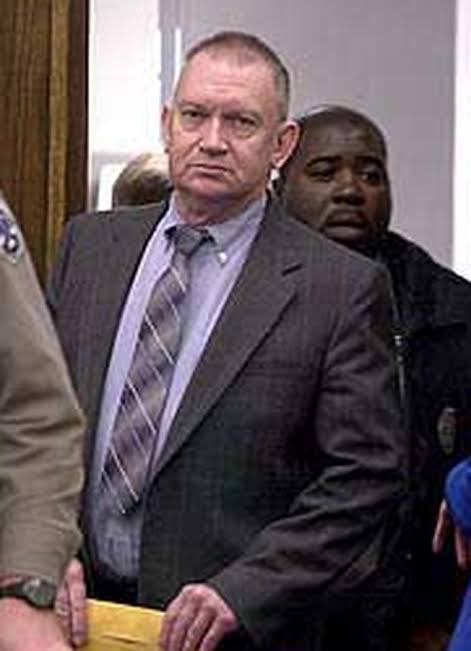
Raymond Horsch: The Olney House of Horrors
Overview
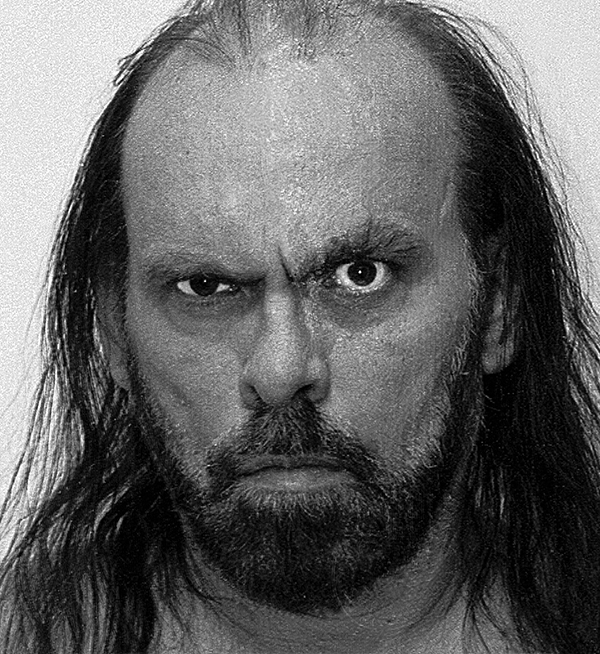
Raymond "R.C." Horsch was a pornographic filmmaker and career criminal who died in May 2025 at the age of 82. More than a year after his death, he became the primary suspect in the disappearances and presumed murders of multiple women, leading law enforcement sources to label him a suspected serial killer. The sprawling investigation, which has drawn national attention, began in June 2026 with the arrest of his son, Eugene Horsch, on unrelated charges. This led police to the family's dilapidated home in Philadelphia's Olney neighborhood, a property now grimly referred to as the "house of horrors."
Inside the home at 417 West Chew Avenue, investigators discovered a massive and disturbing trove of digital evidence. This included over a million files, with hundreds of thousands of images and videos. Some of this media allegedly depicts several missing women, first alive and later appearing lifeless or deceased. One video reportedly shows Raymond Horsch himself strangling a woman with a zip tie. While an intensive, months-long excavation of the property has yet to yield human remains, the digital evidence has linked at least seven missing women to the home, with police stating five of them are feared dead. Horsch, who preyed on vulnerable women, often those battling addiction, was never charged in connection with these cases and died of natural causes before the investigation began.
Early Life and Criminal Career
Raymond Charles Horsch was born on May 5, 1943, in East Stroudsburg, Pennsylvania. In a 1985 psychological exam, he claimed to have been raised on a farm in Bucks County, describing a "philosophical split" with his family during his teenage years that led him to rebel. By the late 1960s, he was in Philadelphia, where he opened an avant-garde movie theater.
Horsch's life was marked by a long and varied criminal history that frequently involved deception and illicit manufacturing. In the 1970s, he was convicted of theft for making counterfeit bills. After police raided his home in 1977 and found a suspected methamphetamine lab, he fled the country. He stole the identity of a chemist, forged a Stanford diploma, and re-established himself in New Zealand, even helping to open an ethanol fuel plant. His time as a fugitive ended in 1984 when he was caught re-entering New Zealand with multiple fake passports. He fled back to the U.S. but was soon captured by the FBI in Florida and extradited to Philadelphia, where he was sentenced to four years in prison.
A 1985 psychological profile compiled for his sentencing described him as "grandiose, mistrustful, suspicious, and excessively controlling" and "consumed by anger." His criminal activities continued after his release. In 2009, he was arrested for attempting to lure a nine-year-old girl into his car in Philadelphia's Kensington neighborhood and was subsequently convicted and sentenced to prison. That same year, he was charged in a separate federal case after police discovered a large marijuana growing operation and illegal firearms at his then-home in Chalfont. To reduce a potential 15-year sentence, Horsch became a federal informant, ultimately serving about four and a half years.
A Fixation on Violent Pornography
Parallel to his criminal life, Horsch developed a decades-long obsession with producing violent and sadomasochistic pornography. His 1973 directorial debut, financed by a Philadelphia mob associate, depicted graphic scenes of sexual violence. He often recruited vulnerable women, particularly those struggling with addiction in neighborhoods like Kensington, using drugs and money to persuade them to act as models or performers in his films and photography.
His work frequently featured simulated acts of violence, bondage, and death. After losing his Chalfont home following a drug arrest, he and his son Eugene moved into the family property on Chew Avenue in Olney, which he had inherited. He continued to bring women he recruited to this home, which would later become the center of the murder investigation. Horsch also self-published several books with violent themes. In one autobiographical work, he described himself as an "empathetic serial killer" and graphically detailed strangling a woman and disposing of her body using a chemical process.
The Suspected Murders
While Raymond Horsch was never convicted of murder, the investigation that began in 2026 has led police to suspect him in the deaths and disappearances of numerous women. The evidence is primarily digital, consisting of photos and videos recovered from his home that appear to document the final moments of several women's lives. No human remains have been found, and the Philadelphia Medical Examiner's Office has been unable to officially determine a cause of death for any of the women.
The investigation has linked at least seven women to the Horsch house. Based on the digital evidence, authorities have stated that five of these women are feared dead.
- Gabrielle Amarando, 22, disappeared in 2012. In August 2026, police announced they had found images on a hard drive that appeared to show her alive inside the house and later deceased.
- Amy McHale went missing in June 2016. She was previously married to Horsch from 2004 to 2008, and her last known location was the Chew Avenue house. Police had interviewed Horsch shortly after her disappearance, but at the time, there was no apparent evidence of foul play.
- Maribel Fresses, 27, was reported missing in 2018. Like Amarando, images recovered from the home allegedly show her alive and then deceased.
- Nicole Fusaro, 27, also disappeared in 2018. In September 2026, police identified her as the woman seen in a disturbing video being strangled by Raymond Horsch.
- Blair Tonzelli, 35, was reported missing in 2023. The entire investigation was triggered when a woman accompanying Eugene Horsch during his arrest produced a fake ID with Tonzelli's name.
Police have also identified two other women with connections to the house who have not been seen in years, but have not publicly released their names.
Investigation and Capture
The investigation into the Olney "house of horrors" began by chance on June 19, 2026, more than a year after Raymond Horsch's death. A U.S. Park Ranger near Independence Mall grew suspicious of a parked car occupied by Eugene Horsch, then 44, and a woman. A search of the vehicle uncovered two guns with obliterated serial numbers, drugs, and a fake DEA badge with Eugene's photo. The woman with him was in possession of a fraudulent ID belonging to Blair Tonzelli, a woman missing since 2023.
This discovery led Philadelphia police and federal agents to the Horsch family home on West Chew Avenue. The initial search in late June uncovered weapons, chemicals, drug paraphernalia, and urns with cremated remains. Most significantly, they seized over 50 hard drives and other electronic devices. A woman who was with Eugene Horsch at the time of his arrest reportedly told investigators that "bad things happened" to people in the basement of the home.
As the FBI began the painstaking process of analyzing the more than one million digital files, a horrific picture began to emerge. In August, police announced the discovery of images showing two missing women, Gabrielle Amarando and Maribel Fresses, alive and then apparently dead inside the house. In September, they revealed a video appeared to show Raymond Horsch strangling a third missing woman, Nicole Fusaro.
The focus of the investigation shifted decisively to the deceased patriarch, Raymond Horsch. Investigators launched a massive excavation of the property, bringing in heavy machinery and hazmat teams. They removed sections of sewer pipes, tore out walls and floorboards, and dug up the backyard, searching for forensic evidence and human remains. They specifically looked for signs of "wet cremation," a method of dissolving bodies with chemicals that Horsch had described in his own writings. While tests using luminol revealed the presence of human DNA in several locations, bones discovered in the backyard were determined to be from an animal, and as of late October 2026, no bodies had been recovered.
Trial and Sentence
Raymond Horsch died of chronic obstructive pulmonary disease in May 2025, a year before the investigation into his alleged crimes began. He was never questioned or charged in connection with the disappearances of the women linked to his home. The case against him is being built posthumously by law enforcement.
His son, Eugene Horsch, was arrested on June 19, 2026. State charges for weapons and drugs were dropped when federal prosecutors took over the case in August 2026. He was indicted on federal charges of being a felon in possession of firearms and unlawful production of an identification document. He has not been charged in connection with any of the missing women. His attorney has stated that Eugene denies being a serial killer and has called the intense investigation a "runaway train."
The Victims
The investigation has connected at least seven women to Raymond Horsch and his home. Police have stated five are feared dead based on digital evidence, while two others remain missing. No bodies have been recovered, so these women are not proven homicide victims in a legal sense.
- Gabrielle Amarando, 22 — Disappeared in 2012. Police found digital images that allegedly show her both alive and deceased inside the Horsch home.
- Amy McHale — Missing since June 2016. She was Raymond Horsch's ex-wife and was last known to be at his residence on Chew Avenue.
- Maribel Fresses, 27 — Reported missing in 2018. Like Gabrielle Amarando, she was allegedly depicted in photos found in the house appearing both alive and dead.
- Nicole Fusaro, 27 — Vanished in 2018. Authorities have reportedly identified her as the woman Raymond Horsch is seen strangling in a video recovered from the home.
- Blair Tonzelli, 35 — Missing since 2023. The investigation began after an associate of Eugene Horsch was found with a fake ID bearing her name.
Aftermath and Legacy
The discovery of the "house of horrors" in Olney sent a shockwave through Philadelphia and captured the attention of the nation. The case has raised difficult questions about how the disappearances of vulnerable women are handled by law enforcement, as several of the women had been reported missing years before the investigation began. Raymond Horsch, who had a long and public history of criminality and violent sexual fantasies, was able to operate for decades, preying on women from the margins of society.
The ongoing investigation by Philadelphia Police and the FBI is a complex, large-scale forensic effort, complicated by the absence of physical bodies and the suspect's death. For the families of the missing women, the case is a source of unimaginable pain and frustratingly slow answers, as they await definitive news about the fate of their loved ones. The legacy of Raymond Horsch is that of a predator who hid in plain sight, his self-proclaimed identity as an "empathetic serial killer" turning out to be a chillingly literal confession discovered only after his death.