Stephen Wayne Anderson: The Bard of Death Row
Overview
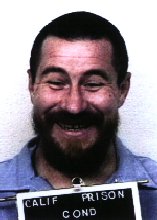
Stephen Wayne Anderson was a convicted murderer and self-proclaimed contract killer whose violent path culminated in a death sentence in California. Before his execution in 2002, Anderson gained notoriety as the "Bard of Death Row" for his award-winning poetry, which sparked a debate about redemption and the nature of justice. His proven crimes include three murders committed in Utah and California between 1977 and 1980. Anderson's life was a study in contradictions: a man with a reported IQ of 136 who engaged in brutal violence, and a remorseless killer who later expressed his humanity through the written word.
Born in St. Louis, Missouri, on July 8, 1953, Anderson's life of crime began in his teens and escalated over the years. He was serving time for burglary in Utah when he committed his first known murder, killing a fellow inmate in 1977. After escaping from prison in 1979, he murdered at least one other man in Utah before being captured in California following the murder of an elderly woman during a home invasion. Though he confessed to numerous other killings, these three are the only ones police have definitively attributed to him. He was executed by lethal injection at San Quentin State Prison on January 29, 2002.
Early Life and Criminal History
Stephen Anderson's childhood was marked by instability and abuse. He and his younger brother were raised by an alcoholic and violent father and an emotionally abusive mother. At the age of 14, his father forced him from their home, leaving him to live with friends. This tumultuous upbringing led to a life of crime, and by 1971, at age 17, Anderson was arrested for burglarizing a school in Farmington, New Mexico. He was convicted of aggravated burglary and sentenced to one to five years in prison.
In 1973, he received an additional conviction for three more counts of aggravated burglary, resulting in a sentence of 10 to 50 years. Though paroled for the first offense in 1975, he continued to serve time for the others. As part of an interstate agreement, New Mexico transferred Anderson to the Utah State Prison. His violent tendencies continued behind bars; he stabbed another inmate during a movie screening, leading to a conviction for aggravated assault with a deadly weapon.
A Murder in Prison
On August 24, 1977, while incarcerated at the Utah State Prison, Anderson murdered a fellow inmate, Robert Blundell. During his later trial for a different murder, Anderson would admit to stabbing Blundell to death in the prison kitchen. He claimed the killing was in self-defense, a position he maintained for years. This act was a significant escalation in his pattern of violence and was later used by prosecutors as an aggravating factor to argue for the death penalty in his California murder trial. The prosecutor in that case would later state, "This particular individual is a sociopath. He cannot live with anybody. He cannot get along with anybody. He kills people everywhere."
Escape and a Second Murder
In November 1979, Anderson escaped from a prison work-release program. He later claimed that after his escape, he fell in with drug traffickers and became a contract killer in Las Vegas. While he confessed to at least seven such murders, authorities were never able to substantiate most of these claims.
However, one of his post-escape crimes was later confirmed. On February 22, 1980, Anderson and an accomplice, Ace Fairbanks, were involved in a marijuana deal in Salt Lake County, Utah. They became suspicious that the buyer, 29-year-old Timothy Glashien, was a police informant. Anderson shot and killed Glashien. For decades, Anderson was only a suspect in this murder. It was not until 2015, long after Anderson's execution, that a reinvestigation officially confirmed his responsibility for Glashien's death.
The Murder of Elizabeth Lyman
By May 1980, Anderson had drifted to Bloomington, California. On May 26, after observing the home of 81-year-old Elizabeth Lyman for several days, he decided to burglarize it. Shortly after midnight, the 26-year-old prison escapee cut the retired piano teacher's telephone line and broke into her house by removing a pane of glass from a door.
Anderson believed the house was empty. As he moved through the rooms, he entered Lyman's bedroom. She awoke and screamed. From a distance of just a few feet, Anderson shot her once in the face with a .45 caliber handgun. He then covered her body with a blanket, retrieved the spent bullet casing, and proceeded to ransack the house, finding less than $100.
After the murder, Anderson went to the kitchen, cooked himself a meal of noodles and eggs, and sat down to eat. A neighbor, awakened by barking dogs, had seen Anderson in the house and called the police. When sheriff's deputies arrived, they found Anderson inside and arrested him at 3:47 a.m.
The Victims
- Robert Blundell, age unknown — August 24, 1977. An inmate at Utah State Prison, Blundell was stabbed to death by Anderson. Anderson later claimed it was self-defense.
- Timothy Glashien, 29 — February 22, 1980. Glashien was shot and killed by Anderson in Salt Lake County, Utah, during a drug deal. Anderson suspected him of being a police informant.
- Elizabeth Lyman, 81 — May 26, 1980. A retired piano teacher living alone in Bloomington, California, she was shot and killed in her bed by Anderson during a burglary of her home.
Investigation and Capture
The investigation into Elizabeth Lyman's murder was straightforward, as Anderson was caught at the scene. During interrogations, he confessed to the murder without remorse. He also began confessing to a string of other murders, claiming he was a professional hitman responsible for at least eight other killings in Utah and Nevada. One investigating sergeant, with 25 years of experience and over 200 murder investigations, described Anderson as "the coldest I have ever seen." While authorities were able to confirm his involvement in the Utah murders of Blundell and Glashien, the other "contract killings" he described were largely determined to be fabrications.
Trial and Sentence
At his trial, Anderson conceded that he had killed Elizabeth Lyman but denied the murder of Timothy Glashien and maintained that the killing of Robert Blundell was self-defense. His defense team argued that a "brain abnormality" diminished his capacity to form intent, especially after consuming alcohol, a claim disputed by the prosecution's experts.
On May 6, 1981, a San Bernardino County jury convicted Anderson of first-degree murder with the special circumstance of murder during a burglary. On July 24, 1981, he was sentenced to death.
The legal proceedings were not over. In 1985, the California Supreme Court upheld his murder conviction but reversed the special circumstance finding and the death sentence due to an error in jury instructions regarding the intent to kill. A second penalty-phase trial was held, and in 1986, a new jury once again imposed the death penalty. This sentence was repeatedly appealed and reviewed by state and federal courts over the next 16 years, but it was consistently upheld.
The Bard of Death Row
During his two decades on death row at San Quentin State Prison, Stephen Wayne Anderson underwent a transformation. He began to write poetry and short stories, study Latin, and read voraciously. His work, which often explored themes of remorse, prison life, and mortality, gained national attention. He won multiple awards from PEN America's Prison Writing Program, and one of his works was the basis for an off-Broadway play.
This literary success led to a campaign for clemency, arguing that Anderson had been rehabilitated. The movement was supported by writers, activists, and even some relatives of his victims, Elizabeth Lyman and Robert Blundell, who stated they did not want him to be executed. His supporters also pointed to the fact that his original trial lawyer was later deemed incompetent in other capital cases.
Anderson himself did not actively support the campaign to spare his life. He told his lawyer he wanted to "feel it all" during the execution as a form of repentance. In the weeks leading up to his execution, he isolated himself, refusing visitors and phone calls to finish writing a novel.
Execution
California Governor Gray Davis formally denied clemency, stating, "Mr. Anderson chose to pursue a lifetime of crime. He confessed to multiple, cold-blooded murders... There is no question of his guilt. I can find neither a miscarriage of justice nor sufficient mitigating factors to stay the course of justice." The U.S. Supreme Court also denied a final appeal.
On January 29, 2002, Stephen Wayne Anderson was executed by lethal injection at San Quentin. His last meal consisted of two grilled cheese sandwiches, cottage cheese, a corn and hominy mixture, peach pie, chocolate chip ice cream, and radishes. When asked for his last words, he said he had none. The execution began at 12:18 a.m., and he was pronounced dead at 12:30 a.m. No family or friends came to visit him in his final days.