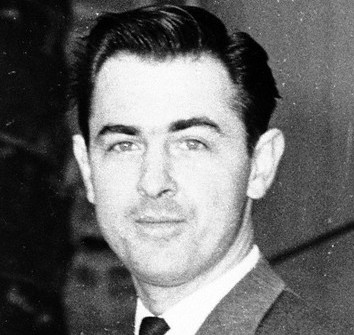
Jake Bird: The Tacoma Ax-Killer
Overview
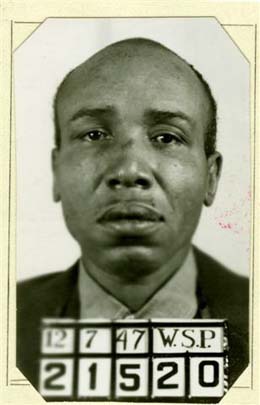
Jake Bird was a transient railroad worker and one of America's most prolific, though lesser-known, serial killers. Active for two decades, he was convicted and executed for a brutal double axe murder in Tacoma, Washington, in 1947. Before his death, Bird confessed to 44 other murders across more than a dozen states. Police investigators were able to substantiate at least 11 of these confessions, closing cold cases that stretched back to the 1920s. His crimes were marked by the use of an axe or hatchet, and his victims were primarily Caucasian women. Bird's case is also remembered for the "Jake Bird Hex," a curse he allegedly placed upon the individuals involved in his trial, several of whom died shortly after his sentencing.
Early Life and Criminal Background
Jake Bird was born on December 14, 1901, in a rural part of Louisiana he described as "somewhere... where they ain't no post office." Little is known about his childhood or family life. He left home at the age of 19 and began a transient life, traveling the country by freight train. He earned a living as a manual laborer, often finding work with railroad section gangs, which provided him the means to move from town to town.
This itinerant lifestyle facilitated a lengthy and serious criminal record that predated his known murders. By the time of his final arrest at age 45, Bird had spent approximately 31 years incarcerated in various state prisons, including in Michigan, Iowa, and Utah. His record was filled with charges of burglary, assault, and attempted murder. This extensive history of violence and time in the penal system shaped the man who would later confess to being one of the nation's most widespread serial murderers.
The Tacoma Murders
In the pre-dawn hours of October 30, 1947, Jake Bird broke into the Tacoma, Washington, home of Bertha Kludt, 52, and her daughter, Beverly June, 17. Bird, who had taken an axe from a nearby shed, entered the house through an unlocked back door with the intent to commit a burglary. He took off his shoes to move quietly through the house.
After stealing $1.50 from a purse, he was discovered by Bertha Kludt. A struggle ensued, and Bird brutally attacked her with the axe. The commotion awoke Beverly June, who came downstairs to investigate and was also met with the same savage violence. Neighbors, awakened by screams, promptly called the police.
Investigation and Capture
Two Tacoma police officers, Andrew Sabutis and Evan Davies, arrived at 1007 S. 21st Street just as Bird was fleeing from the back of the house. They gave chase, and after a frantic pursuit through neighboring yards, they cornered him. Bird resisted arrest, attacking the officers with a knife and injuring both before he was subdued and taken into custody.
At the Tacoma City Jail, Bird initially claimed innocence. However, the physical evidence was overwhelming. His clothing was spattered with the blood and brain tissue of his victims, and his bloody fingerprints were found in the house and on the axe he had left behind. Faced with this, Bird dictated and signed a confession in the presence of Detective Lieutenant Sherman W. Lyons and four other officers. He claimed the murders were the result of a "botched burglary," stating that he only intended to use the axe to scare anyone who might confront him.
The Confessions
Following his conviction for the Kludt murders and his sentencing to death, Jake Bird's story took a dramatic turn. Facing execution, scheduled for January 16, 1948, he began to confess to other murders. He claimed to have committed or been involved in 44 additional killings across the country, a tally he said represented "a murder for every year of his life."
This stunning claim prompted Washington's Governor, Monrad C. Wallgren, to grant Bird a 60-day reprieve. Law enforcement officers from numerous states traveled to the Washington State Penitentiary in Walla Walla to interview him. During these interviews, Bird provided details that allowed police to clear at least 11 unsolved homicides in states including Illinois, Nebraska, Iowa, Kentucky, Wisconsin, Kansas, South Dakota, Ohio, and Florida. For many other cold cases, he provided enough information to be considered the prime suspect.
His confessions included the 1928 murders of J.W. Blackman, Gertrude Resso, and Creda Brown in Omaha, Nebraska. He also confessed to the murder of 8-year-old Harvey Boyd in Carter Lake, Iowa, in 1928, a crime for which another man, Clarence Lukehart, had been wrongly convicted and imprisoned for nearly two decades. Bird's knowledge of the crime scenes was often so detailed that authorities were convinced of his guilt, and numerous departments officially closed their cases.
The Victims
Jake Bird was convicted for the murders of two women. Following his confessions, law enforcement agencies substantiated his involvement in at least 11 other killings.
- Bertha Kludt, 52 — October 30, 1947, in Tacoma, Washington. A widowed mother, she was killed in her home during what began as a burglary.
- Beverly June Kludt, 17 — October 30, 1947, in Tacoma, Washington. She was a high school student murdered when she came to her mother's aid.
- Joseph W. Blackman, 74 — November 18, 1928, in Omaha, Nebraska. He was found bludgeoned to death in his home.
- Gertrude Resso, 21 — November 19, 1928, in Omaha, Nebraska. She was killed in her bed alongside her sister.
- Creda Brown, 18 — November 19, 1928, in Omaha, Nebraska. She was visiting her sister, Gertrude Resso, when both were murdered.
- Harvey Boyd, 8 — July 1928, in Carter Lake, Iowa. His murder led to the wrongful conviction of another man, who was eventually freed due to Bird's confession.
- Two Unnamed Women — 1942, in Evanston, Illinois. Bird confessed to the axe murders of two women, which police were then able to close.
- Additional Victims — Police departments in Louisville, Kentucky; Portage, Wisconsin; Kansas City, Kansas; Sioux Falls, South Dakota; and Cleveland, Ohio, also confirmed they had solved murders based on Bird's detailed confessions, though the names of these victims are not widely available in public records.
Trial and Sentence
Jake Bird's trial for the murder of Bertha Kludt began on November 24, 1947. Though he was also responsible for Beverly June's death, it was common practice to charge a defendant with a single count in a multiple homicide case. The prosecution, led by Patrick M. Steele, presented the overwhelming physical evidence, including Bird's blood-soaked clothes and his signed confession.
Bird's defense attorney, James W. Selden, argued that the confession was inadmissible because it had been obtained through force, as a police officer admitted to beating Bird after his arrest. However, Judge Edward D. Hodge ruled that the beating and the confession were unrelated. The trial was swift, lasting only three days. On November 26, 1947, the jury deliberated for just 35 minutes before finding Jake Bird guilty of first-degree murder and recommending the death penalty.
On December 6, 1947, Judge Hodge formally sentenced Bird to death by hanging. When asked if he had anything to say, Bird delivered an impassioned 20-minute speech, claiming he had been denied a fair trial and that his own lawyers had worked against him. He concluded with a chilling statement that would become legendary: "I'm putting the Jake Bird hex on all of you who had anything to do with my being punished. Mark my words, you will die before I do."
The Jake Bird Hex
The "Jake Bird Hex" became an infamous part of the case's folklore. Within a year of his sentencing, six men connected to the trial died.
- Judge Edward D. Hodge died of a heart attack on January 1, 1948.
- Joseph E. Karpach, the under-sheriff who transported Bird to prison, died of a heart attack on April 5, 1948.
- George L. Harrigan, the court reporter, died on June 11, 1948.
- Sherman W. Lyons, the detective who took Bird's initial confession, died of a heart attack on October 28, 1948.
- James W. Selden, Bird's own defense attorney, died on November 26, 1948.
- Arthur A. Steward, a prison guard on death row, died of pneumonia two months before Bird's execution.
The string of deaths, most from sudden heart attacks, cemented the legend of Bird's curse in local and true-crime history.
Appeals and Execution
Despite his confessions, Bird, who had some experience as a "jailhouse lawyer," filed a series of appeals. He appealed his conviction to the Washington State Supreme Court and sent three petitions to the U.S. Supreme Court, but all were denied.
His execution was carried out shortly after midnight on July 15, 1949, at the Washington State Penitentiary. In front of 125 witnesses, Jake Bird was hanged. He said nothing on the gallows. His last meal consisted of fried chicken, strawberries with ice cream, and orange soda. No family came to claim his body, and he was buried in an unmarked grave in the prison cemetery. His entire estate amounted to $6.15, which he willed to one of his appeals attorneys.