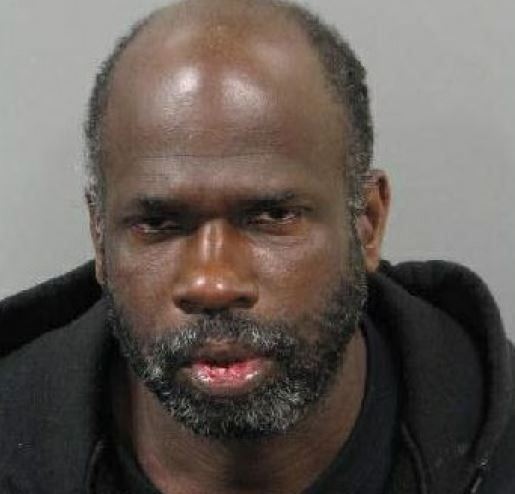
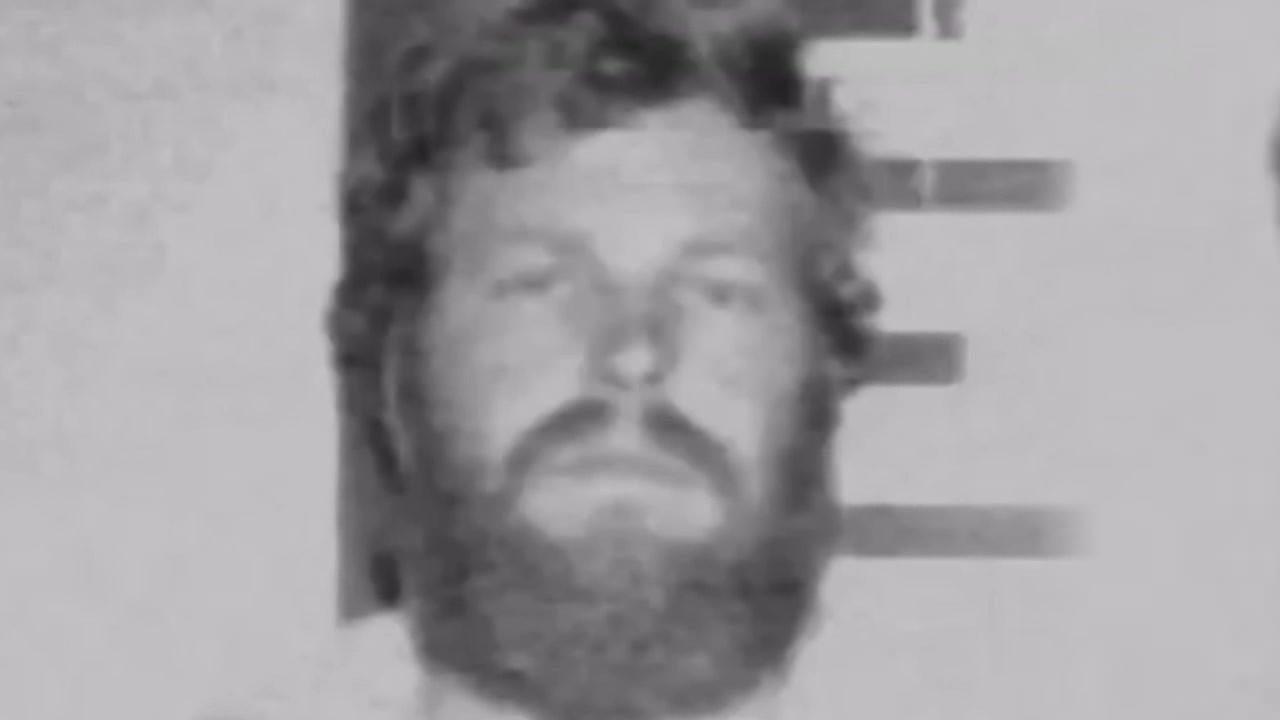
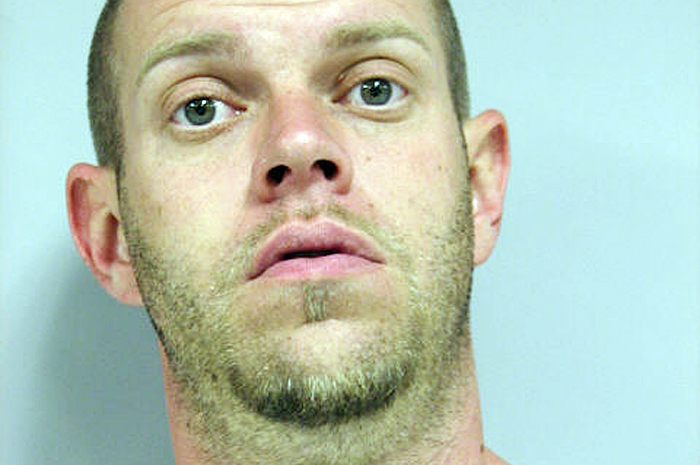
Joseph Brant: The Post-Katrina New Orleans Serial Killer
Overview
In the tumultuous years after Hurricane Katrina ravaged New Orleans, as the city struggled to rebuild its infrastructure and its soul, a predator haunted its fractured neighborhoods. Between 2007 and 2008, Joseph Brant exploited the chaos and thinned-out police presence to murder at least four women. His methods were brutal and varied—strangulation, stabbing, and shooting—and he often tried to conceal his crimes by setting his victims' bodies on fire. For a decade, the cases went cold, leaving families to grieve without answers and adding to the city's climate of fear.
The resolution came unexpectedly in 2018. While serving a prison sentence in Texas for burglary, Brant confessed to a string of murders that had long baffled New Orleans investigators. In a calculated deal to avoid the death penalty, he provided chilling, detailed accounts of his crimes, offering information that only the killer could possess. His confessions closed four cold cases, finally bringing a name to the shadow that had moved through the city and delivering a painful, long-awaited measure of justice to the victims' loved ones.
Early Life and Background
Publicly available records offer very little insight into the life of Joseph Brant before his killing spree. Born on July 13, 1969, his upbringing, education, and employment history remain largely unknown. By the time he arrived in New Orleans, he was in his late thirties, a transient figure with a criminal history that included burglary. He appeared to have no stable roots in the city, drifting through its recovering districts. The specific circumstances that led him to escalate from property crimes to serial murder have never been fully explained. He existed on the margins, a ghost in the system until his own words brought his horrific acts into the light.
The First Murder: An Unidentified Woman
Joseph Brant’s reign of terror began on October 17, 2007. According to the detailed confession he would provide a decade later, he solicited a woman for sex in New Orleans. When she refused his proposition, his demeanor shifted from solicitation to violence. He pulled out a knife, forced her into a car, and attempted to rape her. In the struggle, he strangled her to death.
To dispose of the body and erase his connection to the crime, Brant drove the car to a desolate area near a set of railroad tracks. He placed his victim inside the abandoned vehicle, doused it with gasoline, and set it ablaze. The fire was so intense that it not only destroyed any potential evidence but also burned the victim beyond recognition. Despite his later confession, authorities were never able to identify her. She remains a Jane Doe, Brant's first known victim, her name and story lost to the flames.
The Murder of Jody Johnson
Three months later, on January 11, 2008, Brant killed again. His second victim was Jody Johnson, a 47-year-old mother and former cheerleader from Georgia who had fallen on hard times. She was in New Orleans struggling with an addiction to painkillers, a vulnerability Brant likely exploited. He encountered her in the city's 7th Ward.
The following day, a gruesome discovery was made. Johnson’s body was found, abandoned and burned. She had been shot once in the forehead. The use of fire to destroy evidence became a chilling signature, linking her death to the unknown woman killed months earlier, though investigators at the time did not have the evidence to make the connection. Her case, like the first, quickly went cold, leaving her family in Georgia to wonder what had happened to her in the chaotic streets of New Orleans.
The Murder of Jessica Hawk
On the night of August 11, 2008, Joseph Brant committed a crime that was different in its execution but just as brutal. He broke into the Bywater neighborhood home of Jessica Lou Hawk, a 32-year-old botanist who had moved to the city from Ohio. Inside her house on Chartres Street, Brant attacked and stabbed her to death.
Unlike his previous murders, this one occurred in the victim's home, a place where she should have been safe. The crime scene was bloody and violent, and it sent a shockwave through the tight-knit Bywater community. Despite a thorough investigation by the New Orleans Police Department, no viable suspects were identified. For years, the case remained one of the city's most haunting unsolved homicides. It was this murder, however, that would eventually provide the first thread for investigators to unravel Brant's killing spree.
The Murder of Kirsten Brydum
Brant's final known murder occurred just over a month later. On the night of September 27, 2008, he targeted Kirsten Brydum, a 25-year-old social justice activist from San Francisco who was visiting New Orleans. Brydum was a vibrant and idealistic person, known for co-founding the "Really, Really Free Market" movement. She was in the city as part of a cross-country journey exploring community projects.
After leaving a gathering of friends, Brydum was riding her bicycle home when Brant abducted her. He sexually assaulted her and then shot her once in the head, a chilling echo of the murder of Jody Johnson. Her body was discovered the next morning, left on the side of a desolate road in the Ninth Ward. Her bicycle and purse were missing, leading police to initially surmise that she was the victim of a robbery-homicide.
In his confession, Brant revealed a crucial detail about this crime. He had intended to burn Brydum's body, just as he had with his first two victims. However, after the murder, while on his way to procure gasoline, he got into a car accident. The accident thwarted his plan, forcing him to hastily abandon her body on the roadside, leaving more evidence than he had in his previous killings.
The Victims
- Jane Doe — killed on October 17, 2007, in New Orleans. Her identity remains unknown after Brant burned her body in a car to hide his crime. She was his first known victim.
- Jody Johnson, 47 — killed on January 11, 2008, in New Orleans. A former high school cheerleader and mother from Georgia, she was remembered for her vibrant personality before she found herself struggling with addiction.
- Jessica Lou Hawk, 32 — killed on August 11, 2008, in New Orleans. A passionate botanist and a graduate of Miami University, she had moved from Ohio to pursue her love of plants in the unique environment of New Orleans. A memorial garden, the Jessica Hawk Garden on St. Claude Avenue, was established in her honor.
- Kirsten Brydum, 25 — killed on September 27, 2008, in New Orleans. A dedicated and beloved community activist from San Francisco, she co-founded a collective to promote alternatives to capitalism and was known for her radiant spirit and commitment to social justice.
Investigation and Capture
For years, the murders of the four women remained separate, unsolved cases in the NOPD's files. The lack of forensic evidence, particularly in the cases involving fire, left detectives with few leads. The breakthrough came from an entirely different state and a completely unrelated crime.
In 2013, Joseph Brant was arrested and convicted for burglary in Texas and was sentenced to 11 years in prison. While he was incarcerated, a New Orleans detective working the cold case of Jessica Hawk received a tip implicating Brant in her murder. Investigators traveled to Texas to question him. During the interview, the then 44-year-old Brant confessed to breaking into Hawk's home and stabbing her to death. This confession alone was a major victory for the NOPD, closing a case that had been cold for five years.
The full truth, however, remained hidden for several more years. In February 2018, as he was nearing the end of his Texas sentence and facing extradition to Louisiana to be tried for Hawk's murder, Brant made a stunning offer through his attorneys. He claimed he had information about other unsolved murders in New Orleans and was willing to confess to everything. In exchange, he wanted prosecutors to take the death penalty off the table and allow him to serve his sentences in Louisiana.
Orleans Parish District Attorney Leon Cannizzaro agreed to the terms, dispatching an investigator to the Texas prison. Over the course of a lengthy interview, Brant laid out the details of his killing spree. He confessed to the murders of Jody Johnson, Kirsten Brydum, and the unidentified woman from 2007. He provided investigators with specific, non-public details about each crime—the locations, the methods, and the chilling story of his failed attempt to burn Brydum's body. These corroborating details confirmed that he was the killer they had been hunting for a decade.
Trial and Sentence
Joseph Brant's legal reckoning came in two phases. Following his initial confession to the murder of Jessica Hawk, he was extradited to Louisiana. In December 2016, he pleaded guilty to a charge of second-degree murder. The plea resulted in a mandatory sentence of life in prison without the possibility of parole.
After his full confession in 2018, the process began for the other three murders. An Orleans Parish Grand Jury formally indicted Brant on three counts of first-degree murder for the deaths of Jane Doe, Jody Johnson, and Kirsten Brydum. The first-degree charges reflected the aggravating circumstances of the crimes, including the sexual assault and the fact that they occurred during the commission of other felonies.
On May 7, 2021, Brant appeared in court and, honoring the agreement he had made, pleaded guilty to all three counts of first-degree murder. The judge formally sentenced him to three additional life sentences. These sentences were ordered to be served consecutively to each other and to the life sentence he was already serving for Jessica Hawk's murder. The four consecutive life sentences ensured that Joseph Brant would die in prison.
Aftermath and Legacy
The confessions of Joseph Brant brought a final, somber end to a decade of uncertainty for the families of his victims. For the city of New Orleans, it closed a dark chapter from its post-Katrina recovery, a period when the city's vulnerabilities were exploited by a ruthless predator. The resolution of the cases highlighted the persistent, often thankless work of cold-case detectives who refuse to let victims be forgotten.
The families of the victims expressed a profound sense of relief, tempered by the enduring pain of their loss. Steen Brydum, Kirsten's father, said in a statement, "We are relieved to know that the man who extinguished her incredible flame can never harm another woman." The community that had rallied around Jessica Hawk's memory found solace in knowing her killer was held accountable. For the families of Jody Johnson and the still-unidentified Jane Doe, the confession provided answers, if not complete peace.
The case of Joseph Brant serves as a stark reminder of the hidden dangers that can flourish in the aftermath of disaster, when social systems are strained and the most vulnerable are left exposed. His crimes are woven into the complex history of New Orleans's struggle to heal, a testament to both the fragility of life and the enduring quest for justice.