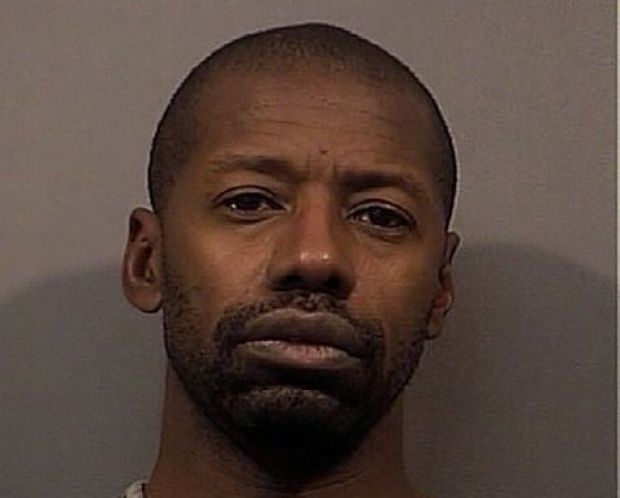
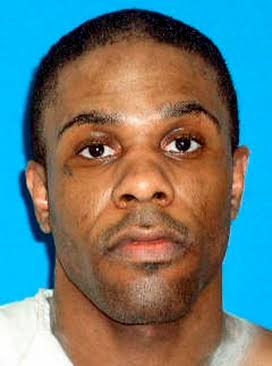
Eugene Britt: The Gary Strangler
Overview
In the summer of 1995, a wave of terror gripped the city of Gary, Indiana, as the bodies of women and girls began appearing in abandoned lots and wooded areas. The man responsible was Eugene Victor Britt, a drifter with a prior conviction for rape who had been paroled two years earlier. Over a five-month period, Britt raped and strangled at least seven victims, his youngest just eight years old. His crimes were marked by a brutal simplicity: he stalked vulnerable females, overpowered them, and murdered them to prevent them from identifying him. After his arrest for the murder of a child in the nearby city of Portage, Britt confessed to a string of killings that had baffled investigators, leading them to the bodies of victims who hadn't even been reported missing. His confessions brought a horrifying clarity to the violence that had plagued Gary, revealing a single predator behind a series of seemingly disconnected deaths.
Early Life and Criminal History
Eugene Victor Britt was born on November 4, 1957, in Gary, Indiana, into a large, impoverished family plagued by alcoholism. His home life was violent; his father frequently beat his mother, and the abuse was a constant presence in the children's lives. At the age of 14, Britt dropped out of school and ran away from home, living on the streets and turning to drugs. During this time, he began to exhibit signs of an intellectual disability.
Britt's criminal history began in April 1978, when he attacked a 17-year-old girl who was walking home from Roosevelt High School in Gary. He robbed and raped her. He was arrested for the crime and, in December of that year, received a 30-year prison sentence. After serving about half of his sentence, Britt was paroled in August 1993.
Upon his release, he returned to Gary. Unable to maintain stable housing, he lived with a sister and in homeless shelters. He worked a series of low-skilled jobs and spent much of his free time riding his bicycle around the city, a mode of transportation that would later feature in his deadly attacks. A psychological evaluation conducted before his 1993 release concluded that he was "psychologically intact" with "no indications of gross mental illness."
The 1995 Murders
Britt's killing spree began in the spring of 1995, less than two years after his parole. He targeted girls and women in Gary, attacking them in desolate areas. His method was consistent: he would approach victims from behind, drag them to a secluded spot, rape them, and then strangle them to death. He later told police that a "murdering and raping spirit" would overcome him, and he would get on his blue 10-speed bicycle to search for a victim he could easily overpower.
The first of his proven victims was 41-year-old Maxine Walker. In May 1995, Britt approached her as she was walking, grabbed her when she became alarmed, and dragged her into a wooded area. He raped her twice while strangling her. Her decomposed body was not found until December 2, 1995, after Britt led police to the location.
On June 24, 1995, the body of 14-year-old Nakita Moore was discovered in a weedy area near an abandoned house. Britt confessed that he had grabbed her, and just before he strangled her, she pleaded for her life.
In July, the body of 41-year-old Deborah McHenry was found naked in a weedy area behind a house. Britt told police he had followed her, dragged her into a grassy area, and raped her. He said he strangled her when he saw her looking at his face. McHenry had been a childhood neighbor of Britt's.
On July 18, 1995, 24-year-old Tonya Dunlap of Knox, Indiana, went missing. Britt confessed that Dunlap had flagged him down. When she realized he didn't have the marijuana she was seeking, she tried to run. He grabbed her, threw her into the weeds, raped her three times, and strangled her. Her remains were found on November 8, 1995, after Britt directed police to the wooded area.
On August 13, 1995, the body of 27-year-old Michelle Burns was found in a grassy field. Britt admitted he had grabbed her from the street, raped her, and then strangled her after she told him she would never forget his face.
On September 1, 1995, Britt attacked 50-year-old Betty Askew in an alley near her home. When she sensed danger and screamed, he grabbed her by the neck, dragged her to a vacant lot, and raped and strangled her. He stole $300 from her purse after she was dead. Her body was discovered the next day.
The crime that would ultimately lead to his downfall occurred on August 22, 1995, in Portage, Indiana. Eight-year-old Sarah Lynn Paulsen was riding her bike in a church parking lot near her home. Britt, who had been sent home from his job at a nearby Hardee's restaurant, abducted her. He took her to a wooded area, raped her, and strangled her. Her body was found later that day under a pine tree.
The Victims
Eugene Britt's crimes extinguished the lives of at least seven girls and women, leaving a trail of devastation for their families and communities.
- Maxine Walker, 41 — Murdered in May 1995 in Gary. Her body was one of two that police only discovered after Britt's confession, leading them to her remains in a field months after she was killed.
- Nakita Moore, 14 — Killed on June 24, 1995, in Gary. Her sister, Veda Robinson, later spoke of the family's profound loss, saying Britt had robbed them of seeing the youngest sibling go to her high school prom.
- Deborah McHenry, 41 — Killed in July 1995 in Gary. She had at one time lived next door to Britt and played with him as a child. Her family noted that she was mentally challenged.
- Tonya R. Dunlap, 24 — A waitress from Knox, Indiana, she was last seen on July 18, 1995. She was a mother to a young son, Michael, and her remains were found in November after Britt confessed.
- Michelle Burns, 27 — Her body was discovered on August 13, 1995, in a grassy field in Gary. Britt killed her because she told him she would not forget his face.
- Sarah Lynn Paulsen, 8 — Murdered on August 22, 1995, in Portage. A bright and somewhat shy second-grader at Aylesworth Elementary School, she loved playing softball, insects, and frogs. Her murder sent shockwaves through her community.
- Betty Askew, 50 — Killed on September 1, 1995, in Gary. She was a grandmother who was remembered lovingly by her family in memorials after her death.
Investigation and Capture
The murder of 8-year-old Sarah Paulsen in the relatively quiet city of Portage sparked an intensive investigation. Detectives at the scene collected crucial evidence, including about 20 blue and green polyester fibers from the area where her body was found. An FBI specialist later matched these fibers to the uniforms worn by employees of the Hardee's restaurant chain.
This lead directed police to the local Hardee's, where they learned that an employee, Eugene Britt, had been sent home early on the day of the murder for an administrative offense. Witnesses also reported seeing a man matching his description riding a bicycle near the crime scene. On November 3, 1995, police went to the Gary homeless shelter where Britt was living and confiscated his uniform for examination.
A few days later, Britt confessed to the murder of Sarah Paulsen to Reverend Clyde Smith, the head of the homeless shelter. He also confessed to killing nine other people. Reverend Smith persuaded Britt to turn himself in to the police. On November 7, during an eight-hour interrogation with detectives and the pastor present, Britt gave a full confession to the Paulsen murder and detailed his involvement in a string of other killings in Gary. He pointed out the locations of his victims' bodies on a map, leading police to discover the remains of Tonya Dunlap and Maxine Walker, whose disappearances had not been connected to the other murders.
Just prior to his arrest, Britt attempted suicide by throwing himself in front of a train. He survived but sustained serious injuries that left him permanently in a wheelchair.
Trial and Sentence
Following his confession, Eugene Britt was first charged in Porter County for the murder of Sarah Lynn Paulsen. In May 1996, he pleaded guilty to avoid the death penalty, citing his intellectual disabilities. He was sentenced to life in prison without the possibility of parole, plus an additional 100 years.
In February 2000, after a lengthy investigation into his other confessed crimes, Lake County prosecutors charged Britt with six additional murders and one count of rape involving a 13-year-old girl he had attacked in May 1995 but let go because she did not see his face. Prosecutors initially sought the death penalty for these crimes.
The case faced numerous delays. Britt's defense attorneys argued he was mentally incompetent to stand trial. However, after psychiatric evaluations, he was deemed sane and capable of facing the charges. In September 2006, a judge ruled that Britt was intellectually disabled, making him ineligible for the death penalty under a 2002 U.S. Supreme Court ruling.
On October 6, 2006, Britt reached a plea agreement. He pleaded guilty but mentally ill to the murders of Nakita Moore, Tonya Dunlap, and Maxine Walker, as well as the rape of the 13-year-old girl. As part of the deal, he admitted to killing Betty Askew, Michelle Burns, and Deborah McHenry, but the formal charges in those cases were dropped.
On November 3, 2006, exactly eleven years after his arrest, Britt was sentenced to an additional 245 years in prison. During the sentencing, he sat in his wheelchair, shaking and crying. He apologized for his actions, stating, "I'm truly sorry for my sins and I take full responsibility for my actions... God knows I'm guilty." The judge told him, "You deserve to be in prison for the rest of your life. You deserve to die in prison." He was transferred to the Indiana State Prison in Michigan City to serve his cumulative sentences.
Aftermath and Legacy
The crimes of Eugene Britt left a lasting scar on the communities of Gary and Portage. For the families of his victims, the pain was immeasurable. Relatives spoke in court of their enduring grief and anger. The sister of Nakita Moore lamented the milestones her sibling would never reach, while other families struggled with addiction and mental illness in the aftermath of their losses.
Britt's case highlighted the vulnerability of women in a city already struggling with high rates of violence and economic decline. His ability to murder multiple victims before being identified underscored the challenges faced by law enforcement in connecting cases when victims came from marginalized communities or when their bodies were left in desolate urban landscapes. His confession was a shocking revelation, linking deaths that had not been considered the work of a single killer. Eugene Britt remains incarcerated, a grim figure in Indiana's criminal history who brought a summer of unimaginable terror to the region.