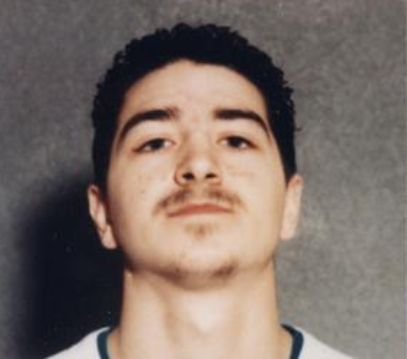
Judy Buenoano: The Black Widow of Florida
Overview
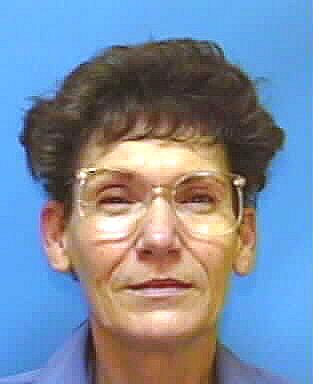
For more than a decade, Judias "Judy" Buenoano left a trail of dead men in her wake, their untimely demises attributed to the lingering effects of war, mysterious illnesses, or tragic accidents. To friends and neighbors, she was a hardworking mother and businesswoman, but prosecutors would later paint a picture of a cold and calculating "Black Widow" who murdered for money. Driven by greed, she poisoned her husband, her boyfriend, and her own son, collecting substantial life insurance policies after each death. Her murderous spree only unraveled when a fiancé survived a car bombing, leading investigators to look back at the string of tragedies that seemed to follow her. Convicted of two murders and one attempted murder, Judy Buenoano became the first woman executed in Florida in 150 years.
Early Life
Born Judias Anna Lou Welty on April 4, 1943, in Quanah, Texas, Buenoano’s childhood was one of instability and alleged abuse. Her mother died when she was just four years old, and she and her younger brother were sent to live with their grandparents. When her father remarried, she moved to Roswell, New Mexico, to live with him and her stepmother. Buenoano would later claim that she was starved and forced into labor by her father and stepmother.
This period of her life was marked by turmoil. At the age of 14, she was incarcerated for two months for attacking her father, stepmother, and stepbrothers. After her release, she attended a reform school, graduating in 1960. She then trained as a nursing assistant. In 1961, at age 17, she gave birth to her first child, Michael.
The Murder of James Goodyear
In 1962, Judy married James Goodyear, a U.S. Air Force sergeant. He adopted Michael, and the couple went on to have two more children, a son and a daughter. The family eventually settled in Orlando, Florida. In 1971, Sergeant Goodyear returned home from a tour of duty in Vietnam. Within months, he began to suffer from mysterious and debilitating symptoms, including nausea, vomiting, and diarrhea.
He was admitted to a naval hospital in Orlando on September 13, 1971. Doctors were perplexed by his condition, which rapidly deteriorated. On September 16, 1971, James Goodyear died; his death was attributed to renal failure and cardiovascular collapse. Because he was under a doctor's care, no autopsy was performed to test for toxins. Following his death, Judy collected approximately $95,000 in life insurance and veterans' benefits. Later that year, she received another insurance payout of $90,000 after a fire at her home.
The Death of Bobby Joe Morris
After James Goodyear's death, Judy began a relationship with Bobby Joe Morris. In 1977, she and her children moved with him to Trinidad, Colorado. In January 1978, Morris began to experience the same baffling symptoms that had afflicted Goodyear. He was hospitalized but released when doctors could not determine the cause of his illness. Two days after returning home, he collapsed and died on January 21, 1978. His death was not initially considered suspicious. Buenoano, who had taken out several life insurance policies on him, was the beneficiary.
Later that year, Judy legally changed her last name to "Buenoano," a corrupted Spanish version of "Goodyear," the surname of her deceased husband.
The Murder of Michael Goodyear
By 1979, Judy's eldest son, Michael, had joined the U.S. Army. Soon after, he fell gravely ill, exhibiting symptoms of severe arsenic poisoning that led to paralysis in his limbs. He was fitted with heavy metal leg and arm braces and medically discharged from the military into his mother's care.
On May 13, 1980, Judy took Michael and his younger brother, James Jr., canoeing on the East River in Santa Rosa County, Florida. During the trip, the canoe capsized. While Judy and James Jr. made it to shore, Michael, weighed down by his heavy braces, drowned. For years, his death was considered a tragic accident. Judy collected on a $20,000 military life insurance policy she had taken out on her son. With the proceeds, she opened a beauty salon in Gulf Breeze, Florida.
The Attempted Murder of John Gentry
In 1982, Buenoano became engaged to John Gentry, a Pensacola businessman. She convinced him that they should take out life insurance policies on each other, with Judy set to collect over $500,000 in the event of his death. Soon after, she began giving Gentry what she called "vitamin C" capsules. He started suffering from extreme nausea and vomiting and was hospitalized in December 1982. His condition improved in the hospital, but the symptoms returned as soon as he went home and resumed taking the "vitamins."
Gentry's health continued to decline, and Buenoano began telling friends that he was terminally ill. On June 25, 1983, his car exploded as he was driving in downtown Pensacola. Gentry was seriously injured but survived the blast. This brazen attempt on his life finally brought Judy Buenoano to the attention of law enforcement.
Investigation and Capture
The investigation into John Gentry's car bombing quickly exposed Judy Buenoano's web of deceit. Gentry told police about the "vitamin" pills she had been giving him. When tested, the capsules were found to contain paraformaldehyde and arsenic. A search of Buenoano's home uncovered wire and tape that matched the materials used in the car bomb.
The shocking discovery prompted investigators to re-examine the deaths of the men in her past. In 1984, the bodies of James Goodyear, Bobby Joe Morris, and Michael Goodyear were exhumed. Autopsies revealed that all three had significant amounts of arsenic in their systems. It was determined that James Goodyear and Bobby Joe Morris had died from chronic arsenic poisoning. Michael Goodyear's body also contained arsenic, confirming that he had been poisoned, which led to the paralysis that made him helpless when the canoe overturned. The motive in each case appeared to be the same: collecting life insurance money. Buenoano was arrested and faced a series of trials for her crimes.
The Victims
- James Goodyear, 37 — Died on September 16, 1971, in Orlando, Florida. A U.S. Air Force sergeant and decorated Vietnam veteran, he was a husband and father who was slowly poisoned by his wife after returning home from war.
- Bobby Joe Morris — Died on January 21, 1978, in Trinidad, Colorado. He was Buenoano's live-in boyfriend who succumbed to arsenic poisoning after she had taken out multiple life insurance policies on him.
- Michael Goodyear, 19 — Died on May 13, 1980, in Milton, Florida. Buenoano's son, a U.S. Army veteran, he was poisoned by his mother until he became paralyzed and then drowned during a staged boating accident.
Buenoano was also a suspect in the 1980 death of another boyfriend, Gerald Dossett, and a 1974 murder in Alabama, though she was never charged in those cases.
Trial and Sentence
Judy Buenoano faced three separate trials in Florida. In 1984, she was convicted of the murder of her son, Michael, and the attempted murder of John Gentry. She received a life sentence for Michael's murder and a concurrent 12-year sentence for the attack on Gentry.
In 1985, she stood trial for the murder of her first husband, James Goodyear. A jury found her guilty of first-degree murder. The prosecution, led by Russell Edgar who dubbed her the "Black Widow," argued that her motive was "twisted greed." The court sentenced her to death. Authorities in Colorado declined to prosecute her for the murder of Bobby Joe Morris, as she was already on death row in Florida.
Buenoano maintained her innocence throughout her appeals, which were all denied. She spent over a decade on death row at the Broward Correctional Institution.
Aftermath and Legacy
On March 30, 1998, at the age of 54, Judy Buenoano was executed in the electric chair at Florida State Prison. Her last meal consisted of steamed broccoli, asparagus, strawberries, and hot tea. When asked if she had any last words, she replied, "No, sir." She was pronounced dead at 7:13 a.m.
Buenoano was the first woman executed in Florida since 1848 and the first woman to be executed in the electric chair in the United States since the reinstatement of capital punishment in 1976. Her case stands as a chilling example of murder for financial gain, hidden for years behind a facade of misfortune and tragedy. The "Black Widow" nickname has become synonymous with her story, a reminder of the predator who preyed on her own mates and offspring.