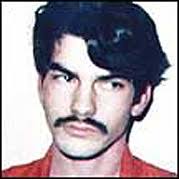
Timothy Burkhart: The Pierce County Shadow
Overview
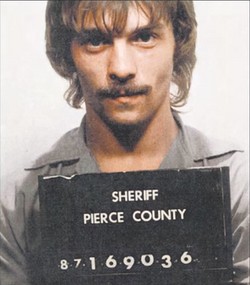
For fifteen years, a shadow of violence passed over Pierce County, Washington, leaving a trail of grief that stretched from 1986 to 2001. The man responsible, Timothy Ray Burkhart, murdered at least four females—two teenage girls and two adult women—while evading justice for his earliest crimes for decades. He was a phantom who haunted the community, his identity unknown until he resurfaced with a final, brutal pair of killings in the summer of 2001. As investigators closed in, Burkhart chose to end his own life, taking his secrets with him. It would take another eight years, and the determined work of a cold case detective armed with modern DNA technology, to finally link Burkhart to the cold-blooded murders of 1986 and reveal the full, tragic scope of his crimes.
Early Life and Background
Timothy Ray Burkhart was born in 1966 in Parkland, Washington, the community he would later terrorize. Details about his upbringing and early life remain scarce in public records. What is known is that his name first came to the attention of law enforcement two years before his first known murder. In 1984, Burkhart was suspected in an attempted kidnapping that also occurred in Parkland. However, charges were never filed, and he remained a free man, his capacity for violence yet to be fully realized by the authorities. For years, he lived in the same communities where he committed his crimes, a familiar face to some but a predator hiding in plain sight.
The 1986 Murders: Sallee and Payne
The terror began on January 24, 1986. Denise "Denny" Sallee, a 17-year-old who had recently dropped out of high school and worked at a fast-food restaurant, spent the evening at the Paradise Village Bowl in Parkland with a friend. When her friend left, Denise stayed behind. She was never heard from again. Her mother reported her missing the next day, but authorities initially treated the case as a teenage runaway.
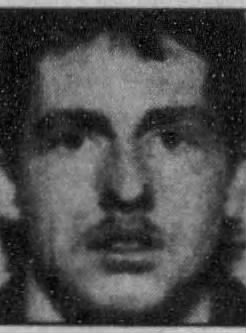
The grim truth was discovered two months later. On March 26, a man cleaning a vacant lot found a pile of clothes stuffed under a log. Three days later, on March 29, a seven-year-old boy searching for bottles in the woods behind his home stumbled upon Denise's partially buried and decomposing body. She had been strangled. The investigation produced a facial composite of a man named "Tim" who was seen with her that night, but despite tips, the case went cold.
Seven months later, on October 6, 1986, three children playing in a gravel pit near Parkland made another horrific discovery: the body of 16-year-old Kimberly Ann Payne. Kimberly was a runaway who, like Denise, was last seen heading to the Paradise Village Bowl. Police received a tip that she had been seen with a man named "Kim Burkhard," a misspelling that would prove significant years later. With few leads to follow and technology of the era limited, Kimberly's murder also became a cold case, leaving two families shattered and a killer at large.
The 2001 Murders: Coates and Nash
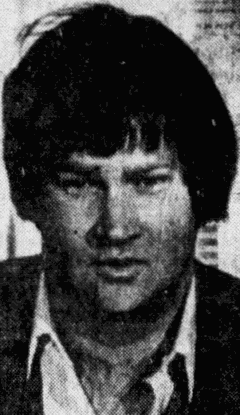
For a decade and a half, Burkhart’s murderous impulses seemingly lay dormant. Then, in the summer of 2001, the violence erupted again. On June 13, 72-year-old Kathryn Coates was bludgeoned to death in the backyard of her home in Summit, a community near Tacoma. Her husband found her body when he returned from running an errand. The crime appeared to be a burglary gone wrong. Witnesses reported seeing a stranger in the area, and police released a composite sketch, but the attacker's identity remained unknown.
Just two weeks later, on June 27, Rebecca Nash, a 48-year-old employee of a water delivery company, was found murdered in her Tacoma apartment. She too had been the victim of an apparent robbery. Her car was missing but was located abandoned about a mile away. The two quick, brutal murders spread fear throughout the region and put immense pressure on law enforcement to find the person responsible.
The Victims
The four women murdered by Timothy Burkhart were daughters, wives, and neighbors whose lives were cut short with shocking brutality.
- Denise "Denny" Sallee, 17 — Vanished on January 24, 1986, from Parkland. A high school dropout working to make her way, she was last seen alive at a local bowling alley before her life was tragically taken.
- Kimberly Ann Payne, 16 — Found on October 6, 1986, near Parkland. A runaway who frequented the same bowling alley as Denise, her life ended before she had a chance to find her path.
- Kathryn Coates, 72 — Murdered on June 13, 2001, in Summit. A housewife attacked in the perceived safety of her own backyard, she was killed during what police believe was a botched burglary.
- Rebecca Nash, 48 — Found murdered on June 27, 2001, in Tacoma. An employee at a local business, she was killed in her apartment just two weeks after Kathryn Coates, escalating the fear in the community.
Investigation and Suicide
The 2001 murders of Kathryn Coates and Rebecca Nash sparked an intense investigation. A crucial break came when a relative of Timothy Burkhart saw the police sketch of the suspect in the Coates murder and called Crime Stoppers. The relative noted Burkhart's resemblance to the sketch and mentioned that he had been near the victim's neighborhood on the day of the crime.
This tip propelled Burkhart to the top of the suspect list. Investigators discovered he had pawned a ring belonging to one of the victims. As they began to build their case, they searched a storage unit belonging to Burkhart and found items stolen from Rebecca Nash, including a TV and VCR, as well as blood-stained clothing. The blood was later confirmed to be that of Kathryn Coates.
With damning evidence in hand, police issued a warrant for Burkhart's arrest on July 2, 2001. But just hours after the warrant was issued, before police could take him into custody, a man checking on a relative's apartment in Parkland found Timothy Burkhart's body in the bathroom. He had died from a self-inflicted drug overdose. A suicide note was found at the scene, but its contents have never been made public. With the prime suspect dead, the cases for the murders of Coates and Nash were officially closed.
Cold Case Breakthrough
For years, the murders of Denise Sallee and Kimberly Payne remained unsolved, their files collecting dust in the cold case archives. That changed in April 2009, when Detective Gene Miller of the Tacoma Police Department began a systematic review of the county's unsolved homicides.
Reviewing the 1986 case files, Miller noticed a name, "Tim," that appeared in reports related to both victims, though it was sometimes misspelled. He suspected a connection between the 1986 murders and two other unsolved slayings of young women from that era, those of Michella Welch and Jennifer Bastian. Using a software program that could identify similarly sounding names, he entered the variations from the old reports. The program returned the name Timothy Ray Burkhart.
Digging into Burkhart's history, Miller learned of his suicide in 2001 while he was the prime suspect in two other murders, as well as the 1984 attempted kidnapping suspicion. The pieces began to fall into place. Miller applied to have the DNA evidence collected from the Sallee and Payne crime scenes in 1986 entered into the Combined DNA Index System (CODIS) to be compared against Burkhart's profile. The results were a definitive match. Eight years after his death, Timothy Burkhart was officially identified as the killer of Denise Sallee and Kimberly Payne.
Aftermath and Legacy
The posthumous identification of Timothy Burkhart brought a painful and incomplete form of justice to the families of his first two victims. As Detective Gene Miller stated, "The families deserve justice, and sometimes it just doesn't come from a courtroom." The resolution of the cold cases was a testament to the persistence of law enforcement and the critical role of advancing forensic technology. It highlighted how evidence, carefully preserved for decades, could one day speak the truth.
The other two cold cases that Detective Miller had initially considered, the murders of Michella Welch and Jennifer Bastian, were eventually solved and attributed to other perpetrators, clearing up any speculation of Burkhart's involvement in those crimes. Investigators have suggested that Burkhart could be responsible for other unsolved murders, given the fifteen-year span of his known activity, but to date, no other cases have been officially linked to him. Timothy Burkhart's story is a chilling reminder of how a killer can hide within a community for years, his evil acts separated by long stretches of silence, only to be unmasked long after he has gone.