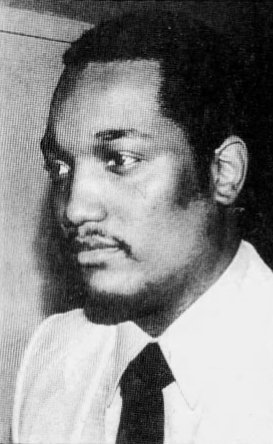
Maurice Oscar Byrd: The Pope's Cafeteria Killer
Overview
Maurice Oscar Byrd was a serial killer responsible for five murders committed during armed robberies in Missouri and Georgia from 1980 to 1981. His most infamous crime was the execution-style massacre of four employees at Pope's Cafeteria in Des Peres, Missouri, a brutal act that deeply scarred the St. Louis community. Seven months after the Missouri killings, Byrd murdered a liquor store clerk in Savannah, Georgia, during another robbery. His capture for the Georgia crime led directly to his identification as the perpetrator of the Pope's Cafeteria slayings. Following separate trials in which he was convicted of all five murders, Byrd was sentenced to death in Missouri and executed by lethal injection in 1991, closing a dark chapter for two states.
Early Life and Background
Maurice Oscar Byrd was born in Missouri on December 7, 1954. Little is publicly known about the specifics of his upbringing, though court documents and news reports paint a partial picture of his life before the murders. He had previously worked as a security guard at Saint Louis University, where he had once received a good citizen award for helping police recover stolen guns.
At the time of the Missouri killings in October 1980, the 25-year-old Byrd was employed as a pest control technician. This job gave him familiarity with the layouts of his clients' businesses, including the Pope's Cafeteria at the West County Center shopping mall, a detail that would later become a key piece of circumstantial evidence against him.
The Pope's Cafeteria Massacre
On the morning of Thursday, October 23, 1980, before the West County Center mall opened for business, Maurice Byrd gained entry to the Pope's Cafeteria. Inside, four employees were starting their day: manager James E. Wood, 51, and cooks Edna R. Ince, 68, Carolyn R. Turner, 51, and Judy M. Cazaco, 37.
Armed with a .22 caliber pistol, Byrd confronted the employees. He forced Wood to open the office safe, from which he stole what was estimated to be between four and nine thousand dollars. After securing the money, Byrd herded all four employees into the small office. There, in a chilling act of violence, he shot each of them in the head, execution-style. The bodies, as one authority later described, were "stacked like cordwood."
The crime was discovered around 7:45 a.m. when other employees arrived for work and were confronted with a horrific scene of blood inside the restaurant. They flagged down a passing police car. Officers found Wood, Ince, and Turner deceased at the scene. Judy Cazaco was found clinging to life, having been shot through both eyes. She was rushed to a local hospital, where she fought for ten days before succumbing to her devastating injuries on November 2, 1980. The massacre was the first homicide in the city of Des Peres since its incorporation in 1934, and the sheer brutality of the crime sent shockwaves through the quiet St. Louis suburb.
On the day of the murders, Byrd had reported to his pest control job. However, around 10:00 a.m., he called in sick and left. He never returned to work and never collected his final paycheck, abandoning his job and his life in Missouri.
Murder in Georgia
After fleeing St. Louis, Byrd made his way to Savannah, Georgia, with his girlfriend, Sandra Sanders, and their child. For seven months, he lived under the radar, but his violence resurfaced on May 21, 1981. On that day, Byrd entered a liquor store in Savannah with the intent to rob it. During the holdup, he shot and killed an employee named Fred Johnson.
This second robbery-murder proved to be his undoing. The subsequent police investigation in Savannah quickly identified Byrd as the prime suspect. Five days after killing Johnson, on May 26, 1981, Maurice Oscar Byrd was arrested.
The Victims
- James E. Wood, 51 — The dedicated manager of Pope's Cafeteria, he was a responsible leader starting another workday when his life was tragically cut short.
- Edna R. Ince, 68 — A cook at the cafeteria, she was a hardworking member of the restaurant's staff preparing for the day's customers.
- Carolyn R. Turner, 51 — A cook at Pope's, her daughter Sally later recalled that their relationship had been going well at the time. She expressed deep gratitude for their last, pleasant conversation on the morning of the murder.
- Judy M. Cazaco, 37 — A cook who displayed immense bravery, fighting for her life for ten days in the hospital before dying from the grievous wounds inflicted by Byrd.
- Fred Johnson — An employee at a Savannah, Georgia, liquor store who was murdered by Byrd during a robbery in May 1981.
Investigation and Capture
The investigation into the Pope's Cafeteria massacre was intense from the start, with more than 30 officers from the Major Case Squad of Greater St. Louis assigned to the case. Early leads were confusing; one witness reported seeing three men leaving the mall in a yellow Ford around the time of the shooting. This led investigators down a path that ultimately proved to be a dead end.
The crucial break came with Byrd's arrest in Georgia. During their investigation of the Fred Johnson murder, Savannah authorities found evidence connecting Byrd to the St. Louis killings. On June 18, 1981, while Byrd was detained in a Georgia jail, he was formally charged by Missouri authorities with four counts of capital murder. He was subsequently extradited to Missouri to stand trial for the Pope's Cafeteria slayings.
The Missouri Trial
Maurice Byrd's trial for the four murders began in St. Louis County in August 1982. The prosecution, led by Gordon Ankney, built a powerful case based on circumstantial evidence and a series of damning confessions Byrd had made. They established that Byrd's job as an exterminator gave him intimate knowledge of the cafeteria's layout and routines. They presented evidence showing he abruptly left his job and fled St. Louis immediately after the crime, and that he arrived in Georgia with a large sum of cash.
The most compelling testimony came from three people to whom Byrd had confessed. His partner, Sandra Sanders Byrd, testified that Byrd had told her he "killed three people to be with her and their baby in Georgia." Her testimony was fraught with legal challenges, as she initially denied he made the statement, only to recant after being arrested for perjury. The charge was dropped in exchange for her testimony, a fact the jury was made aware of.
Additionally, a former brother-in-law and a cellmate from Byrd's time in the Chatham County jail both took the stand to testify that Byrd had admitted to them that he had killed people during a restaurant robbery in Missouri.
Byrd testified in his own defense, denying any involvement in the murders. He claimed the money he had in Georgia was a combination of his wages and $1,600 he had stolen from an unlocked car. He explained his absence from work on the day of the killings by saying he was hungover and had faked being sick. The jury found his story unconvincing. On August 14, 1982, they convicted him of four counts of capital murder. During the penalty phase, the jury recommended he be sentenced to death for each of the four murders.
The Georgia Trial
Following his conviction and death sentence in Missouri, Byrd was tried in Chatham County, Georgia, for the murder of Fred Johnson. On October 25, 1983, a jury found him guilty of murder and robbery. For these crimes, he received two concurrent life sentences.
Suspected Victim Cleared
For a period, investigators considered Byrd the prime suspect in another unsolved robbery-homicide that had occurred in the area six months prior to the cafeteria shooting. On April 23, 1980, Margaret "Marge" Walsh, a 47-year-old mother of three and a part-time manager at a Dairy Queen in Ellisville, was found shot to death in the restaurant's office. The crime bore similarities to the Pope's Cafeteria case. However, investigators thoroughly checked Byrd's whereabouts and confirmed he had a solid alibi: at the time of Walsh's murder, he was at his job working as a security guard. Maurice Byrd was officially cleared as a suspect, and the tragic murder of Margaret Walsh remains an active cold case.
Appeals and Execution
Byrd's death sentence in Missouri began a nearly decade-long process of appeals. His legal team raised numerous issues, arguing that the jury was improperly death-qualified and racially biased, that his wife's testimony should have been barred by marital privilege, and that the death penalty was disproportionately applied in cases involving a Black defendant and white victims.
These arguments were systematically rejected by state and federal courts. The Missouri Supreme Court affirmed his conviction and sentence on September 11, 1984, and the U.S. Supreme Court denied his petition in 1985. After several stays of execution throughout the late 1980s and early 1990s, all of his legal avenues were exhausted.
In the early hours of August 23, 1991, Maurice Oscar Byrd, 36, was executed by lethal injection at the Potosi Correctional Center. He was pronounced dead at 12:04 a.m. He was the sixth person to be executed in Missouri since the reinstatement of capital punishment.
Aftermath and Legacy
The Pope's Cafeteria massacre left an indelible mark on the St. Louis community, remembered for its cold-blooded nature and the violation of a familiar public space. In 2018, retired police chief Ronald Martin, who had worked on the case, published a book titled "Murder At Pope's Cafeteria."
For the victims' families, the passage of time did little to heal the wounds. In a 2022 interview, Carolyn Turner's daughter, Sally Huitt, spoke of the enduring pain, saying the memory of her mother's murder felt as if it had happened only yesterday. The execution of Maurice Byrd brought a legal conclusion to the case, but for those who lost loved ones, the tragedy remains a permanent part of their lives.