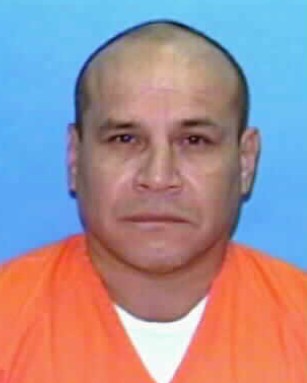
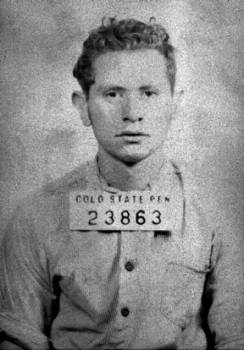
Edward Castro: The Florida Drifter Murders
Overview
Edward Castro was an unemployed drifter whose brief but brutal crime spree left three men dead across central Florida in late 1986 and early 1987. Over a period of less than three months, Castro murdered men in Polk, Pinellas, and Marion counties, primarily to steal their vehicles. His victims were Claude J. Henderson, George Larry Hill, and Austin Carter Scott. Castro was arrested on a minor charge and subsequently confessed to all three killings. He was convicted of two of the murders, receiving a life sentence for one and a death sentence for the other. After years of legal appeals, which he eventually sought to end, Castro was executed by the state of Florida in 2000.
Early Life and Background
Edward Castro was born on January 26, 1950, in El Cajon, California. Details about his childhood are not extensively documented, but court proceedings later revealed a troubled upbringing. During the penalty phase of his trial, testimony indicated that Castro was a victim of sexual abuse, including incest, beginning at the age of four. This abuse was presented as a mitigating factor that may have contributed to what a psychologist described as an "alcohol- and drug-addicted personality," bizarre thinking, and aggressive behavior. Sources also mention a diagnosis of a brain disorder, though specifics are scarce. As an adult, Castro struggled with alcohol abuse and drifted from his native California to Florida, where his string of violent crimes would unfold.
The Murders
Claude J. Henderson The series of murders began in the autumn of 1986. On October 25, 46-year-old Claude J. Henderson had just moved into a mobile home in Auburndale, located in Polk County. His brother, Charles, visited him that day and found him in good spirits. It was the last time they would ever speak. A few days later, Castro, who had recently arrived in the county, entered Henderson's trailer. He bound Henderson's hands and feet and beat him to death. Castro left his victim's body on the bed and fled after stealing the keys to Henderson's 1973 Chevrolet van. On November 4, after Henderson had been out of contact for several days, his brother Charles and a friend went to the trailer and discovered his body.
George Larry Hill Two months later, Castro struck again. On January 5, 1987, he was at a gay bar in St. Petersburg where he met 50-year-old George Larry Hill, an interior designer. Castro persuaded Hill to take him home. Inside the residence, which Hill shared with a doctor, Castro later told authorities he became enraged with jealousy over the home's expensive contents, including a large entertainment center with multiple televisions. Arming himself with a knife from the kitchen, Castro confronted Hill, allegedly saying, "Hey, man, you've only got one life to give. Pick a spot." He tied Hill up and stabbed him four times in the chest. Before leaving, Castro scrawled homophobic messages on the walls of the home.
Austin Carter Scott Castro's final murder occurred just nine days later. After paying a motorist to drive him first to Tampa and then to Ocala, Castro went to another gay bar on January 14, 1987. There, he met 57-year-old Austin Carter Scott and convinced Scott to give him a ride. They went to the small efficiency apartment where Castro was staying. Castro's plan was to kill Scott to steal his Ford Maverick. Inside the apartment, Castro began to choke Scott until his face turned purple. He taunted his victim, saying, "Hey man, you've lost. Dig it?" before pulling a knife from his sock and stabbing him repeatedly in the chest.
After the murder, Castro involved an upstairs neighbor, a hitchhiker from Iowa named Robert McKnight whom he had recently met. Castro brought McKnight into the bloody room and, threatening that he would be next, ordered him to stab Scott's body. McKnight complied, stabbing the deceased man several more times. The two then cleaned the apartment, took Scott's wallet, rings, and watch, and fled Ocala in the victim's car.
The Victims
- Claude J. Henderson, 46 — murdered in late October or early November 1986 in Auburndale. He had just moved into a new mobile home and was visited by his brother the day he was last seen alive. He was a veteran.
- George Larry Hill, 50 — murdered on January 5, 1987, in St. Petersburg. An interior designer, he was killed in the home he shared with a doctor. His identical twin brother, Nathan Jerry Hill, was deeply affected by his death.
- Austin Carter Scott, 57 — murdered on January 14, 1987, in Ocala. He gave his killer a ride from a local bar, not knowing Castro's intention was to murder him for his car.
Investigation and Capture
Castro's crime spree ended not with a major breakthrough, but with a minor police stop. While driving Austin Scott's stolen Ford Maverick, Castro and Robert McKnight headed north. During the drive, Castro became heavily intoxicated. In Columbia County, a sheriff's deputy noticed the car and pulled Castro over for his erratic behavior. The deputy observed Castro's slurred speech and the smell of alcohol, and when confronted, Castro became hostile. He was arrested for disorderly intoxication on January 15, 1987.
While in a holding cell, Castro told a corrections officer he had something to say that would "put a stripe on [his] sleeve" and asked for an investigator. What followed was a full confession to all three murders. He provided details that easily linked him to the recent killings of Hill and Scott. Police had been stymied by the Henderson case, but Castro's confession provided the missing link, even telling investigators where he had abandoned Henderson's stolen van near a church. Based on his detailed confessions, authorities charged him with the murders of Scott and Hill. Robert McKnight, who had fled to Chicago after the final murder, later contacted police there and provided information. He pleaded guilty to being an accessory after the fact, received five years' probation, and testified for the state against Castro.
Trial and Sentence
Edward Castro faced separate trials for the murders of Austin Carter Scott and George Larry Hill. He was never prosecuted for the murder of Claude J. Henderson, as he was already facing capital charges.
In 1988, Castro was tried in Marion County for the first-degree murder and robbery of Austin Carter Scott. He did not deny his guilt during the trial. The jury found him guilty, and he was sentenced to death.
In 1991, Castro stood trial in Pinellas County for the murder of George Larry Hill. Prosecutors again sought the death penalty, but the jury recommended a life sentence. The judge followed the recommendation, and Castro was sentenced to life in prison for the Hill murder.
Appeals and Final Years
Castro's death sentence for the Scott murder entered a lengthy and convoluted appeals process. In 1989, the Florida Supreme Court affirmed his conviction but ordered a new sentencing hearing due to errors in the original trial, including faulty jury instructions and the admission of prejudicial evidence. At the new penalty phase hearing, a jury again recommended death by an 8-4 vote. However, this second death sentence was also overturned in 1992 because the trial court had erred in not disqualifying the state attorney's office, which had a conflict of interest.
A third penalty phase hearing was held in 1993. For a third time, a jury recommended the death penalty, and the judge imposed it. This time, in 1994, the Florida Supreme Court upheld the sentence.
Beginning in 1994, Castro's attitude toward his sentence began to shift. He repeatedly changed his mind about the appeals process, sometimes wanting to pursue them and at other times demanding they be stopped. He contacted judges and his state-appointed lawyers multiple times, first requesting to drop all appeals, then changing his mind, then again demanding to waive representation. Finally, in 1999, the Florida Supreme Court granted his formal request to end all of his appeals.
Execution
With his appeals exhausted at his own request, an execution date was set. A clemency hearing was scheduled in September 2000, but Castro wrote over 40 letters insisting that he wanted to be executed. On November 14, 2000, Florida Governor Jeb Bush signed Castro's death warrant.
On December 7, 2000, at Florida State Prison, Edward Castro had his last meal, consisting of steak, shrimp, ice cream, and a cola. In his final statement, he apologized to the families of his victims and expressed love for his mother. The lethal injection was administered at 6:02 p.m., and he was pronounced dead at 6:15 p.m.
Aftermath and Legacy
Edward Castro's case is a stark example of a transient individual whose personal demons and struggles with substance abuse culminated in a brief, violent, and deadly rampage. His decision to abandon his appeals and demand his own execution made his final years on death row unusual. His case left a trail of grief across three Florida counties. The brother of victim Claude Henderson was left to discover the body, and the identical twin of George Hill expressed enduring pain over his brother's violent death. The execution brought a final, grim chapter to a story of senseless loss. Dr. Joseph Diaz, a witness to the execution, later wrote a book about the experience titled "The Execution of a Serial Killer."