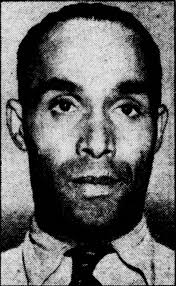
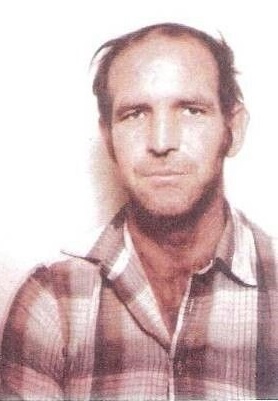
Jarvis Catoe: The D.C. Strangler
Overview
For six years, a shadow of fear fell across Washington, D.C., as a series of brutal murders targeting women went unsolved. The perpetrator, Jarvis Theodore Roosevelt Catoe, was a serial rapist and killer who operated in the nation's capital and New York City between 1935 and 1941. Known as the "D.C. Strangler," Catoe confessed to murdering eight women, though authorities suspected him of more. His crimes were marked by strangulation and, frequently, sexual assault. Catoe’s spree highlighted issues of race and media attention, as the murders of his Black victims initially garnered little notice compared to the outcry following the deaths of his white victims. His eventual capture was the result of a single mistake made after his final murder, leading to a swift trial and execution. His case also brought to light a grave miscarriage of justice, as another man had been wrongly convicted and imprisoned for one of his earliest crimes.
Early Life and Background
Jarvis Catoe was born on November 2, 1904, in Kershaw County, South Carolina, the eldest of eight children of a preacher. By most accounts, his childhood was unremarkable until 1925, when he sustained a significant head injury. In the years that followed, those who knew him noted a marked change in his behavior, which became increasingly erratic and strange. In 1929, Catoe moved to Washington, D.C., to live with his brother.
In the capital, Catoe began to accumulate a criminal record. He was arrested multiple times for traffic violations and other minor offenses. More troubling were his arrests for indecent exposure. In May 1935, he was convicted on two counts of indecent exposure and served four months in jail. He was convicted on two more counts in December of that year and served another five months. During his periods of freedom, he worked various jobs, including as a chauffeur and handyman, roles he would later exploit to gain access to his victims.
The Murders
Jarvis Catoe’s confessed murder spree began on April 11, 1935, with the rape and strangulation of 65-year-old Florence Dancy in her Washington, D.C. home. In a tragic turn of events, police arrested another man, James Matthew Smith, for the crime. Smith was convicted of second-degree murder in 1937 and sentenced to life in prison. This wrongful conviction may have emboldened Catoe, who remained free and inactive as a killer for over four years.
His violent impulses resurfaced on December 1, 1939, when he murdered 34-year-old Josephine Robinson. This was the beginning of a more frequent and brutal series of attacks. In 1940, he killed two more women in D.C.: 82-year-old Lucy Kidwell on September 28 and 48-year-old Mattie Steward on November 28. His first victim of the next year was Ada Puller, murdered on January 22, 1941. All five of these women were Black, and their deaths received minimal public attention or police resources, allowing the killer to continue his rampage without a city-wide panic.
The dynamic of the case shifted dramatically on March 8, 1941. On that day, Catoe was hired by Rose Abramowitz, a 25-year-old white woman who had been married for only a month, to wax the floors of her apartment. Catoe raped and strangled her, leaving her body on her bed and stealing twenty dollars. The murder of a young white bride ignited a public outcry and intense media coverage that the previous killings had not.
Three months later, on June 15, 1941, during a severe rainstorm, 23-year-old Jesse Elizabeth Strieff, a secretary at the War Department, was looking for a taxi. Catoe, wearing a chauffeur's cap, offered her a ride. She accepted, and he drove her to a deserted area where he raped and strangled her. Her nude body was later found in a garage. The murder of a young government worker in the capital caused a political firestorm, leading to a Congressional investigation into the perceived incompetence of the Washington police force.
With law enforcement on high alert in D.C., Catoe traveled to New York City. On August 4, 1941, he attacked his final victim. Evelyn Anderson, a 26-year-old waitress, was found strangled in an alley in the Bronx. Catoe stole her watch and handbag before fleeing back to Washington.
The Victims
The eight women Jarvis Catoe confessed to murdering came from different walks of life, their only connection being the man who ended their lives. For many, especially the earliest victims, little is remembered or was recorded about them, a sad testament to the era's disregard for the lives of many of its citizens.
- Florence Dancy, 65 — Murdered on April 11, 1935, in Washington, D.C. She was the first woman Catoe confessed to killing, a crime for which another man was wrongfully imprisoned for years.
- Josephine Robinson, 34 — Murdered on December 1, 1939, in Washington, D.C. Little is known about her life beyond the tragic circumstances of her death.
- Lucy Kidwell, 82 — Murdered on September 28, 1940, in Washington, D.C. As with other early victims, details of her life were not widely reported.
- Mattie Steward, 48 — Murdered on November 28, 1940, in Washington, D.C. Her death was one of several that failed to raise a significant alarm before Catoe began targeting white women.
- Ada Puller — Murdered on January 22, 1941, in Washington, D.C. She was the last of Catoe's five initial Black victims.
- Rose Abramowitz, 25 — Murdered on March 8, 1941, in Washington, D.C. A newlywed of only one month, she had hired Catoe for handyman work at her home.
- Jesse Elizabeth Strieff, 23 — Murdered on June 15, 1941, in Washington, D.C. A secretary for the War Department, she accepted a ride from Catoe, mistaking him for a cab driver during a storm.
- Evelyn Anderson, 26 — Murdered on August 4, 1941, in New York, New York. A waitress in the Bronx, she was Catoe's final victim, and a piece of her stolen property would lead directly to his downfall.
Investigation and Capture
For years, the Washington, D.C. police failed to connect the string of murders. The significant gap between the first and second killings, and the fact that the first five victims were Black women whose cases were not prioritized, meant that a serial killer was not suspected. It was only after the high-profile murders of Rose Abramowitz and Jesse Strieff in 1941 that a massive investigation was launched, but Catoe remained elusive.
The break in the case came from his final, out-of-state murder. After killing Evelyn Anderson in the Bronx, Catoe took her watch. He gave the watch to a girlfriend, who in turn passed it to another person. Eventually, a man named Charles Woolfolk pawned the watch in a Bronx pawnshop. New York City detectives, investigating Anderson's murder, routinely checked pawnshop records and found the watch. They meticulously traced it back through Woolfolk and the others until the trail led to Jarvis Catoe in Washington, D.C.
New York authorities alerted the D.C. police, who arrested Catoe on August 29, 1941. Under interrogation, he quickly confessed, not only to the murder of Evelyn Anderson but to the seven unsolved murders in Washington. He held up his fingers and counted off his victims, telling police he had been troubled by "spells." To corroborate his confession, he provided details only the killer could know, such as the location of a victim's missing umbrella and the exact amount of money stolen from Rose Abramowitz.
A Wrongful Conviction
Catoe's confession brought a shocking revelation: an innocent man was in prison for his first murder. James Matthew Smith had been convicted of killing Florence Dancy in 1935 and had already served five years of a life sentence. Following Catoe's detailed confession to the Dancy murder, police officials acknowledged that Smith may have been wrongfully convicted. However, in a cruel twist, Catoe later retracted his confession to that specific crime. Despite the strong evidence of his guilt, Smith's appeals for release were ultimately dismissed, and the outcome of his case remains a dark stain on the justice system.
Trial and Sentence
In late October 1941, Jarvis Catoe went on trial for the first-degree murder and rape of Rose Abramowitz. During the proceedings, he attempted to recant his detailed confessions, claiming he had been "sick and weak" and that police had tortured him into making false statements. The prosecution presented the overwhelming evidence of his confession, including details that only the killer could have known. The jury was unconvinced by Catoe's claims of coercion. After deliberating for only eighteen minutes, they returned a verdict of guilty and recommended the death penalty.
Jarvis Theodore Roosevelt Catoe was sentenced to death. He spent his final years in the D.C. Jail. On January 15, 1943, he was executed in the electric chair. Reports from the time noted that he walked into the execution chamber singing.
Aftermath and Legacy
The case of Jarvis Catoe, the "D.C. Strangler," left a complex legacy. His capture brought relief to a terrified city, but it also exposed deep-seated problems within law enforcement and the media. The initial lack of investigation into the murders of his Black victims stood in stark contrast to the massive response to the murders of his white victims, highlighting the racial inequalities of the era. The case also led to a shake-up within the Washington, D.C. police department and a Congressional inquiry into its handling of the investigation. The wrongful conviction of James Matthew Smith served as a painful reminder of the fallibility of the justice system. Though largely forgotten by the general public, Catoe's violent spree remains a chilling chapter in the history of American true crime.