Harvey John Collins: The War Hero Who Became a Killer
Overview
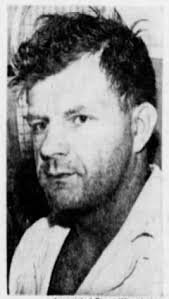
Harvey John Collins was a decorated World War II veteran whose life took a dark and violent turn, culminating in a series of murders in the mid-1950s. A former U.S. Marine Captain who fought with distinction at the Battle of Iwo Jima, Collins later struggled with apparent psychological distress. While serving in the U.S. Army, he committed his first murder in Kentucky in 1953. After a suicide attempt and a dishonorable discharge, he moved to Washington state, where he killed two more people in early 1955. His violent spree ended when a courageous victim survived and identified him to police. Collins confessed to the three murders, was sentenced to death for one, and was executed by hanging in 1957.
Early Life and Military Service
Harvey John Collins was born on October 5, 1925, in Portland, Oregon, to Alfred and Mable Collins. The family later moved to Spokane, Washington, where Collins grew up in what was described by a sister as a stable and loving home. As a young man, he enlisted in the U.S. Marine Corps and served in the Pacific Theater during World War II. He fought in the brutal Battle of Iwo Jima, where he reportedly killed a Japanese soldier in combat and brought home the soldier's katana as a war trophy.
His military service was distinguished, and he rose to the rank of Captain, widely regarded as an upstanding member of society. After the war, however, Collins began to show signs of psychological trouble, which some have speculated could have been post-traumatic stress disorder from his combat experiences or related to the earlier death of his father in a workplace accident. Despite these issues, he later joined the U.S. Army for artillery training.
The Murder of Edna Iona Hall
By 1953, Collins was stationed at Fort Knox, Kentucky. On the evening of May 15, he was at a local roadhouse where he got into an argument with a man who was with Edna Iona Hall, a 37-year-old waitress and divorcée from the nearby town of Vine Grove. After the altercation, Collins offered to drive Hall home. Instead of taking her home, he drove to an isolated road and made unwanted sexual advances.
When Hall rejected him, Collins flew into a rage. He dragged her from the car, beat her, and stabbed her in the head with a screwdriver. Believing her to be dead or dying, he placed her in the back of his car. When his vehicle became stuck in sand, he even flagged down a passing motorist for assistance. After freeing his car, he drove deeper into the woods, dragged the still-breathing Hall into a foxhole, and buried her alive, covering the spot with dirt and sheet metal. He then returned to Fort Knox and burned his bloody clothes in a furnace.
FBI agents questioned Collins about Hall's disappearance, but he was initially cleared after some of her friends mistakenly claimed to have seen her alive after the night she went missing. Her body was not discovered for another eight months, and the case went cold.
A Downward Spiral
In early 1954, Collins was transferred to Fort Sill, Oklahoma, for an aviation course. On January 6, his internal turmoil became terrifyingly public. After leaving a suicide note, he stole a Cessna O-1 Bird Dog, an observation aircraft, from the base airfield. For hours, he flew erratically around the area before crashing the plane near railroad tracks in Temple, Oklahoma. Though the wreckage was found quickly, Collins had vanished. He surrendered to police in Dallas, Texas, two days later. Following a psychiatric evaluation that found him sane, he was dishonorably discharged from the military.
After his discharge, Collins moved to Puyallup, Washington, to live with relatives and found work in a dairy shop. But the peace did not last.
Murders in Washington
On February 7, 1955, Collins committed his second murder. He went to a gas station in Federal Way, Washington, and, in what appeared to be a robbery, shot and killed the 25-year-old attendant, Edward Morley. The weapon he used was a Japanese pistol he had acquired during the war.
A little over a month later, on the night of March 21, 1955, Collins entered a motel in Milton, Washington, and inquired about room rates. He left but returned soon after, knocking on the door of the owners' residence. When motel owner Anna Stolen answered, Collins attacked her with a paring knife. As she fought back and fled, he retrieved the samurai sword he had taken from Iwo Jima and slashed at her, severing one of her fingers.
Her husband, Andrew K. Stolen, who was disabled, was awakened by the commotion and came to his wife's aid. Collins turned his brutal attack on him, slashing and stabbing him to death with the sword. Collins then pursued Anna outside, attempting to run her over with his car. She managed to dodge the vehicle as he sped away.
The Victims
- Edna Iona Hall, 37 — A waitress and mother from Bullitt County, Kentucky, born on April 2, 1915. She was brutally murdered on May 15, 1953, after rejecting Collins's advances and was buried alive near Fort Knox.
- Edward Morley, 25 — A gas station attendant in Federal Way, Washington. He was shot and killed on February 7, 1955, during a robbery committed by Collins.
- Andrew K. Stolen, age unknown — The co-owner of a motel in Milton, Washington. He was killed with a samurai sword on March 21, 1955, while bravely defending his wife, Anna, from Collins's frenzied attack.
Investigation and Capture
Anna Stolen, though grievously injured, was able to give sheriff's deputies a description of her attacker and the last two digits of his license plate. This crucial information led police directly to Harvey Collins. Within an hour of the attack, he was arrested. A search of his car revealed the blood-stained katana and bloody clothing, directly linking him to the savage assault on the Stolens.
During interrogation, Collins quickly confessed to the murder of Andrew Stolen and the attack on his wife, as well as the murder of Edward Morley. Initially, however, he denied any involvement in the murder of Edna Iona Hall in Kentucky, citing that he had already been cleared in that case. But after questioning by FBI agents, he confessed to her murder as well, providing details that only the killer could have known.
In an unusual legal arrangement, the Kentucky prosecutor agreed not to press charges for Hall's murder, provided that Washington authorities seek the death penalty against Collins for the murder of Andrew Stolen.
Trial and Sentence
The trial for the first-degree murder of Andrew K. Stolen began on June 27, 1955. The prosecution's case was built on Collins's confession and the powerful testimony of the survivor, Anna Stolen. To counter a potential insanity defense, prosecutors called upon two psychiatrists, Dr. Myron Kass and Dr. Harlan P. McNutt, who had previously examined Collins and testified that he was sane at the time of the killings. Collins's defense attorneys chose not to have him take the stand. The jury found Harvey Collins guilty and, as the prosecution had sought, recommended the death penalty.
On September 18, 1955, while awaiting his formal sentencing and subsequent appeals, Collins and six other inmates escaped from the Pierce County jail. He sought refuge with a childhood friend who had testified on his behalf at the trial. However, two days later, Collins surrendered peacefully at the sheriff's office, reportedly telling officers he had "thought the situation through" and decided to accept his fate.
His defense attorneys continued to file appeals, but they were ultimately denied by the Supreme Court.
Execution and Aftermath
Harvey John Collins's execution date was set for December 3, 1957. In the early moments of that day, at the Washington State Penitentiary in Walla Walla, he was executed by hanging before a crowd of 30 witnesses. He was pronounced dead at 12:17 a.m. His final words were reported to be, "I ask forgiveness for everything I've done." At his request, his body was donated to the University of Washington's medical school for research. The case of Harvey Collins stands as a disturbing example of a man once lauded as a war hero who, for reasons that may never be fully understood, descended into brutal violence, leaving a trail of tragedy across two states.