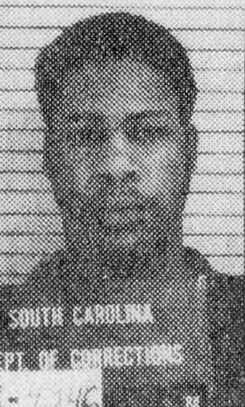
Frederick Pete Cox: The Orlando Prostitute Killer
Overview
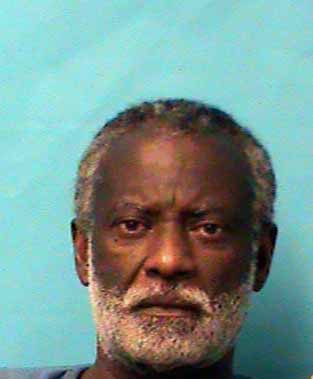
In the spring of 1997, a series of brutal shootings targeting women plunged Orlando, Florida, into fear. The attacker, who prowled the streets in a tan Buick, was Frederick Pete Cox, a 43-year-old Army reservist and telemarketer. Over a terrifying seven-week period, Cox shot five women, killing three of them. His victims were primarily prostitutes struggling with drug addiction. The courage of two survivors, who provided police with a detailed description of Cox and his vehicle, led to his capture. After a mistrial that left the community on edge, Cox was convicted in a second trial and sentenced to life in prison, ensuring he would never again pose a threat.
Early Life and Background
Frederick Pete Cox was born on August 27, 1953, in Tallahassee, Florida, but his family moved to Orlando when he was young. He graduated from Jones High School in 1972 and promptly enlisted in the U.S. Army, serving for three years in West Germany before receiving an honorable discharge. He continued his military service for approximately two decades in the U.S. Army Reserve's 143rd Transportation Command.
Cox held a variety of jobs throughout his life. He briefly worked as an Orange County correctional officer in 1978 but was fired for falling asleep on the job. In the years leading up to the murders, he lived in a modest home in the Pine Hills neighborhood with his common-law wife, their two sons, and two German Shepherds. A back injury in 1996 led to his discharge from the army reserve and required him to walk with a cane. Despite this, he worked as a telemarketer.
To his family, he was a nice man who enjoyed tinkering with his ham radio. Neighbors, however, described him as quiet and unfriendly. Cox had minor run-ins with the law before 1997. In 1988, he was charged with indecent exposure for masturbating in an adult bookstore. In 1990, he was arrested for marijuana possession, for which he pleaded no contest and performed community service. Ironically, he volunteered for an organization called "Mothers Against Crack Cocaine," aimed at helping drug addicts.
The 1997 Attacks
The string of violent attacks began on March 12, 1997. Tracey Adams, 34, was not a sex worker, but she became Cox's first victim. Her car had a flat tire, and she had pulled over on an Orlando street just after midnight when Cox approached, mistaking her for a prostitute and asking for sex. When she refused, he shot her in the right arm and fled. Adams survived the attack but suffered lasting injury.
The violence quickly escalated to murder. On March 20, Cox shot and killed 40-year-old Patricia Ann Logan, a prostitute who struggled with drug use. Her naked body was found five days later, on March 25, by a jogger in a field near West Colonial Drive. She had been shot execution-style and left in a degrading position.
On April 16, Cox picked up 28-year-old Yolanda Neals, a prostitute, offering her money for sex. He drove her to a secluded area, where he suddenly shot her in the face. Despite being grievously wounded, Neals managed to flee as Cox continued to fire at her. She survived the horrific attack, though the injuries to her face and neck left her with a permanent lisp.
Cox's final and deadliest attacks occurred on April 29. Within 24 hours, he murdered two more women: Stephanie Singleton, 26, and Mary Ann Voepel, 22. Both women were transient, addicted to drugs, and had histories of prostitution. They had met each other in the Orange County Jail. A transient discovered their bodies together in a wooded area off Americana Boulevard, near Interstate 4 in Orlando's tourist district.
The Victims
- Patricia Ann Logan, 40 — Murdered on March 20, 1997, in Orlando. Her body was discovered in a field five days later. She was a mother who was reportedly struggling with drug use at the time of her death.
- Stephanie Singleton, 26 — Murdered on April 29, 1997, in Orlando. She had a history of arrests for prostitution, theft, and drugs. Her body was found alongside Mary Ann Voepel's.
- Mary Ann Voepel, 22 — Murdered on April 29, 1997, in Orlando. She grew up in the area and had learned to play piano as a child. She had a history of prostitution arrests and was struggling with a crack cocaine addiction.
Investigation and Capture
The key to solving the terrifying string of shootings lay with the two women who survived. Tracey Adams and Yolanda Neals provided detectives with crucial information. Neals helped develop a composite sketch of the attacker and described his tan Buick Park Avenue. Adams, who had seen her attacker again after she was shot, confirmed the sketch and, most importantly, had written down his license plate number.
Armed with this information, police quickly identified their suspect. On May 21, 1997, Frederick Pete Cox was arrested and charged with two counts of attempted murder. His family was stunned. A search of his home and car uncovered a 9mm pistol and bloodstains on the car's carpet. Ballistics tests later matched the pistol to the bullets used in the attacks. On July 22, 1997, a grand jury indicted Cox on three counts of first-degree murder and two counts of attempted first-degree murder.
Trial and Sentence
Frederick Pete Cox's journey through the justice system was prolonged and complex. His first trial, for the murders of Stephanie Singleton and Mary Ann Voepel, began in February 2001. The prosecution presented evidence including the testimony of the survivors and the ballistics match. However, the trial ended with a hung jury. After 16 hours of deliberation, one lone juror refused to convict, believing the evidence was insufficient. A mistrial was declared, forcing the victims' families and the community to wait longer for justice.
Cox's second trial began in April 2001, this time for all three murders and both attempted murders. In a strategic move, Cox opted to be tried by a judge instead of a jury. During this trial, Cox claimed to be paralyzed in his legs and right arm, a condition his defense attorney, Mark O'Mara, argued was psychological. O'Mara contended that Cox had "snapped" and suffered from a mental illness, arguing for a conviction of second-degree murder to avoid the death penalty.
On April 17, 2001, the judge found Cox guilty on all counts: three for first-degree murder and two for attempted murder. The sentencing phase, however, was delayed for nearly two years as prosecutors continued to seek the death penalty. Finally, after a request from a victim's family member to bring the case to a close, prosecutors agreed to drop their pursuit of capital punishment. On January 17, 2003, Judge Frank Kaney sentenced Frederick Pete Cox to three consecutive life sentences for the murders, plus 30 years for each of the attempted murders.
Aftermath and Legacy
The conviction of Frederick Pete Cox brought an end to a chapter of fear in Orlando. The case highlighted the vulnerability of women living on the margins of society, particularly those involved in sex work and struggling with addiction. The successful resolution of the case was a direct result of the bravery and clear-headedness of the two survivors, Tracey Adams and Yolanda Neals, whose testimony and crucial evidence were indispensable in identifying and convicting their attacker. Cox has filed appeals over the years, but his convictions have been upheld. He remains incarcerated, serving his life sentences at the Suwannee Correctional Institution in Live Oak, Florida.