Scott Thomas Erskine: The Cross-Country Predator
Overview
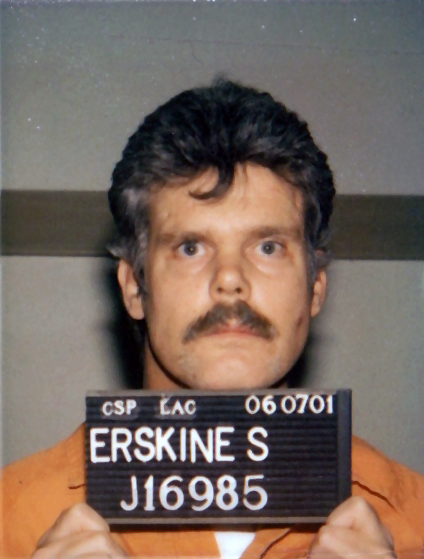
Scott Thomas Erskine was an American serial killer whose brutal crimes spanned two states and left a trail of devastation. Convicted for the 1993 murders of two young boys in San Diego, California, he was also linked by DNA to the 1989 murder of a woman in Palm Beach, Florida. Erskine's criminal history was extensive, marked by a pattern of escalating sexual violence that began in his teenage years. He was already serving a lengthy prison sentence for rape and kidnapping when advances in DNA technology definitively connected him to the cold-case murders. Sentenced to death in California and life in prison in Florida, Erskine died on death row in 2020 from complications related to COVID-19 before his execution could be carried out.
Early Life and Background
Scott Thomas Erskine was born on December 22, 1962, in San Diego, California. His childhood was marked by a significant head injury at age five, when he was struck by a car and fell into a coma for 60 hours. After the accident, he reportedly suffered from chronic headaches and memory blackouts. By age ten, Erskine's behavior grew deeply troubled; he began sexually molesting his younger sister and her friends, using threats to ensure their silence. He was placed in special education classes for emotionally disturbed students.
Erskine's criminal behavior escalated in his teens. At 15, he escaped a juvenile facility and committed a knifepoint rape of a 13-year-old girl, followed by an assault on a 27-year-old female jogger the next day. In 1980, at age 18, he beat a 14-year-old boy unconscious during an attempted rape and later sexually assaulted an inmate while incarcerated. Despite his mother's pleas for him to be sent to a mental institution, he was sentenced to four years in prison and was paroled in 1984. After his release, he married, moved to Florida, and had a son, but the marriage was short-lived due to his physical abuse of his wife. He eventually returned to Southern California.
The Murder of Renee Baker
On June 23, 1989, the body of 26-year-old Renee Baker was discovered near the bank of the Intracoastal Waterway in Palm Beach, Florida. She had been raped, her neck was broken, and she was left to drown. The case remained unsolved for over a decade. At the time, Erskine was living in Palm Beach County. The crucial piece of evidence that would eventually solve the crime was a Marlboro cigarette butt found near Baker's neatly piled clothing. It was not until years later, after Erskine's DNA was entered into a national database for an unrelated crime, that investigators in Florida were able to link him to Baker's murder.
The Murders of Jonathan Sellers and Charlie Keever
On March 27, 1993, two friends, 9-year-old Jonathan Sellers and 13-year-old Charles "Charlie" Keever, went for a bike ride along the Otay River in San Diego. When they didn't return home, a frantic search began. Two days later, on March 29, a cyclist discovered their bodies in a makeshift, igloo-shaped fort made of brush and castor bean plants.
The crime scene was one of horrific brutality that haunted investigators for years. Both boys had been bound, gagged, tortured, and sexually assaulted before being strangled. Jonathan was found hanging from a castor bean tree branch, naked from the waist down. Charlie was found on the ground, his head resting on a pile of their clothes, also partially naked. An autopsy revealed that Charlie had been alive when he was extensively bitten. The case went cold, leaving the boys' families and the community in a state of prolonged grief and fear.
The Victims
- Renee Baker, 26 — Murdered on June 23, 1989, in Palm Beach, Florida. Her life was cut short in a brutal attack while Erskine was living in the area. She was raped and her neck was broken before she was left to drown.
- Jonathan Sellers, 9 — Murdered on March 27, 1993, in San Diego, California. An energetic boy who loved basketball, he received a new bike from his mother for his upcoming birthday, a gift she would later regret. He and his friend Charlie were on a bike ride when they were abducted.
- Charles "Charlie" Keever, 13 — Murdered on March 27, 1993, in San Diego, California. A friend of Jonathan's older brother, Charlie was known for his love of his basset hounds and taking long walks. He was a companionable and trusting boy whose life was taken alongside his younger friend.
Investigation and Capture
Months after murdering the two boys, in the summer of 1993, Erskine's predatory behavior continued. He abducted a woman who was waiting for a bus, held her captive in his home for several days, and repeatedly raped her. After he released her, she went to the police, and Erskine was quickly arrested. He was convicted of rape and kidnapping and sentenced to 70 years in prison. As a convicted sex offender, he was required to submit a DNA sample to the state database.
The murders of Jonathan and Charlie remained unsolved for eight years. In March 2001, the San Diego Police Department's cold case unit reopened the investigation, utilizing advances in DNA technology. They tested evidence from the 1993 crime scene, including cotton swabs containing semen from Charlie Keever's mouth and two cigarette butts found near the bodies. The DNA profile was entered into the Combined DNA Index System (CODIS) and returned a direct match to Scott Erskine, who was already incarcerated. This breakthrough finally provided investigators with the identity of the long-sought killer.
Trial and Sentence
In September 2003, Scott Erskine went on trial for the murders of Jonathan Sellers and Charlie Keever. His defense attorney did not deny that Erskine killed the boys but argued that the head injury he sustained as a child left him with brain damage that diminished his capacity to distinguish right from wrong. The prosecution presented the horrific details of the crime scene and the conclusive DNA evidence. On October 1, 2003, a jury found Erskine guilty of two counts of first-degree murder with special circumstances of torture, child molestation, and multiple murders.
However, the jury deadlocked on the penalty phase, with eleven jurors voting for death and one for life without parole, forcing the judge to declare a mistrial for the sentencing portion. A second penalty phase trial was held in April 2004, and this time the jury unanimously recommended the death penalty. On September 1, 2004, a San Diego Superior Court judge affirmed the verdict and sentenced Erskine to death.
While awaiting his California sentencing, Erskine was charged with the 1989 murder of Renee Baker in Florida. In August 2004, he pleaded guilty to second-degree murder via a video link from San Diego. In exchange for his plea, he was sentenced to life in prison without the possibility of parole, avoiding a second death penalty trial. As part of the agreement, he also agreed to be interviewed about other unsolved homicides in the area.
Aftermath and Legacy
Scott Erskine was admitted to California's death row at San Quentin State Prison on December 27, 2004. He remained there for over 15 years, his death sentence upheld on appeal in 2019. On July 3, 2020, Erskine died at an outside hospital at the age of 57 from complications related to COVID-19, amid a large outbreak at the prison.
The families of his victims expressed a sense of relief at his death, though they acknowledged it would not bring full closure. The mothers of Jonathan Sellers and Charlie Keever became advocates for victims' rights and worked to keep their sons' memories alive. A park and outdoor educational center near the site of the murders was dedicated in the boys' names, creating a positive legacy out of a terrible tragedy. The case stands as a powerful example of the role of DNA technology in solving cold cases and bringing long-delayed justice to victims' families.