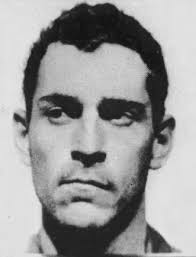
Danny Figueroa: The Backwoods Sniper
Overview
In the spring of 1986, a palpable sense of fear descended upon the quiet, rural communities of Southern California. A mysterious figure, clad in military fatigues and armed with a rifle, began a series of random and deadly attacks, earning the chilling moniker "The Backwoods Sniper." For 36 days, Danny Figueroa, a 26-year-old self-styled survivalist, stalked the remote landscapes of Riverside and San Bernardino counties, transforming hiking trails and isolated homesteads into his personal hunting grounds. He shot four people, killing three of them, in unprovoked assaults that seemed to lack any clear motive. The victims were ordinary people engaged in mundane activities—working in their yard, driving to a job, or walking a dog. The sheer randomness of the violence created a siege mentality in the region until a massive, 12-day manhunt culminated in Figueroa's capture and brought his brief but terrifying reign to an end.
Early Life and Background
Danny Figueroa was born on September 24, 1959, and grew up in Moreno Valley, California. His childhood and adolescence were marked by a profound disconnect from his family and a growing obsession with the outdoors. He was described by those who knew him as having a childlike mentality, a man who never fully matured beyond adolescence. He preferred the company of teenagers, with whom he would engage in paramilitary-style games in the woods, acting out survivalist fantasies. This was not predatory in a sexual sense; rather, Figueroa seemed to be seeking peers who shared his fixation on military gear, hunting, and the romanticized notion of living off the land.
This obsession became the defining feature of his adult life. He was unemployed and spent most of his time wandering the vast, rugged wilderness areas of Southern California, often for weeks at a time. He adopted a uniform of military fatigues and carried weapons, viewing himself as a rugged individualist at one with nature. His family was aware of his eccentric lifestyle, often not knowing his whereabouts but assuming he was simply "camping." This deep immersion in a fantasy world, combined with his access to firearms, would eventually curdle into a violent reality that law enforcement would struggle to comprehend.
The Murders Begin
The first killing occurred on May 13, 1986, in the small, unincorporated community of Aguanga in Riverside County. Reynold W. Johnson, a 52-year-old man, was outside his home doing yard work on his remote property. Figueroa, who had been roaming the area, happened upon him. Without any interaction or warning, Figueroa raised his rifle and shot Johnson, killing him. The crime was baffling to investigators; it was a seemingly motiveless execution in a peaceful, isolated area. The only clue was a vague description from neighbors of a stranger seen in the vicinity dressed in military-style clothing. With no forensic evidence and no apparent connection between the killer and the victim, the case quickly went cold.
Just over two weeks later, on May 29, Figueroa struck again. Raymond Wallace Webber, a 19-year-old on his way to a construction job, was driving his pickup truck along a dirt road near Banning, another Riverside County community. Figueroa, armed with a shotgun this time, ambushed the young man, shooting him in the head and killing him instantly. Figueroa would later claim that he had been on a 25-mile hike from Palomar Mountain and believed Webber was following him, forcing him to act in self-defense. Investigators found no evidence to support this claim, concluding that Webber was simply in the wrong place at the wrong time, another random victim of Figueroa's escalating violence.
The final murder took place on June 17, 1986, this time in San Bernardino County. Mary Rose Lengerich, a 72-year-old resident of Redlands, was taking her daily walk with her dog along the scenic San Timoteo Canyon Road. Figueroa, again dressed in his fatigues, encountered her on the quiet road. He shot and killed her before melting back into the wilderness. Her body was found later that day after her husband, concerned that she had not returned, went searching for her. This third killing, geographically distinct but stylistically identical to the others, confirmed that a serial sniper was at large and intensified the public's fear.
Other Attacks and Encounters
Figueroa's violent spree was not confined to the three fatal shootings. His aggression manifested in other terrifying encounters that, by sheer luck, did not result in more deaths. On the night of May 14, only one day after murdering Reynold Johnson, Figueroa was trespassing on the Aguanga property of Thomas Breedlove. When Breedlove went outside to investigate a noise, he was confronted by Figueroa, who aimed a rifle directly at him. Breedlove's son, David, saw the confrontation from the house and fired his own weapon at the intruder, prompting Figueroa to flee into the darkness. The next morning, the Breedloves discovered a backpack Figueroa had dropped, which contained a Bible verse, offering a strange glimpse into the killer's mindset.
Weeks later, on June 8, Figueroa had another near-fatal encounter in Indio. Robert Jimenez was in his backyard when he noticed Figueroa walking nearby. Figueroa smiled and waved at Jimenez, a disarming gesture that was immediately followed by an act of shocking violence. He raised his rifle and opened fire. Jimenez was hit multiple times but managed to scramble to a neighbor’s house and call for help. He survived his injuries and provided police with a clear description of his attacker.
Authorities also came to suspect Figueroa in the earlier shooting of an undocumented immigrant in Imperial County. The man had been shot and left for dead but survived. His description of the assailant matched Figueroa. However, when police, who had briefly detained Figueroa on a minor charge before the murder spree was connected, arranged for the victim to see him, the man failed to make a positive identification, and Figueroa was released.
The Victims
- Reynold W. Johnson, 52 — On May 13, 1986, Mr. Johnson was killed while working in the yard of his Aguanga home. He was the first person murdered by Figueroa, a victim of a senseless, random act of violence that marked the beginning of a month of terror.
- Raymond Wallace Webber, 19 — On May 29, 1986, Raymond was ambushed and shot to death in his truck near Banning as he drove to his construction job. His father, Leonard Webber, would later voice his family's profound grief and outrage at the justice system's handling of his son's killer.
- Mary Rose Lengerich, 72 — Mrs. Lengerich was shot and killed on June 17, 1986, during her daily walk with her dog in Redlands. Remembered as a vibrant and independent woman who loved the outdoors, her murder was the final act that solidified the regional panic over the "Backwoods Sniper."
Investigation and Capture
The series of shootings across two counties sparked a massive law enforcement response and widespread public alarm. A multi-agency task force was formed, bringing together the Riverside and San Bernardino County Sheriff's Departments and local police. The media dubbed the unknown assailant "The Backwoods Sniper," a name that captured the terror of an unseen killer striking from the cover of the wilderness. The descriptions from survivors Robert Jimenez and the Breedlove family were crucial, painting a consistent picture of a white male in his mid-20s, dressed in military gear and carrying a rifle.
After the murder of Mary Lengerich, two construction workers came forward to report seeing a man matching the sniper's description leaving the San Timoteo Canyon area shortly after the time of the shooting. This sighting, combined with other evidence, led investigators to identify Danny Figueroa as their prime suspect. When police contacted his family, they were told he was not home and was likely "camping" in the desert.
This information triggered one of the largest manhunts in the region's history. Beginning on June 17, hundreds of officers, aided by helicopters and tracking dogs, began a systematic sweep of the rugged, arid terrain between Moreno Valley and the San Jacinto Mountains. For 12 days, they combed the canyons and scrubland, a difficult task given Figueroa's survival skills and familiarity with the area. The search was relentless and highly publicized.
The breakthrough came on June 28, 1986. A pair of hikers near the Lake Perris Dam, an area at the edge of the search zone, spotted a man in camouflage clothing acting suspiciously. They immediately alerted authorities. A large contingent of officers converged on the location. They found Figueroa hiding in a concrete flood-control channel beneath a road. Exhausted and cornered, the "Backwoods Sniper" surrendered without a fight. He was still wearing his military fatigues.
Trial and Sentence
Danny Figueroa was arrested and booked into the Riverside County Jail. During interrogations, he confessed to the three murders and the attempted murder of Robert Jimenez. He offered a bizarre, self-serving justification for killing Raymond Webber, insisting it was self-defense, a claim investigators dismissed. The ballistic evidence was damning. The rifle found with Figueroa was matched to the weapon used to kill Mary Lengerich, and other evidence connected him to the remaining crimes.
Faced with three counts of first-degree murder with special circumstances—which made him eligible for the death penalty—Figueroa and his lawyers opted for a plea bargain. On June 12, 1987, Figueroa appeared in court and pleaded guilty to three counts of murder, one count of attempted murder, and additional charges of kidnapping, assault with a deadly weapon, and burglary related to his other encounters.
At his sentencing hearing, the 27-year-old killer, described as emotionless by observers, offered a terse, almost perfunctory apology to the court and the families of his victims. "I am very sorry for what happened out there and I wish that it never happened," he stated. The judge sentenced him to 66 years to life in prison. The plea deal, which spared him a potential death sentence, was met with anger by the victims' families. Leonard Webber, the father of Raymond Webber, spoke for many when he publicly condemned the sentence as far too lenient for the man who had murdered his teenage son.
Aftermath and Legacy
Danny Figueroa was sent into the California state prison system to serve his sentence, disappearing from public view. His brief, violent rampage left an indelible mark on the communities he terrorized, shattering the sense of peace and safety that residents of the rural backwoods had long cherished. The case of "The Backwoods Sniper" remains a chilling example of a "thrill killer"—an individual who kills for the excitement and empowerment it provides, with victims chosen not for who they are, but simply because they are there.
On December 20, 1998, after serving just over 11 years of his sentence, Danny Figueroa died in prison at the age of 39. The California Department of Corrections did not publicly release his cause of death. His demise brought a quiet end to the story of a man whose deadly fantasies of survival and combat spilled over into the real world, leaving a trail of grief and unanswered questions in the California wilderness.