Clayton Anthony Fountain: The Federal Prison Killer
Overview
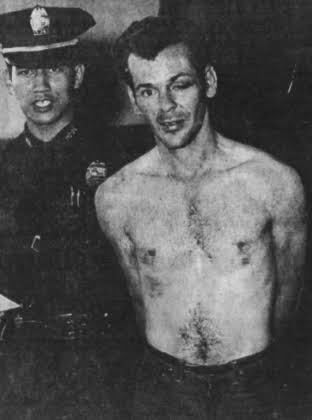
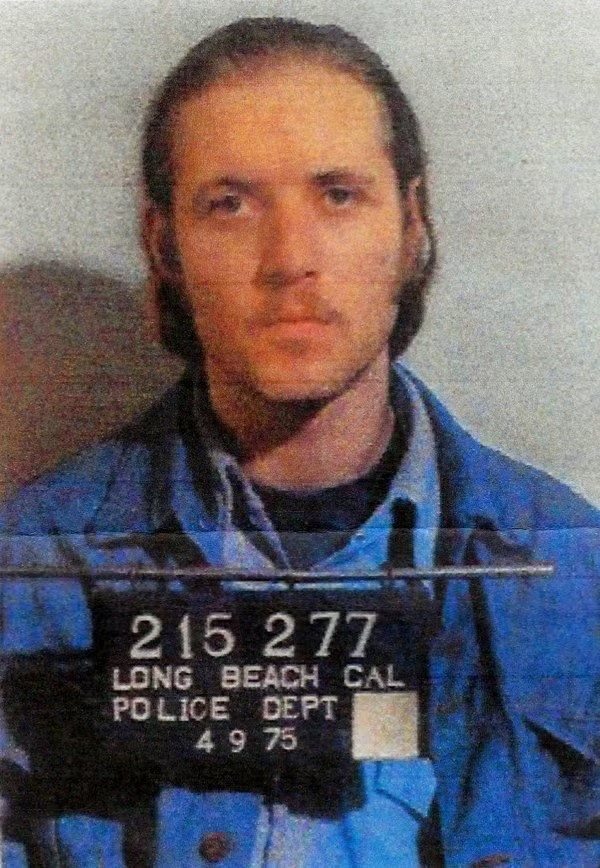
Clayton Anthony Fountain was one of the most violent and feared inmates in the history of the U.S. federal prison system. Over nine years, he was convicted of murdering six people across three different correctional systems, beginning with a superior officer in the Marine Corps and culminating in a series of attacks that left a fellow inmate and four federal prison guards dead. Fountain’s violence was not random but targeted, a brutal assertion of power within the rigid hierarchy of military and prison life.
Already serving a life sentence when he entered federal custody, Fountain’s murderous spree inside the walls of Leavenworth, Springfield, and Marion highlighted the extreme challenges of managing a generation of hardened, anti-authoritarian inmates. His final two attacks in October 1983, carried out in concert with notorious Aryan Brotherhood leader Thomas Silverstein, triggered the infamous "Marion Lockdown." This event permanently altered the American correctional landscape, ushering in the era of the supermax prison and its attendant policies of near-total isolation. Fountain would collect four life sentences before dying of natural causes, ironically in the same prison hospital where he had committed his most notorious massacre.
Early Life and Military Crime
Clayton Anthony Fountain was born into the world of the military on September 12, 1955, at Camp Lejeune, a major Marine Corps base in North Carolina. His father was a career Marine, and Fountain grew up in the disciplined, transient culture of a military family. It was a path he seemed destined to follow, and as a young man, he enlisted in the U.S. Marine Corps.
In 1974, the 19-year-old Fountain was deployed to the Philippines. There, his military career came to an abrupt and violent end. On October 19, 1974, Fountain had a confrontation with his platoon leader, Staff Sergeant Tomas Aguon Gali, a 27-year-old decorated Marine from Guam. The specific cause of their dispute is not a matter of public record, but Fountain's reaction was extreme. He shot and killed Staff Sgt. Gali.
The military justice system acted swiftly. In 1975, a court-martial found Fountain guilty of premeditated murder. He was sentenced to life imprisonment at hard labor and dishonorably discharged from the service. Because the military does not have its own long-term penal facilities for such sentences, Fountain was transferred into the custody of the Federal Bureau of Prisons, a move that would prove fatal for five more people.
Murder at USP Leavenworth
Fountain began his sentence at the U.S. Penitentiary in Leavenworth, Kansas, a maximum-security institution with a reputation for housing some of the nation's most dangerous criminals. Within this violent new world, Fountain not only adapted but thrived. He quickly became known as a dangerous and unpredictable inmate.
On September 2, 1979, Fountain and another inmate targeted a 21-year-old prisoner named Robert Frederick Knapps, Jr. In a coordinated attack, they cornered Knapps and bludgeoned him to death with a pipe. Faced with a first-degree murder charge and the possibility of a death sentence, Fountain accepted a plea bargain. He pleaded guilty to the lesser charge of second-degree murder. The court accepted his plea and handed him a second life sentence, to be served consecutively with his first. The murder solidified his reputation within the prison system as a "killer," a status that afforded both a degree of protection and a fearsome notoriety.
The Springfield Massacre
In the early 1980s, Fountain was transferred to the U.S. Medical Center for Federal Prisoners (MCFP) in Springfield, Missouri. This facility housed inmates with significant health issues but also contained a unit for the federal prison system's most mentally disturbed and dangerous individuals. It was here that Fountain's violence reached a new level of ferocity.
On the morning of October 21, 1983, Fountain, then 28, armed himself with a sharpened, homemade knife. He launched what authorities would later describe as a "bloody rampage." He first attacked and killed Corrections Officer Boyd H. Spikerman, 44. He then moved on, fatally stabbing Officer Robert L. Miller, 34, and Officer Albert C. Mar, 58. A fourth guard was also stabbed and critically wounded but survived. The entire attack was a whirlwind of brutal, targeted violence that left the institution in a state of shock and chaos.
Fountain was immediately subdued and placed in isolation. The federal judicial system moved with unusual speed. A jury was impaneled, and a trial was held the very next day. Prosecutors presented the overwhelming evidence, and Fountain, who had reportedly once said he would kill again to get the death penalty, offered little defense. On October 22, 1983, the jury found him guilty on three counts of first-degree murder. Following the verdict, they recommended that Clayton Fountain be sentenced to death.
The Marion Murders and Lockdown
The conviction and death sentence recommendation triggered Fountain's immediate transfer to the most secure and severe prison in the federal system at the time: the U.S. Penitentiary at Marion, Illinois. Marion had replaced Alcatraz as the BOP's "end of the line" institution, housing inmates considered too violent or escape-prone for any other facility. When Fountain arrived, the prison was a powder keg of racial tension and gang warfare, primarily between the Aryan Brotherhood and the DC Blacks.
Fountain was an associate of Thomas Silverstein, a notorious and influential leader of the Aryan Brotherhood who was also housed at Marion. On the very day of Fountain's conviction in Missouri, October 22, 1983, Silverstein was being escorted from a shower when he used a hidden shank to stab and kill Corrections Officer Merle Clutts.
The prison was thrown into a state of high alert. But just hours later, in a different cell block, the violence was repeated in a chillingly similar fashion. As 53-year-old Corrections Officer Robert Lee Hoffman was escorting Fountain from a shower, Fountain broke free, produced a 12-inch shank, and stabbed the officer repeatedly. Officer Hoffman died from his wounds.
The two officer killings on the same day, perpetrated by known associates, were the culmination of a series of violent incidents at Marion. It was the final straw for the Bureau of Prisons. The warden declared a state of emergency and placed USP Marion on a permanent, indefinite lockdown. Inmates were confined to their cells for 23 hours a day, meals were delivered through slots in the doors, and all communal dining, work, and educational programs were terminated. This new mode of operation, designed for total control and isolation, became known as the "Marion model." It served as the direct blueprint for the nation's first "supermax" prison, ADX Florence, and ushered in a new, harsher era of American corrections. The lockdown at Marion would remain in effect for the next 23 years.
The Victims
- Staff Sgt. Tomas Aguon Gali, 27 — October 19, 1974, in the Philippines. A career Marine from Agana, Guam, he was a husband and father of two. He was serving as Fountain's platoon leader when he was murdered.
- Robert Frederick Knapps Jr., 21 — September 2, 1979, at USP Leavenworth, Kansas. A young inmate from the Leavenworth area, he was bludgeoned to death by Fountain and an accomplice.
- Boyd H. Spikerman, 44 — October 21, 1983, at USMCFP Springfield, Missouri. A dedicated corrections officer at the federal medical center who was killed in the opening moments of Fountain's rampage.
- Robert L. Miller, 34 — October 21, 1983, at USMCFP Springfield, Missouri. A sergeant and corrections officer murdered alongside his colleagues during the attack at the Springfield facility.
- Albert C. Mar, 58 — October 21, 1983, at USMCFP Springfield, Missouri. A veteran corrections officer who was just a few years from retirement when he was stabbed to death by Fountain.
- Robert Lee Hoffman, 53 — October 22, 1983, at USP Marion, Illinois. A corrections officer and family man who was killed just hours after another officer was murdered in a separate incident that led to the prison's historic lockdown.
Trials and Sentencing
Clayton Fountain was tried four times for six murders. His 1975 court-martial for the murder of Staff Sgt. Gali resulted in his first life sentence. His 1979 guilty plea to second-degree murder for killing inmate Robert Knapps added a consecutive life sentence.
The trial for the Springfield massacre, while resulting in a guilty verdict and a jury's recommendation for death, led to a significant legal challenge. The federal death penalty had been reinstated by Congress in 1974 for certain crimes, but its constitutionality was still being debated in the courts. For years, Fountain's sentence remained in limbo. On May 14, 1987, U.S. District Judge Scott O. Wright issued a final ruling. He declared the specific federal death penalty statute under which Fountain was prosecuted to be unconstitutional, citing a lack of clear guidelines for the jury. Unable to impose the death sentence, Judge Wright sentenced Fountain to a third life term.
In 1985, Fountain stood trial for his final murder, that of Officer Robert Hoffman. A federal jury in Illinois convicted him of first-degree murder on April 24, 1985. This was the sixth murder for which he was held legally responsible. The following month, a judge formally sentenced him to a fourth life sentence, ordering it to be served consecutively with his others. By this point, Fountain was one of the most heavily sentenced inmates in the federal system, with no possibility of ever leaving prison alive.
Death in Prison
After the Marion lockdown, Fountain was subjected to the extreme isolation he had helped create. He spent the remainder of his life under the tightest security, a permanent resident of the system's most restrictive units.
On July 10, 2004, Clayton Fountain died from a heart attack. He was 49 years old. In a final, ironic chapter to his story, he died at the U.S. Medical Center for Federal Prisoners in Springfield, Missouri. He had been transferred back to the very hospital where, 21 years earlier, he had committed the triple murder that sealed his fate as one of the most infamous killers in the annals of American prisons. His body was cremated, bringing a quiet end to a life defined by extraordinary violence.