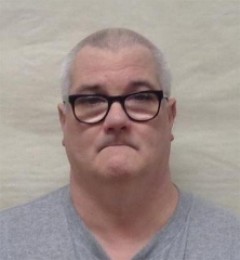
Wayne Henry Garrison: The Tulsa Child Killer
Overview
Wayne Henry Garrison’s criminal history began in childhood and escalated to a series of shocking murders that terrorized Tulsa, Oklahoma. Over a span of 17 years, he killed three children, two of them while he was still a minor himself. His first two killings, committed in 1972 and 1974, resulted in lenient sentences due to his youth. For years, he evaded justice for his third and most brutal murder, the 1989 slaying and dismemberment of 13-year-old Justin Wiles. The case went cold for a decade until advances in forensic science and the dogged efforts of cold-case detectives finally linked Garrison to the crime. His arrest in 1999, moments after being released from prison for another crime, brought an end to a long and disturbing pattern of violence. Convicted and initially sentenced to death, Garrison is now serving a life sentence, ensuring he will never harm another child.
Early Life and First Killing
Wayne Henry Garrison was born in Tulsa, Oklahoma, on August 26, 1959. Early signs of a violent nature were present from a young age. In one reported incident, he begged his grandmother for a pet rabbit, only to deliberately break the animal's neck the day after receiving it.
This cruelty foreshadowed a far more horrific act. On Halloween night in 1972, at the age of 13, Garrison was at his uncle’s home in Tulsa. In the middle of the night, he lured his 4-year-old cousin, Dana Dyane Dean, into the crawlspace beneath the house. There, he tied a felt headband around her neck and strangled her. When Dana’s father, James, awoke in the morning and couldn't find his daughter, he reported her missing around 7 a.m. A police search of the home soon led to the discovery of Dana's body in the crawlspace.
Garrison was quickly arrested and confessed to the murder. A detective who interviewed the 13-year-old was disturbed by his complete lack of remorse. Due to his age, a juvenile murder petition was reduced to a classification of "child in need of supervision." In December 1972, a judge ordered him committed to Central State Griffin Memorial Hospital, a psychiatric facility in Norman, Oklahoma, for treatment rather than sending him through the adult criminal justice system.
The Murder of Craig Neal
Garrison's institutionalization did little to curb his violent impulses. In 1974, after about a year and a half at the psychiatric hospital, the 14-year-old was granted a 10-day leave to visit his grandmother in Tulsa. On May 29, 1974, during this leave, he abducted a 3-year-old neighborhood boy named Craig Neal.
Garrison lured the toddler with promises of candy, then suffocated him, possibly with a dry-cleaning bag. He hid the boy's body under an abandoned house across the street from Craig's home. When Craig was reported missing, a search ensued. His body was discovered on June 3. Garrison confessed to the murder but refused to discuss the horrific discovery that the boy had been sexually mutilated.
He was arrested and charged with murder. Despite the brutality of the crime and his history, he was once again spared the full force of the law. On September 9, 1975, Garrison pleaded guilty to a reduced charge of second-degree manslaughter. He was sentenced to just four years in prison. On March 9, 1977, having served less than two years at the Oklahoma State Reformatory, Wayne Garrison was released at the age of 17. He returned to Tulsa, enrolled in high school, and eventually graduated.
The Murder of Justin Wiles
For more than a decade after his release, Garrison appeared to live a relatively normal life. He married, had a son, and opened his own auto body shop in Tulsa called Chopper's. But his violent tendencies had not disappeared.
On June 20, 1989, 13-year-old Justin Delbert Wiles, who lived just five houses down the street from Garrison, disappeared. Justin, who was deaf in one ear and partially deaf in the other, was a hardworking boy who often did odd jobs for neighbors to earn his own money. He was known to sweep floors and help out at Garrison's body shop, which was only four blocks from his home.
On the day he went missing, Justin was last seen with Garrison at the shop. Witnesses later testified that they saw Justin getting into Garrison's car. When Justin didn't return home, his family began a frantic search, putting 1,500 miles on their car over the next four days looking for him.
The search came to a devastating end on June 24, 1989. A fisherman at Lake Bixhoma, about 30 miles southeast of Tulsa, discovered a human hand and arm in a plastic bag in the mud. A wider search of the area uncovered more remains: a thigh in another bag, and a dismembered torso behind some rocks. The victim's head, with a rock tied to the jaw with wire, was found floating in the water. The body had been expertly dismembered post-mortem. The remains were identified as Justin Wiles through fingerprints and distinctive surgical scars behind his ears. The cause of death could not be determined by the medical examiner.
Investigation and Capture
Suspicion immediately fell on Wayne Garrison. He was the last person seen with Justin, and his dark history of killing children was well-known to Tulsa police. During questioning, police noticed a bruise on Garrison's forearm that they suspected was a bite mark. Garrison claimed the injury was from a fight with his brother, who he said had attacked him with an entrenching tool. Police photographed the mark.
A search of Garrison’s car revealed Justin’s fingerprint on the inside of the passenger window. Police also found copper wire in the trunk that appeared similar to the wire used to weigh down Justin's head. Despite this, prosecutors felt the evidence was entirely circumstantial and insufficient to secure a conviction.
Shortly after the murder, in July 1989, Garrison abruptly moved his family to Charlotte, North Carolina. The Justin Wiles case went cold, but Tulsa detectives never forgot about their prime suspect.
Over the next decade, Garrison continued to have run-ins with the law. In 1990, he was convicted of insurance fraud in Oklahoma and served a brief prison sentence. In February 1996, he was arrested in North Carolina for giving a strong prescription of narcotics to an 11-year-old boy he had abducted. He pleaded guilty in March 1997 and was sentenced to three to five years in prison.
As Garrison's 1999 release date from the North Carolina prison approached, detectives with the Tulsa Police Cold Case Squad renewed their efforts to finally bring him to justice for Justin Wiles's murder. They knew that without a solid piece of physical evidence, Garrison would walk free and potentially kill again.
In 1998, a detective reviewing the case file looked at the 1989 photograph of the mark on Garrison's arm and became convinced it was a bite mark. In August 1999, with his family's permission, Justin Wiles's body was exhumed. A forensic odontologist created a mold of Justin's teeth. The mold was a match to the injury on Garrison's arm, providing the crucial link detectives needed. Further analysis in 1999 of the wire found on Justin's head revealed traces of automotive strip caulk that was the same type as wire found in Garrison's car.
On October 22, 1999, Wayne Garrison was released from the Columbus Correctional Institution in North Carolina. As he stepped into the prison parking lot, Tulsa detectives and local authorities were waiting. He was arrested for the first-degree murder of Justin Wiles, a decade after the crime.
Trial and Sentence
Garrison was extradited to Oklahoma to stand trial in November 2001. He maintained his innocence. His defense attorneys argued that the ten-year delay in bringing charges had prejudiced his case, as some potential defense witnesses had died. They also attempted to point the finger at another man, George Kent Wallace, a suspected serial killer who had been executed in Oklahoma in 2000 for other murders. However, prosecutors established that Wallace had never been a suspect in the Wiles case.
The prosecution built a powerful circumstantial case. They presented the new forensic evidence of the bite mark and the wire. Witnesses testified to seeing Justin with Garrison on the day he disappeared. The jury also heard about Garrison's disturbing history: the killings of Dana Dean and Craig Neal.
After deliberating for six hours, the jury found Wayne Henry Garrison guilty of first-degree murder. His formal sentencing was delayed after he attempted suicide in jail. In January 2002, a judge formally sentenced him to death, in accordance with the jury's recommendation. The jury found two aggravating circumstances: that Garrison had a prior felony conviction involving violence and that he posed a continuing threat to society. When asked if he had anything to say, Garrison stated, "I did not kill Justin Wiles."
Garrison's death sentence was later overturned on appeal. In 2007, he accepted a plea deal. In exchange for waiving his right to a new sentencing trial, his death sentence was commuted to life in prison without the possibility of parole. Justin Wiles's mother, Dorothy Farrar, expressed her relief, stating that as long as Garrison could "never hurt another child again," the specific sentence didn't matter.
The Victims
Wayne Garrison's crimes left a devastating impact on three families, cutting short the lives of their young children.
- Dana Dyane Dean, 4 — On October 31, 1972, in Tulsa, young Dana was killed by her own teenage cousin. He lured her into a crawlspace and strangled her, a senseless act of violence that was the first indication of his capacity for murder.
- Craig Neal, 3 — On May 29, 1974, in Tulsa, Craig was a toddler playing in his neighborhood when he was abducted by Garrison, who was on a temporary leave from a psychiatric hospital. His life was ended by a predator who should have been institutionalized.
- Justin Delbert Wiles, 13 — On June 20, 1989, in Tulsa, Justin was a kind-hearted teenager known for his willingness to work for what he wanted. He had hearing and speech impediments but was a typical boy who enjoyed movies and video games. His trust in a neighborhood acquaintance led to his brutal murder and dismemberment.
Aftermath and Legacy
Wayne Henry Garrison is currently serving his life sentence at the Oklahoma State Penitentiary in McAlester. His case stands as a chilling example of how the juvenile justice system can sometimes fail to recognize and contain a budding predator. His ability to commit two murders as a teenager and receive minimal sentences allowed him to be free as an adult to kill again.
The investigation into the murder of Justin Wiles also highlights the importance of cold-case units and the evolution of forensic science. For ten years, Garrison believed he had gotten away with murder. It was the persistence of detectives and the scientific analysis of old evidence that finally brought him to justice, providing a long-awaited, though incomplete, sense of closure for the Wiles family and the Tulsa community.