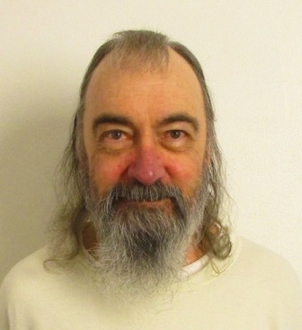
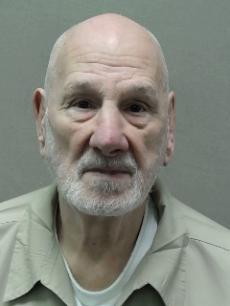
Randy William Gay: The Arkansas Argument Killer
Overview
Over a span of 33 years, Randy William Gay murdered three people in Arkansas, each killing erupting from a sudden argument and executed with a shotgun. His victims included his father-in-law in 1978 and his own father in 1991. For these first two murders, Gay received remarkably light sentences and was paroled after serving only a fraction of his time. This pattern of violence and judicial leniency came to a dramatic end after he killed a third person, a woman he had just met, in 2011. Convicted of capital murder, the man who had twice been sent to prison for killing was sentenced to death, becoming the first person to receive a death sentence in Garland County in over 60 years.
Early Life and Background
Randy William Gay was born on September 1, 1958, in Garland County, Arkansas, into a deeply troubled family. His mother, who had reportedly attempted to have an abortion while pregnant with him, abandoned Randy and his sisters when they were young. Their father, Glen Harold Gay, was left to raise the children alone.
According to Randy's older sister, Gloria Lindsey, their father struggled with anger issues and was a strict, and at times, abusive parent. She described Glen as verbally and sometimes physically abusive toward Randy. Compounding this trauma, Lindsey also stated that her brother was sexually abused by older boys when he was about six years old. She left home and married at 15 to escape the environment. Their father eventually remarried, but his relationship with his new wife was unstable, and Randy often found himself defending his stepmother during his father's outbursts.
As a teenager, Randy met and married Sherry Buford. This relationship would place him in the orbit of his first victim. Throughout his adult life, Gay struggled with alcoholism, which escalated with each failed marriage and seemed to fuel his violent temper.
The First Murder: James Kelly
On August 12, 1978, a dispute broke out at the home Randy Gay, then in his late teens, shared with his wife, Sherry, and her father, 41-year-old James Kelly. The argument escalated, and Gay went to his car, retrieved a shotgun, and shot Kelly in the chest, killing him.
When police arrived, Gay claimed he had acted in self-defense, alleging that Kelly had threatened to kill him. Fearing that a jury might acquit him on these grounds, prosecutors offered Gay a plea agreement. He pleaded guilty to second-degree murder and was sentenced to ten years in prison with five years suspended. In a stunning display of leniency, he was paroled after serving only nine months. He would violate his parole multiple times for offenses including battery and DWI, but ultimately served less than two years for the murder.
The Second Murder: Glen Harold Gay
After his release, Gay's life continued its downward spiral of alcohol abuse and instability. He married again, this time to a woman named Janice Cochran. On May 4, 1991, the couple was camping near the Ouachita River when they were visited by Randy's father, 61-year-old Glen Gay.
Randy and his father went fishing, but Janice soon heard them yelling and swearing at each other. Randy returned to their campsite alone, grabbed his shotgun, and locked Janice inside their camping bus. She then heard a single gunshot. When Randy let her out, she found Glen on the ground, moaning from a gunshot wound to the head. Randy pulled her away as she tried to help his father.
Under duress, Janice helped Randy load Glen's body into their boat. They traveled downriver, placed the body in Glen's truck, and drove away. When initially questioned by police, both Randy and Janice denied knowing where Glen was. They later turned themselves in, and Janice revealed the truth after first trying to claim she shot Glen in self-defense. Randy led investigators to his father's body.
Janice Cochran was convicted of manslaughter and served eight months in prison. In 1992, Randy Gay was convicted of the second-degree murder of his own father and sentenced to 20 years. He was paroled in 2000 after serving just eight years of his sentence. His sister, Gloria, later said she did not blame Randy for killing their father, stating, "Of all the things I had experienced and seen. I of all people can understand how it happened."
The Third Murder: Connie Ann Snow
Freed for a second time after committing murder, Gay married a third time, but this relationship also dissolved amid his escalating alcoholism and violence. In 2008, he was convicted of making terroristic threats against a store owner who had asked him to stop loitering, receiving a 12-year suspended sentence.
On May 10, 2011, Gay gave a ride to 49-year-old Connie Ann Snow, a woman he had just met. While in his truck at a logging site in Garland County, the two got into an argument. Gay ordered Snow to get out of his truck, but she refused. Witnesses working on logging equipment nearby saw Gay get out, retrieve a "bolt action long gun" from his toolbox, and continue arguing with the woman.
He again ordered her out of the vehicle. As she was complying, Gay shot her in the face, killing her instantly. He then put her body back in his truck, drove to the Ouachita National Forest, and dumped her remains. He was arrested the following day.
The Victims
- James Kelly, 41 — August 12, 1978, in Garland County, Arkansas. He was Randy Gay's father-in-law and was shot and killed during a family dispute.
- Glen Harold Gay, 61 — May 4, 1991, in Montgomery County, Arkansas. He was Randy Gay's father. Despite a history of being an abusive parent, he was shot by his son during an argument on a camping trip.
- Connie Ann Snow, 49 — May 10, 2011, in Garland County, Arkansas. Born in Modesto, California, she was a mother to two daughters, Mary Beth and Stevy. Her obituary noted she was survived by her husband, mother, and several brothers.
Investigation and Trial
The investigation into Connie Snow's murder was swift. Witnesses at the logging site identified Randy Gay, and he was arrested on May 11, 2011. Given his history, prosecutors charged him with capital murder and announced their intention to seek the death penalty.
Gay's first trial in 2013 ended in a mistrial due to juror misconduct. He was retried in March 2015. The jury found him guilty of capital murder.
During the sentencing phase, the prosecution, led by Terri Harris, detailed Gay's two prior murder convictions. Harris argued that life in prison would be like "sending him home," as he had twice failed to be rehabilitated. She told the jury that Gay had "caused the violent deaths of three people for no particular reason" and that "the time for leniency for this defendant has come to an end, and it needs to end today."
The defense, led by Public Defender Mark Fraiser, pointed to Gay's traumatic childhood, including the abuse he suffered at the hands of his father. Fraiser argued that Glen Gay had been "beaten up in court and was not here to defend himself." The prosecution countered that many people suffer difficult childhoods without becoming murderers.
Sentence and Appeals
On March 19, 2015, after deliberating for only three hours, the jury recommended a sentence of death. The judge formally imposed the sentence the next day. Upon hearing his fate, Gay simply told the judge, "Take care, judge," to which the judge replied, "You, too." The sentence was historic, as no one had been sent to death row from Garland County since the 1950s.
Randy Gay currently resides on death row at the Varner Unit prison in Arkansas. His conviction and death sentence were affirmed by the Arkansas Supreme Court in 2016. He has since filed multiple post-conviction appeals, arguing ineffective assistance of counsel, among other claims. These appeals have been repeatedly denied, with the Arkansas Supreme Court upholding the circuit court's decisions as recently as 2022.