Robert Willard Liberty: The Candlelight Killer
Overview
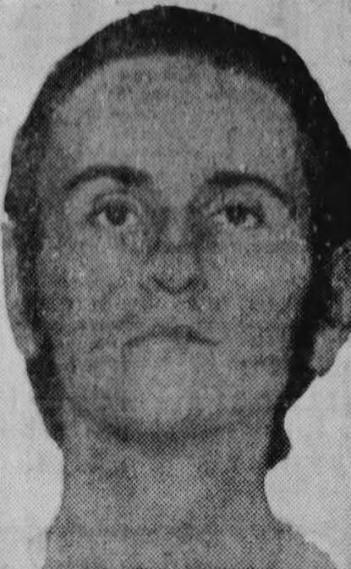
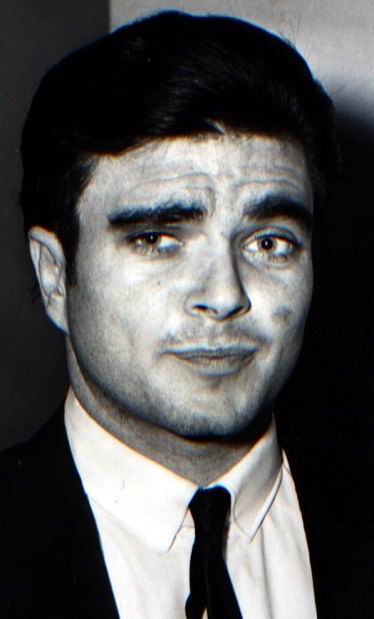
Robert Willard Liberty, known by the chilling moniker "The Candlelight Killer," carved a brief but deeply disturbing chapter in the history of Southern California crime. Between 1966 and 1970, his violence escalated, marked by bizarre, ritualistic crime scenes that included the careful placement of candles around his victims. His criminal career began with the murder of his girlfriend, for which he was found not guilty by reason of insanity. A series of systemic failures in the mental health system led to his release, after which he killed two more men. His final spree was characterized by taunting messages left for police, a brazen challenge from a man who seemed to crave notoriety. Liberty's violent path was not halted by a courtroom verdict but by a fellow inmate who murdered him in his jail cell while he awaited trial for his last two killings. His case remains a harrowing study of a disturbed mind and a stark example of the tragic consequences that can follow when a dangerous individual slips through the cracks of the justice and mental health systems.
Early Life and First Murder
Robert Willard Liberty was born in California on May 15, 1947. Little is publicly known about his childhood, but his late teenage years were marked by significant mental distress. In 1966, at the age of 19, Liberty was admitted to the Orange County Medical Center's psychiatric ward after a suicide attempt. It was there he met 31-year-old Marcella Landis, who was also a patient recovering from her own suicide attempt. A relationship formed between the two, and after their respective releases, Liberty moved into Landis's apartment at 8382 Westminster Boulevard in Westminster.
The relationship, born from shared vulnerability, ended in horrific violence on the night of June 4, 1966. Liberty strangled Marcella Landis to death with one of her own silk stockings. What followed was not a panicked escape but a macabre, methodical ritual. He dressed her body, carefully applied makeup to her face, and positioned her on the living room couch. He then placed a Bible on her chest and surrounded her body with lit candles from head to toe. After conducting what he later described as a funeral service in the presence of her pets, Liberty himself called the Westminster police to report her death.
When officers arrived, they discovered a surreal scene: Landis's body arranged as a grim centerpiece, and Liberty sitting calmly on the floor beside her, strumming a guitar and humming. He was immediately arrested on suspicion of murder.
During his evaluation, three court-appointed psychiatrists examined him, with two concluding he was legally insane. On August 26, 1966, a judge declared Liberty insane and unfit to stand trial, ordering him to spend 90 days at Atascadero State Hospital for evaluation. By February 1967, the court accepted his plea of not guilty by reason of insanity for the murder of Marcella Landis. He was subsequently committed to the Vacaville State Hospital for the criminally insane.
A Flawed Release and a Second Murder
Liberty spent the next few years in California's state hospital system. The prevailing psychiatric opinion eventually shifted, and by 1969, doctors believed he had recovered. His path to freedom was accelerated by a critical administrative mistake. On June 2, 1969, a doctor at Metropolitan State Hospital mistakenly labeled his file as "discharged," and Liberty simply walked out. Although he was located and briefly returned to the Orange County Medical Center, the momentum was in his favor. On September 15, 1969, a panel of psychiatrists declared him legally sane, and he was released without any requirement for future supervision.
Freed from institutional care, Liberty moved to Costa Mesa and rented an apartment at 350 Avocado Street with three other men, one of whom was Randall G. Allen and another Robert Connolly. His reintegration into society quickly unraveled. On the evening of March 12, 1970, a woman called the Huntington Beach Police to report what she thought was a drunk man lying in a ditch. The man was 25-year-old Thomas Carmen Astorina Jr., one of Liberty's roommates. He wasn't drunk; he had been shot in the stomach with a .22 caliber pistol and was dead.
Astorina was a father of two who was separated from his wife. The motive for his murder was reportedly a trivial argument with Liberty over a television set. Though one roommate, Randall Allen, was initially booked on suspicion of murder, detectives soon focused on Liberty, whose violent past was known. By the time they identified him as the primary suspect, Liberty had vanished. The FBI issued a warrant for his arrest on a charge of unlawful flight to avoid prosecution.
The Final Murder and Manhunt
Now a fugitive, Liberty's behavior grew more audacious. He was joined by a female companion, Kendall Bierly. On June 6, 1970, the pair were hitchhiking in Long Beach when they were picked up by 17-year-old Richard Greytak. Liberty quickly produced a .22 caliber pistol and hijacked the car. He first forced Greytak to drive to his own mother's house in Westminster, where he robbed her of $45 at gunpoint.
With their young hostage still in their control, Liberty and Bierly then ordered Greytak to drive them south to San Diego. There, Liberty directed him to an apartment belonging to 53-year-old Robert J. Irion. In a grim coincidence that underscored the failures of the system that had released Liberty, Irion was a nurse who had once been a patient at the same state mental hospital where Liberty had been confined.
Inside the apartment, Liberty and Bierly tied up both Irion and Greytak. For hours, they ransacked the home, holding the two men captive. As midnight approached, Liberty's violence erupted. He brutally beat Robert Irion to death. He then reprised his ritualistic signature. He arranged Irion's body on the bedroom floor and placed lit candles around the victim's head. This time, he added a new element of terror. Using a grease pencil, he scrawled two taunting messages on the bedroom door: "The Candlelight Killer Strikes Again" and "Catch Me If You Can."
Liberty and Bierly fled in Irion's car, leaving Richard Greytak bound but alive in the apartment. For seven agonizing hours, Greytak struggled against his restraints. He finally managed to free himself and called the police, providing investigators with a firsthand account of the murder and a name for their newly christened "Candlelight Killer." A massive manhunt was launched.
The Victims
- Marcella Landis, 31 — Killed on June 4, 1966, in Westminster. She met Robert Liberty while both were patients in a psychiatric ward following suicide attempts. Liberty strangled her in their shared apartment and staged her body in a ritualistic manner.
- Thomas Carmen Astorina Jr., 25 — Murdered on March 12, 1970, in Costa Mesa. A father of two, he was one of Liberty's roommates and was shot and killed following an argument, reportedly over a television.
- Robert J. Irion, 53 — Beaten to death on June 7, 1970, in San Diego. A nurse, he had previously been a patient at the same state mental hospital as Liberty. He was killed in his apartment while a teenage kidnap victim was forced to watch.
Investigation and Capture
The manhunt for Robert Liberty and Kendall Bierly became a top priority for law enforcement across the Southwest. The name "The Candlelight Killer," provided by Liberty himself, fueled media attention and public fear. The key to the investigation was the detailed testimony of Richard Greytak, the teenager who had survived the terrifying ordeal.
Liberty's flight from justice was short-lived. He, Bierly, and a new, third accomplice, 17-year-old Glenn Alan Fawcett, made their way to Colorado. On June 9, 1970, just two days after Irion's murder, the trio's crime spree came to an abrupt end in Colorado Springs. They held up a motel, stealing $109 and kidnapping the owner's wife. The motel owner immediately alerted the police. Officers quickly located the fugitives' vehicle, rescued the kidnapped woman unharmed, and arrested Liberty, Bierly, and Fawcett.
While in custody in Colorado, Liberty made at least one attempt to escape, digging halfway through a cinder block wall with another inmate before being discovered.
Awaiting Trial and Death in Jail
Extradited back to California, Liberty was charged with the murders of Thomas Astorina and Robert Irion. Kendall Bierly was also charged in connection with the crimes. In court, Liberty once again entered a plea of not guilty by reason of insanity. This time, however, the legal process would not run its course.
On January 20, 1971, Robert Liberty was found dead in his cell at the San Diego County Jail. He and his cellmate, Paul Eugene Rankin, had both been strangled. The killer was another inmate in their cell block, 24-year-old Timothy Earl Dudley, who was himself awaiting trial for murder. Dudley later pleaded guilty to the murders of Liberty and Rankin and, in April 1971, was sentenced to life in prison. Robert Willard Liberty was 23 years old when he died.
Aftermath and Legacy
The case of Robert Liberty is a tragic illustration of the profound dangers of a fractured and overburdened mental health system. His initial successful insanity plea for the murder of Marcella Landis placed him in a therapeutic system rather than a punitive one. However, a combination of a clerical error and a psychiatric evaluation that tragically misjudged his state of mind unleashed a violent and unrepentant killer back into society.
The moniker "The Candlelight Killer," a name he gave himself, ensured his infamy. The bizarre rituals and taunting notes spoke to a deep-seated narcissism and a desire for public recognition of his crimes. While his motives were never fully explored in a courtroom, his actions are often attributed to sexual sadism.
Ultimately, the man who dared police to "Catch Me If You Can" was not brought to final justice by the system he so effectively manipulated. Instead, he met a violent end at the hands of another killer, silenced before he could be held fully accountable for the lives he destroyed. The case leaves a legacy of sorrow for the families of his victims and serves as a chilling reminder of the potential for catastrophic failure at the intersection of mental health and criminal justice.