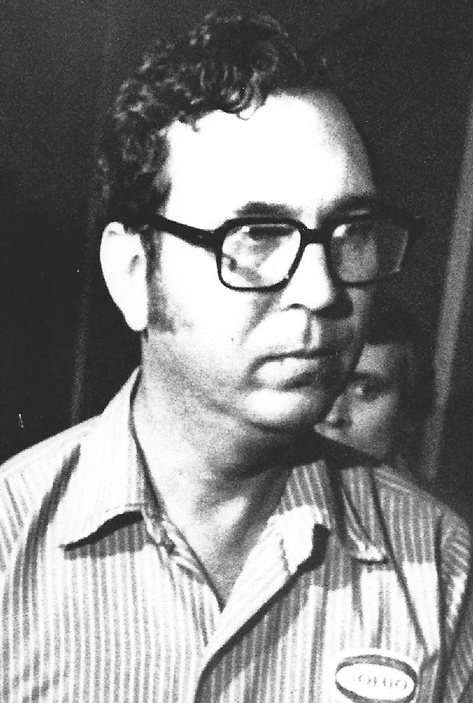
Jeremiah McCray: The Itinerant Killer
Overview
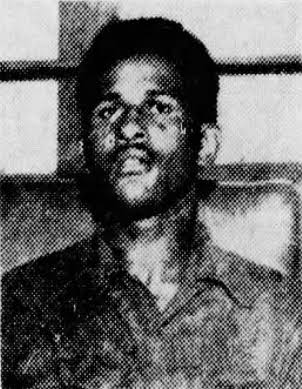
Jeremiah McCray was an American serial killer whose violent crime spree spanned four states between 1956 and 1958. An itinerant laborer, McCray's path of robbery and murder left five people dead, primarily elderly individuals he targeted for small amounts of cash. His crimes were marked by extreme brutality and a chilling detachment. McCray's two-year rampage came to an abrupt halt in Virginia, where his arrest for one murder led to a string of confessions that unveiled the full scope of his violence. His subsequent trial, conviction, and swift execution in 1958 closed the book on a man whose transient life brought permanent loss to families across the American South and Midwest.
Early Life and Background
Born in 1935 in the small rural town of Buchanan, Georgia, Jeremiah McCray's beginnings were steeped in the hardships of the Great Depression-era South. He was the son of Black sharecroppers, and his family was large, with some accounts suggesting he had as many as twenty siblings. Life was a constant struggle against poverty, offering little in the way of comfort or opportunity.
McCray's formal education was fleeting. He claimed to have attended school for only about three years and, as a result, never learned to read or write. This lack of basic literacy severely limited his prospects. He dropped out of school and entered the life of an itinerant farm laborer, a path that kept him constantly moving in search of seasonal work. This transient lifestyle defined his young adulthood, taking him from state to state, never putting down roots. When agricultural work was unavailable, McCray's need for money led him to petty crime, committing thefts and burglaries to survive. This pattern of minor offenses would eventually escalate into a series of violent and deadly encounters.
The Murders
McCray's descent into murder began in early 1956. While employed on a farm in Talladega, Alabama, he and an acquaintance hatched a plan to rob someone for cash. On February 27, 1956, they traveled to the nearby city of Anniston and broke into the home of Daisy F. Gilbert, a 73-year-old woman. When she confronted them, the two men viciously beat her to death with sticks. They fled the scene with just $80 and a pistol. The crime was discovered by Gilbert's daughter-in-law, Ezmi Clifford, who found her body and alerted the police.
For more than a year, McCray's violent streak lay dormant. Then, in the summer of 1957, the killings resumed. On July 1, he and a different accomplice broke into a small house in Washington Court House, Ohio, the residence of 86-year-old Sarah DeWitt. They murdered her and stole $250 before disappearing. There is some dispute over the exact weapon used; McCray later claimed it was a hammer, while authorities believed it was a hatchet.
Just three days later, on the Fourth of July, McCray was in Atlanta, Georgia. He had been hired to do odd jobs for 79-year-old Carrie B. Hanbury. In a sudden and brutal explosion of violence, McCray attacked her 53-year-old son, Robert, on the porch of their home, beating him to death with a shovel. He then entered the house and assaulted Carrie Hanbury, attacking her with a flashlight and a screwdriver, leaving her unconscious and for dead. Believing he had killed them both, McCray stole cash and other personal items and fled. Miraculously, Carrie Hanbury survived the horrific attack, though she was left with severe physical and psychological trauma.
Later in 1957, McCray was arrested in Freedom Township, Pennsylvania, for burglary after stealing a constable's badge and several watches. He was convicted and imprisoned but was paroled for unknown reasons in early January 1958.
Upon his release, McCray made his way to Colonial Heights, Virginia. On January 15, 1958, he broke into the home of 74-year-old Virginia Maclin Stevens. When she discovered him inside, he stabbed her in the neck with a knife, severing her spinal cord. As she lay dying, he stomped on her body and stabbed her repeatedly in the head before fleeing. He hitched a ride to Richmond and then to Fredericksburg, where he was later picked up for loitering.
The final, and perhaps most brutal, of McCray's murders occurred on February 2, 1958, in Ladysmith, Virginia. There, McCray had become acquainted with a 20-year-old fellow laborer named Rush Reager. The two men conspired to rob Jeanette M. Griffin, a 49-year-old widow who lived nearby. That evening, Reager went to Griffin's home and tied her up. He then fetched McCray, and the two returned to the house. They proceeded to rape her before McCray beat her to death with pieces of firewood. They stole several items, including a pair of jeans that McCray would later wash, attempting to remove the bloodstains.
The Victims
- Daisy F. Gilbert, 73 — A resident of Anniston, Alabama, she was killed in her home on February 27, 1956. Her life was taken by two intruders during a robbery that netted them $80 and a pistol.
- Sarah DeWitt, 86 — Living in Washington Court House, Ohio, she was murdered during a home invasion on July 1, 1957. Her killers stole $250 after ending her life.
- Robert Hanbury, 53 — He was beaten to death with a shovel on the porch of his Atlanta, Georgia, home on July 4, 1957. He was killed while trying to defend his elderly mother from Jeremiah McCray.
- Virginia Maclin Stevens, 74 — A resident of Colonial Heights, Virginia, she was stabbed and beaten to death in her home on January 15, 1958, after she confronted McCray during a burglary.
- Jeanette M. Griffin, 49 — A widow from Ladysmith, Virginia, she was the last known victim, murdered on February 2, 1958. She was brutally assaulted and killed in a robbery planned by McCray and an acquaintance.
Investigation and Capture
The initial investigation into the murder of Virginia Maclin Stevens in Colonial Heights went astray. Police focused their attention on her son, Walter, who was held as the primary suspect. Jeremiah McCray was brought in for questioning but managed to deflect suspicion, passing two polygraph tests and being subsequently cleared.
The break in the multi-state crime spree came with the investigation into the murder of Jeanette M. Griffin. Her body was discovered by her son on the morning of February 3, 1958, the day after the attack. Police in Caroline County quickly zeroed in on McCray and his associate, Rush Reager, who were known to be in the area and lived nearby. Both men were arrested and transported to police barracks in Richmond for interrogation.
It was during this questioning that the case broke wide open. McCray, perhaps sensing the weight of the evidence against him in the Griffin murder, made a series of stunning confessions. He not only admitted his part in killing Jeanette Griffin but also confessed to the murder of Virginia Stevens, the very crime for which he had been cleared by a lie detector test just weeks earlier. He went on to admit to the murders in Alabama, Ohio, and Georgia. While he was sparse with details and refused to name his accomplices in the earlier crimes, he provided enough information for investigators to definitively link him to the unsolved homicides in their jurisdictions. Based on his methods, police in Georgia also considered him a suspect in other crimes in the Atlanta area between 1955 and 1957, but no further charges were filed due to a lack of evidence.
Trial and Sentence
With confessions to murders in multiple states, authorities had to decide where to prosecute McCray first. Although he faced charges in both Virginia and Alabama, the decision was made to hold his initial trial in Virginia, where he was already in custody for the Griffin murder.
As a standard procedure, the court ordered a psychiatric evaluation. McCray was sent to a hospital in Bowling Green, where three court-appointed psychiatrists examined him. Their conclusion was that while McCray possessed low intelligence, he was legally sane, capable of understanding the difference between right and wrong, and therefore fit to stand trial.
At a preliminary hearing, McCray pleaded guilty. However, he later reversed this decision and entered a plea of not guilty, setting the stage for a jury trial in Caroline County for the murder of Jeanette M. Griffin. The prosecution presented a formidable case. Over a dozen witnesses testified, including Griffin's son and the family with whom McCray had been staying. The physical evidence was damning, featuring bloodstains found on McCray's shoes, shirt, and even his ear.
When he took the stand, McCray admitted under cross-examination to robbing and assaulting Griffin. However, he denied raping her and claimed he was uncertain if his actions had actually caused her death. The jury was not swayed. They found him guilty on all counts and, given the brutality of the crime, sentenced him to death.
McCray's court-appointed lawyer did not immediately plan to pursue further appeals. A plea for clemency was sent to Virginia Governor J. Lindsay Almond, but it was denied on April 10, 1958. With his legal options exhausted, Jeremiah McCray's execution was scheduled. On April 18, 1958, just over two months after his arrest, he was put to death in the electric chair at the Virginia State Penitentiary. When asked if he had any last words, he reportedly said he hoped everyone was satisfied. Two months later, his accomplice, Rush Reager, was convicted of rape for his role in the Griffin murder and sentenced to life in prison.
Aftermath and Legacy
Jeremiah McCray's case stands as a stark illustration of the terror a single, transient individual can inflict upon multiple communities. His crimes, committed for paltry sums of money, left a trail of devastation and grief across four states. The victims were often the most vulnerable, targeted in the sanctity of their own homes. The swiftness of his capture, confession, trial, and execution reflects a different era of the American justice system, particularly in cases of such clear-cut and heinous violence. Today, McCray is remembered not for any complex motive or criminal genius, but for the sheer brutality and senselessness of his actions, a grim footnote in the annals of mid-20th-century American crime.