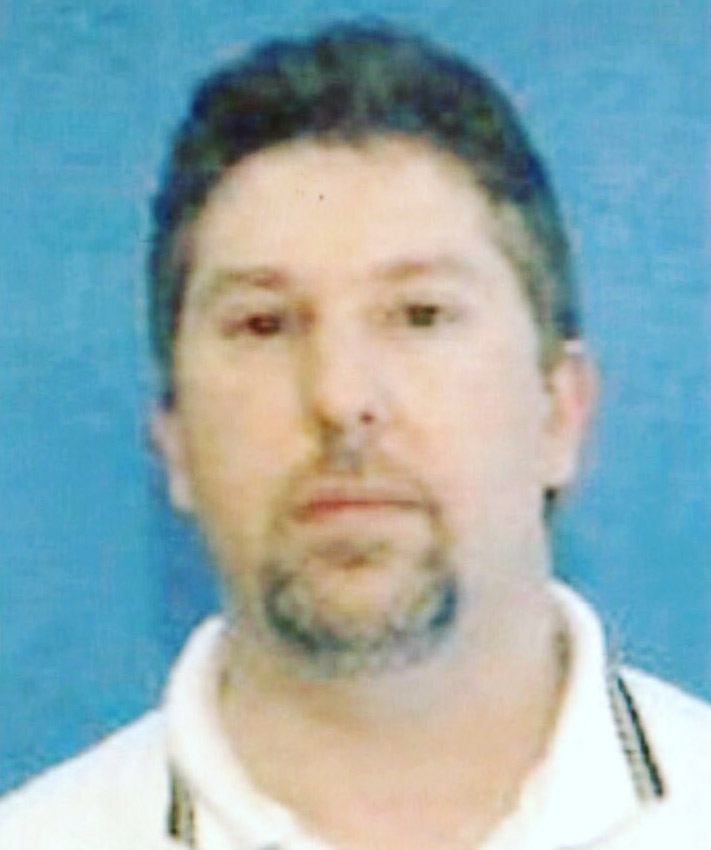
Joseph Dunbar Medley: The Escaped Convict Killer
Overview
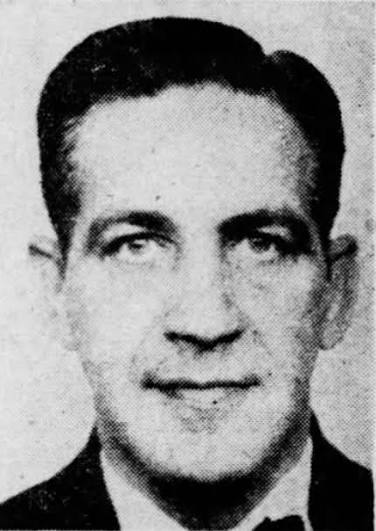
Joseph Dunbar Medley was a career criminal whose suave demeanor and polished appearance masked a ruthless predator. In late 1944, after serving ten years of a lengthy sentence for armed robbery, he escaped from a Michigan prison and embarked on a four-month, multi-state crime spree that left three women dead. Moving from city to city, Medley used his charm to gain the trust of his victims before robbing and murdering them.
His trail of terror stretched from New Orleans to Chicago and finally to Washington, D.C. The murders, connected by their similar motives and Medley's status as a high-profile fugitive, triggered a major FBI manhunt. He was captured in St. Louis in March 1945, but his story took another dramatic turn. While on death row awaiting execution, Medley and another condemned inmate staged a daring escape from the D.C. Jail, leading to his brief but highly publicized taste of freedom. Recaptured within hours, he was ultimately executed for his crimes in December 1946.
Early Life and Descent into Crime
Joseph Dunbar Medley was born in Pittsburgh, Pennsylvania, on July 22, 1901. Little is known about his childhood, but as a young man, he relocated to Chicago, where he found work as a purchasing agent and married, though the union later ended in divorce. His legitimate career path was quickly derailed by a turn to crime. An early conviction for obtaining money under false pretenses in Arkansas landed him a 20-month prison sentence.
After his release, Medley attempted to go straight, securing a position as a field representative for the General Motors Acceptance Corporation. However, his criminal record was discovered just four months into the job, and he was promptly fired. From that point forward, Medley abandoned any pretense of a law-abiding life.
By 1933, he had emerged as the leader of a Michigan-based robbery gang. The crew gained notoriety in October of that year when they abducted Louis E. Brooks, a wealthy manufacturer, and robbed him of $45,000 in bonds and jewelry. The brazen crime sparked a significant police investigation and a months-long manhunt for Medley and his accomplices. Law enforcement finally caught up with him in March 1934. Facing a mountain of evidence, Medley pleaded guilty to armed robbery and was sentenced to serve 30 to 60 years in a Michigan state prison.
A Calculated Escape
For the next decade, Joseph Medley was inmate number 38228. Behind bars, he cultivated an image as a model prisoner. His intelligence and clerical skills were noted by prison officials, and he eventually earned a position of trust as a clerk for the warden. This role gave him access and a degree of freedom that would prove critical to his next move.
On November 27, 1944, after ten years of incarceration, Medley vanished. He had not only planned his escape but also financed it by stealing $775 that his fellow inmates had collected for a war bond drive. With a significant head start and cash in his pocket, the 43-year-old fugitive made his way south, determined to start a new life outside the law.
The First Murder: Laura Fischer
Medley's first destination was New Orleans, Louisiana. He checked into the De Soto Hotel, a bustling establishment where a lone traveler could easily blend in. It was here that he crossed paths with 28-year-old Laura Fischer, an Austrian woman who was also a guest. On December 22, 1944, just under a month after his escape, Medley murdered her. He drowned Fischer in her own bathtub, then ransacked her room, stealing her money and jewelry. He checked out of the hotel without raising any suspicion and immediately left the city, heading north.
The Second Murder: Blanche Zimmerman
Medley's next stop was his old stomping ground of Chicago, Illinois. He took a room at the Atlantic Hotel and began looking for his next victim. On February 17, 1945, he targeted Blanche Zimmerman, a 38-year-old woman. The exact circumstances of their meeting are unclear, but the encounter ended with her death. Medley poisoned Zimmerman with a lethal combination of benzedrine and alcohol. After she was dead, he stole her valuable fur coat and two ruby rings. Just as he had in New Orleans, Medley quickly left the scene and the city, this time traveling east toward the nation's capital.
The Final Murder: Nancy Boyer
Arriving in Washington, D.C., Medley adopted the alias Larry Fischer. On the evening of March 5, 1945, he attended an all-night poker party in the apartment of Nancy Boyer, a 50-year-old divorcée. Medley, described by some as debonair and suave, stayed behind after the other guests had departed. Alone with Boyer, his violent intentions became clear. He shot her three times, killing her. He then stole her fur coat, an emerald ring, and several hundred dollars in cash before fleeing the apartment.
By this point, however, law enforcement agencies in three states were beginning to connect the dots. The murders of three women, all robbed of valuable furs and jewelry, pointed to a single, traveling perpetrator. With Medley's description and status as an escaped convict, the FBI designated him a prime suspect and initiated a federal manhunt.
The Victims
Joseph Medley's proven victims were three women he encountered and killed during his four-month flight from the law.
- Laura Fischer, 28 — On December 22, 1944, in New Orleans, Louisiana, Ms. Fischer, an Austrian native staying at the De Soto Hotel, was found drowned. Medley stole her money and jewelry after killing her.
- Blanche Zimmerman, 38 — On February 17, 1945, in Chicago, Illinois, Ms. Zimmerman was found dead in her room at the Atlantic Hotel. She had been poisoned, and Medley made off with her fur coat and rings.
- Nancy Boyer, 50 — On March 5, 1945, in Washington, D.C., Ms. Boyer was shot and killed in her apartment after Medley stayed behind following a poker party she hosted. He stole her cash, a fur coat, and a ring.
Investigation and Capture
The murder of Nancy Boyer in Washington, D.C., proved to be Medley's undoing. Investigators at the scene quickly identified him, under his alias Larry Fischer, as the last person seen with the victim. When his true identity as an escaped Michigan convict was established, a national alert was issued.
The FBI took the lead in the multi-state investigation, tracking Medley's movements after he fled the capital. The trail led them to St. Louis, Missouri. On March 18, 1945, just thirteen days after killing Nancy Boyer, a team of FBI agents and local police descended on the hotel where he was hiding. They stormed his room and arrested him without incident. At the time of his capture, he was in the company of another woman.
With Medley in custody, authorities from Louisiana, Illinois, and the District of Columbia all sought to prosecute him. After a review of the evidence, prosecutors determined that the case for the murder of Nancy Boyer was the most solid. Medley was extradited to Washington, D.C., to stand trial for her death.
Trial and a Sensational Escape
Joseph Medley's trial for the first-degree murder of Nancy Boyer began and ended quickly. The prosecution presented a strong case, and on June 9, 1945, the jury returned a guilty verdict. The judge handed down the only sentence possible for such a crime in the District at the time: death. Medley was transferred to the D.C. Jail to await his execution in the electric chair.
On death row, Medley was housed with other condemned men, including Earl McFarland, a 25-year-old World War II veteran sentenced to death for the murder of a young woman. Together, the two men began plotting an audacious escape. Over several months, they worked to gain the trust of two death row guards, Hubert Davis and Oscar Sanderlin.
Their chance came on the night of April 3, 1946. Medley and McFarland were playing cards with the two guards in the guards' room, a privilege they had earned through their seemingly good behavior. Seizing their moment, the inmates overpowered the guards and locked them in a cell. After changing into the guards' clothes, they used a can opener to pry open a ventilator shaft. The pair crawled through the ductwork to the jail's roof. Using a rope made from knotted bedsheets, they scaled down the 60-foot wall to the ground and disappeared into the night.
The escape of two condemned killers triggered a massive manhunt and a media frenzy. Medley's freedom, however, was fleeting. Just eight hours after his escape, he was found hiding in a sewer pipe near the Anacostia River. Upon his recapture, he reportedly quipped to reporters, "You can't blame a guy for trying and I'm going to try again." His accomplice, McFarland, remained at large for over a week before being apprehended in Tennessee. The two guards were suspended, and security at the D.C. Jail was overhauled.
Execution
Returned to his cell on death row, Joseph Medley had no more chances to escape. His co-conspirator, Earl McFarland, was executed on July 19, 1946. Medley's own legal appeals were exhausted, and his final execution date was set.
On December 20, 1946, Medley was one of three men scheduled to die in the D.C. Jail's electric chair. The other two were William Copeland, convicted of killing his sister-in-law, and Julius Fisher, who had murdered a librarian at the Washington National Cathedral. All three men were served a final meal of chicken.
After a three-hour delay for last-minute appeals, the executions proceeded. According to a Washington Post report, Medley's last words were, "I want to express my thanks and deep appreciation to everyone who has helped me. I still say I am not guilty of these crimes." Joseph Dunbar Medley was pronounced dead after the current was applied. He was 45 years old.