David Bruce Morton: The Santa Fe Strangler
Overview
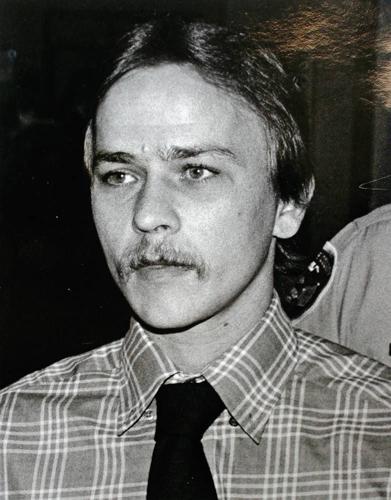
David Bruce Morton is an American serial killer convicted of murdering three young women in New Mexico and Texas between 1983 and 1990. His attacks, which involved sexual assault, strangulation, and stabbing, contributed to a climate of anxiety in Santa Fe known as the "Decade of Fear." Morton was captured and convicted for his final murder in Texas in 1990. It was not until more than a decade later, while serving a life sentence, that he confessed to two cold-case homicides in Santa Fe, finally bringing a resolution to investigations that had haunted the city for years. He remains a person of interest in several other unsolved murders of women in the Santa Fe area from the same era.
Early Life and Criminal History
David Bruce Morton was born in Oklahoma on May 14, 1959. His childhood was marked by profound trauma and instability. When he was five years old, he and his two siblings were removed from their parents' home by Child Protective Services. Morton was separated from his brother and sister almost immediately and would never see his family again. The mental and emotional stress of this abandonment was so severe that he remained in the foster care system for three years before being adopted.
Morton's descent into criminal behavior began in his adolescence. At the age of 16, he was convicted of armed robbery. While housed at a prison treatment facility, he managed to escape but was quickly recaptured. After his release, he moved to New Mexico, but his criminal activities persisted. In 1979, he was convicted for a series of armed robberies in the state and was sentenced to five years in prison. This pattern of escalating crime would eventually lead to murder.
The Murder of Janet Benoit
On November 11, 1983, Janet Ann Benoit, a 22-year-old graduate of Bradley-Bourbonnais Community High School, was on her way from Arvada, Colorado, to Phoenix, Arizona, to begin a new chapter in her life with a job at a sporting goods store. She decided to break up the long drive with an overnight stop in Santa Fe, New Mexico, checking into the Comfort Inn on Cerrillos Road.
The next day, a housekeeper entered Room 205 to perform routine cleaning and made a horrifying discovery. Janet Benoit was lying dead on the bed, having been sexually assaulted, strangled with a handkerchief, and brutally stabbed approximately 30 times. The crime scene was violent, and the initial investigation yielded few leads, leaving the case to go cold.
Janet's older brother, Dave Benoit, was devastated and frustrated by the lack of progress. He launched his own private investigation into the circumstances of his sister's death, focusing on the motel's security. He discovered a shocking lapse: nearly one-third of the keys issued to guests were master keys, capable of opening any door in the establishment. Believing this negligence contributed to his sister's murder, he filed a lawsuit against Comfort Inn, which was eventually settled out of court. For nearly two decades, Janet Benoit's murder remained a painful, unsolved mystery for her family and for Santa Fe law enforcement.
The Murder of Teri Lynn Mulvaney
Seven months after the murder of Janet Benoit, another young woman in Santa Fe fell victim to a brutal attack. On June 28, 1984, the body of 25-year-old Teri Lynn Mulvaney was found in her apartment on Galisteo Street. A secretary at the Public Service Company of New Mexico, she had been raped and strangled.
The investigation quickly focused on one of her neighbors, David Bruce Morton, a convicted armed robber who had reportedly given Mulvaney trouble in the past. The case against him, however, was circumstantial. A significant development occurred when Morton was later arrested for drunk driving. While in jail, he allegedly confessed the murder to a cellmate, who then reported the conversation to the police.
Despite the jailhouse confession, prosecutors at the time, including District Attorney Chet Walter, felt there was not enough corroborating evidence to secure a conviction and were hesitant to file charges. Mulvaney's parents, refusing to let their daughter's case be forgotten, organized a powerful letter-writing campaign, gathering enough signatures to compel a grand jury indictment.
In October 1988, Morton was brought to trial for Teri Mulvaney's murder. The prosecution's case was weak, and after deliberation, the jury was deadlocked. Eleven jurors voted for acquittal, while only one believed he was guilty. With no hope of a unanimous verdict, the judge declared a mistrial, and the case against Morton was dismissed. He was once again a free man.
The Murder of Kimberly Kendall and Capture
Following his acquittal, David Bruce Morton left New Mexico and relocated to Amarillo, Texas. There, his violent impulses resurfaced. On May 4, 1990, he broke into the home of 22-year-old Kimberly "Kim" Kendall, a secretary and college student who lived near him. He raped and murdered her. Her body was discovered by her husband.
This time, the investigation was swift and conclusive. Morton was immediately identified as the prime suspect and arrested. Crucially, investigators linked him to a prior burglary at Kendall's apartment through a fingerprint left at the scene. This evidence proved vital. In 1993, David Bruce Morton was convicted of the murder of Kimberly Kendall. Due to his prior felony convictions, he was sentenced as a habitual offender to life in prison, with an additional 174-year sentence for the murder itself.
Investigation and Confession
While Morton was incarcerated in Texas, the murders of Janet Benoit and Teri Mulvaney remained open, unsolved cases in Santa Fe. In 1996, Santa Fe police, prompted by Janet Benoit's brother and his private investigator, began to re-examine the cold cases. They noted the chilling similarities between the murder of Kimberly Kendall in Amarillo and the murder of Janet Benoit thirteen years earlier. Both victims had been sexually assaulted and had sustained multiple stab wounds to the back and neck. David Bruce Morton, the man convicted in Texas, became the primary focus of their renewed investigation.
The definitive breakthrough came years later. In 2003, after being confronted with the evidence linking him to the Santa Fe crimes, Morton, already serving a life sentence, confessed. He admitted to killing both Janet Benoit in 1983 and Teri Lynn Mulvaney in 1984.
In February 2004, Morton was brought back to New Mexico to face justice. He pleaded guilty to both murders and received two additional life sentences, to be served concurrently with his existing sentence in Texas. After two decades of uncertainty and pain, the families of his first two victims finally had answers.
The Victims
- Janet Ann Benoit, 22 — November 11, 1983, in Santa Fe, New Mexico. A 1978 high school graduate, she was an adventurous young woman embarking on a new life and career in Arizona when she was murdered during an overnight stop on her journey.
- Teri Lynn Mulvaney, 25 — June 28, 1984, in Santa Fe, New Mexico. She worked as a secretary for the Public Service Company of New Mexico and was a cherished daughter whose parents' relentless pursuit of justice eventually led to her killer being tried for her murder.
- Kimberly Dawn Kendall, 22 — May 4, 1990, in Amarillo, Texas. A newlywed who worked as a secretary while attending college, her life was full of promise before it was violently taken by Morton in her own home.
Suspected Victims and the "Decade of Fear"
The 1980s were a time of heightened anxiety in Santa Fe, as a series of disappearances and murders of young women led the community to fear a serial killer was in their midst, a period that became known as the "Decade of Fear." While Morton was convicted of two of these murders, he has been considered a person of interest in several other unsolved cases from that era.
- Teal Pittington, 18 — Pittington disappeared on August 15, 1984, just weeks after Mulvaney's murder. Her body was found in a culvert near Lamy in March 1985, so decomposed she had to be identified by dental records. She had been strangled with her own bra. Morton was a suspect, as was her former boyfriend, Marion Owen Jent, who was seen driving her car after she vanished.
- Maria Padilla, 29, and Susan LaPorte, 25 — Padilla was found raped and strangled in the bosque in Albuquerque's South Valley in May 1985. LaPorte, a visitor from Boston, was found bound with a rope and strangled under a juniper tree in Santa Fe in December 1985. In 2009, DNA evidence confirmed that the same unknown man murdered both women. While Morton was a suspect in the general wave of killings, another man, Kenneth Ray Luna, who died by suicide in 1987 after confessing to another murder, has also been considered a person of interest in these two connected cases.
- Roberta Michelle Montoya, 20 — Montoya, a waitress, was last seen on July 4, 1986. Her skeletal remains were found in April 1987 along the Old Las Vegas Highway. Her cause of death could not be determined, but it was assumed to be a homicide.
- Michelle Quintana, 23 — A real estate worker, Quintana vanished in August 1987. Her truck was found abandoned at a mall, but she was never seen again and her body has never been found.
Trial and Sentence
David Bruce Morton faced trial for murder on three separate occasions. His first trial, for the 1984 murder of Teri Lynn Mulvaney, took place in 1988 and ended with a hung jury, leading to the case's dismissal.
In 1993, he was tried and convicted in Amarillo for the 1990 murder of Kimberly Kendall. He was sentenced to life in prison, with an additional 174-year sentence, and designated a habitual offender.
Following his 2003 confessions, Morton returned to a New Mexico courtroom in February 2004. He pleaded guilty to the murders of Janet Benoit and Teri Lynn Mulvaney and was given two life sentences, which he is serving concurrently with his Texas sentence.
Aftermath and Legacy
The crimes of David Bruce Morton cast a long shadow over Santa Fe, contributing to a decade of fear and leaving multiple families shattered by loss and uncertainty. His eventual confessions provided a long-delayed sense of closure for the families of Janet Benoit and Teri Mulvaney, but questions about his potential involvement in other unsolved homicides linger. The "Decade of Fear" remains a dark chapter in Santa Fe's history, a testament to the terror one man inflicted upon a community and a somber reminder that for the families of other victims from that era, the wait for justice continues.