Pleasant Pruitt: The Indiana Bluebeard
Overview
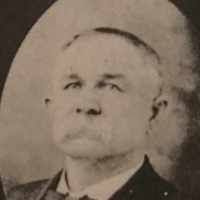
In the small communities of late 19th-century Indiana, Pleasant P. Pruitt was the image of respectability. A landowner and farmer from a well-regarded family, he was known for his intelligence and dignified manner. Yet, over sixteen years, this facade concealed a brutal truth: Pruitt was a serial wife-killer. He murdered three successive wives, with each death growing more brazen. The suspicious demise of his first two wives, one by poison and one by a shotgun blast, was either dismissed or could not be proven in court, allowing him to marry again. His murderous spree culminated in 1902 with the savage killing of his third wife in their Indianapolis home. With police closing in, Pruitt turned a revolver on himself, ending his life to escape justice and leaving a legacy of domestic terror that earned him the moniker "The Indiana Bluebeard."
Early Life and Background
Pleasant P. Pruitt Jr. was born on October 9, 1840, in Shelby, Indiana, to John Jackson Pruitt and Jane Kyle. He was raised in a large and prosperous Protestant family in the town of Edinburgh, Johnson County, which afforded him considerable social standing. Pruitt was described by those who knew him as a man of higher than average intelligence who carried himself with an air of moral righteousness. During the Civil War, he served for three months in the Union Army from April to August 1861.
On December 3, 1863, he married Mary Ellen Van Meter of Rushville. The couple settled in Johnson County, where Pruitt became a prominent citizen, owning a successful fruit farm. They had six children, though two died in infancy. Their four surviving children were Alice, Ethel, Leslie, and Clyde. To the outside world, the Pruitts were an ordinary and happy family, and Pleasant was seen as a dependable husband and father. However, this idyllic image would later be shattered by financial troubles. Pruitt suffered significant losses from speculation and litigation, which eventually forced him to sell his farm. This financial decline marked the beginning of a dark chapter in the family's history.
The Murders
Over a period of sixteen years, Pruitt systematically murdered his three wives. Each death was explained away, allowing him to escape consequences until the final, undeniable act of violence.
Mary Ellen Van Meter
The first tragedy struck in the autumn of 1886. On October 28, Mary Ellen Pruitt, age 42, died suddenly and mysteriously at the family home in Edinburgh. The cause of her death was widely believed to be poisoning. In a small town, such an event was shocking, but Pleasant Pruitt’s sterling reputation shielded him from any serious suspicion. His calm demeanor and respected status in the community seemed incompatible with the notion of foul play. Consequently, no formal investigation or autopsy was conducted, and Mary Ellen's death was recorded as an unsolved mystery, allowing Pruitt to continue his life as an honorable, grieving widower.
Naomia Huffman
A few years later, on June 21, 1889, Pruitt married his second wife, Naomia Huffman. For a time, it appeared that happiness had returned to the Pruitt household. But on July 16, 1896, the community was stunned by another death. Naomia, age 46, was killed by a shotgun blast at their farm, located about a mile west of Edinburgh.
Pruitt’s account of the incident was that it was a terrible accident. He told authorities he was in the back of the house preparing for a hunting trip, cleaning or loading his shotgun, when the weapon accidentally discharged. The shot struck Naomia, who was in the latticed summer kitchen nearby, killing her instantly. One early newspaper report stated Pruitt claimed he had stumbled while carrying the gun on his shoulder, causing it to fire.
This time, the community was not so quick to accept Pruitt's story. The memory of his first wife's suspicious death from poisoning was still fresh in people's minds. Neighbors demanded an official investigation, and suspicion fell squarely on Pruitt. He was arrested and brought to trial for murder. However, the prosecution faced a significant hurdle: establishing a motive. Testimony presented at the trial suggested that the couple lived harmoniously, and there was no hard evidence to contradict Pruitt's claim of an accident. Lacking sufficient proof, the jury acquitted him. The coroner's official verdict, recorded on July 18, 1896, was that Naomia Pruitt "came to her death by reason of a gunshot wound in the face and head, caused by an accidental discharge of a shotgun in the hands of Pleasant Pruitt."
Though he was a free man, the trial and the lingering public suspicion took their toll. The legal fees cost him a significant portion of his remaining wealth, and his social standing was irrevocably damaged. Soon after, Pruitt left Edinburgh, seeking to escape the shadow of two dead wives.
Winnie Berry
Pruitt began to travel extensively. In Iowa City, he met a widow named Winnie Berry. They married around 1899 and eventually moved to Indianapolis, Indiana, settling into a home at 220 East Ohio Street with Winnie’s 14-year-old son from a previous marriage, Jesse Berry.
To generate income, Winnie suggested they turn their home into a boarding house. While the business was initially successful, the marriage was plagued by constant tension. Pruitt, who refused to find steady work, grew increasingly melancholic and irritable. His erratic behavior and arguments over the management of the house caused several boarders to leave. The couple’s quarrels, often about their dire financial situation, became more frequent and intense.
The breaking point came on the morning of October 9, 1902—Pruitt’s 62nd birthday. After another heated argument, and shortly after Jesse had left for school, Winnie, age 42, went to the basement to do the laundry. Pruitt followed her. In a fit of rage, he unleashed a horrific attack. He stabbed her multiple times with a knife, with one wound piercing her heart, and bludgeoned her with a hammer. The assault was savage; he crushed her skull and gouged out her eyes, leaving her face disfigured beyond recognition.
After the brutal murder, it appears Pruitt initially intended to flee. He left the basement but, for reasons that remain unknown, returned to the scene of the crime. Standing over his wife's mutilated body, he took a .38-caliber revolver and shot himself in the head. His body collapsed on top of hers, creating a grim tableau of murder and suicide.
The Victims
- Mary Ellen Van Meter, 42 — Died on October 28, 1886, in Edinburgh, Indiana. Pruitt's first wife and the mother of his four surviving children, she died from what was suspected to be poisoning, though no charges were ever filed.
- Naomia Huffman, 46 — Died on July 16, 1896, near Edinburgh, Indiana. Pruitt's second wife was killed by a shotgun blast. He claimed it was an accident and was acquitted of her murder at trial.
- Winnie Berry, 42 — Died on October 9, 1902, in Indianapolis, Indiana. His third wife, she was brutally stabbed and bludgeoned to death in the basement of their home before Pruitt took his own life.
Discovery and Aftermath
The gruesome discovery was made that afternoon. When 14-year-old Jesse Berry returned from school, he found the house strangely quiet and called out for his mother. Receiving no answer, he spoke to a boarder, Nicholas Yeager, who mentioned that Winnie had been in the basement doing laundry all day.
Jesse descended the stairs into the dark cellar. He lit a match to see, and the small flame illuminated a scene of unimaginable horror: his stepfather's bloodied body lying on the floor. Terrified, Jesse ran from the house to the police station for help. He returned with officers, who entered the basement and quickly understood they were looking at a murder-suicide. When they confirmed that the body beneath Pruitt was his mother, Jesse reportedly responded with a calm that belied his age, stating he had sensed a tragedy like this was coming.
The subsequent police investigation uncovered the history of constant arguments between the Pruitts, identifying the escalating domestic conflict as the motive for the crime. The murder-suicide in Indianapolis prompted authorities in Johnson County to re-examine the deaths of Pruitt's first two wives. With the undeniable evidence of his capacity for violence, the "accidental" shooting of Naomia Huffman and the "mysterious" poisoning of Mary Ellen Van Meter were cast in a new, sinister light. Pleasant Pruitt's reputation was sealed as a man who had serially murdered his wives.
In the weeks following the tragedy, a lawsuit was filed between the administrators of Winnie's and Pleasant's estates. The legal battle was to determine the rightful ownership of the couple's shared assets, as the law at the time was unclear about inheritance in a murder-suicide.
Pleasant Pruitt was buried in Rest Haven Cemetery in Edinburgh, the very town where his violent history had begun sixteen years earlier.