Charles Severance: The Alexandria Knocker Serial Killer
Overview
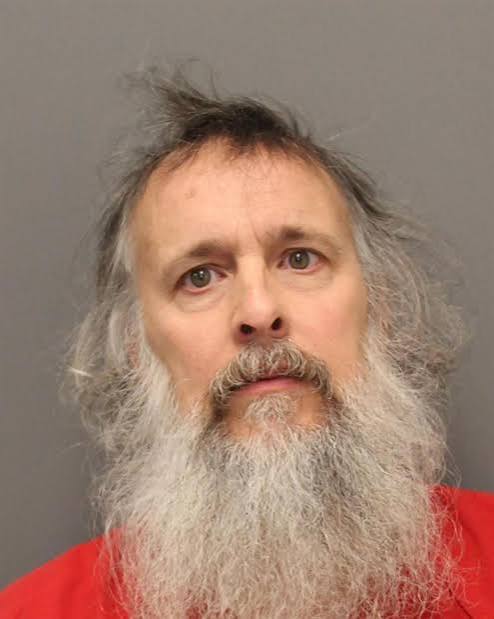
Over eleven years, a series of seemingly random, yet chillingly similar, murders instilled a quiet terror in the affluent neighborhoods of Alexandria, Virginia. Prominent residents were shot and killed in broad daylight after answering a knock at their front doors. The attacks, which occurred in 2003, 2013, and 2014, were eventually linked to one man: Charles Stanard Severance, a former city resident and fringe political candidate with a deep-seated grudge. Prosecutors argued that Severance, fueled by rage over losing custody of his son, sought revenge against what he termed Alexandria's "enforcement class" and "elite." His victims, though apparently strangers to him, were all well-known and respected members of the community he had grown to despise. The investigation culminated in Severance's 2015 conviction for three murders, bringing an end to the city's long-held anxiety and solving a mystery that had haunted its residents for more than a decade.
Early Life and Background
Charles Stanard Severance was born on September 25, 1960, in Fairfax County, Virginia. Raised in the suburban neighborhood of Oakton, he was the son of a Navy Admiral and graduated from the University of Virginia with an engineering degree. By the late 1990s, he was living in Alexandria and had twice run for mayor, in 1996 and 2000, on fringe platforms focused on juvenile mental health and his opposition to psychotropic drugs. His political appearances were often bizarre and disruptive; during one forum, he pointed a flag's spiked finial at a congressman, and at another, he punched an organizer.
A turning point in Severance's life came from a bitter custody dispute over his son, Levite, born in 1999. The child's mother left Severance due to his erratic behavior and emotional abuse. In 2001, an Alexandria court terminated his parental rights, a decision that ignited a deep and lasting rage within him. He began to fill journals with violent writings and manifestos, describing a political doctrine that justified killing members of the "status quo utopian elite" as a form of revenge. In his diary, he questioned, "Can you forgive someone for kidnapping your child can you murder someone for kidnapping your child?" This loss transformed his perception of Alexandria's legal and social establishment into a target for a "family vendetta."
The Murder of Nancy Dunning
On the afternoon of December 5, 2003, Nancy Dunning, a 56-year-old real estate agent known as the "Queen of Del Ray" for her community involvement, was found murdered in her home on West Mount Ida Avenue. She was the wife of Alexandria's then-sheriff, James "Jim" Dunning. Earlier that day, she had been shopping at a local Target for items for needy children. When she failed to meet her husband and son, Chris, for a scheduled lunch, they went to the house to check on her.
Chris Dunning found his mother in the front foyer. She had been shot three times at close range with a .22-caliber weapon: once in the back of the head, once in the collarbone, and once in the shoulder. The medical examiner testified that the wounds would not have been instantly fatal and that she was likely alive for several minutes. There were no signs of forced entry, and nothing was stolen. The case baffled investigators. For years, suspicion fell on Nancy's husband, Jim Dunning, who was investigated but never charged; he died in 2012 under that cloud. The murder remained a cold case for nearly a decade, the first act in a terror campaign that would not become clear until much later.
The Murder of Ronald Kirby
Ten years passed. On November 11, 2013, Ronald Kirby, a 69-year-old transportation planner for the Metropolitan Washington Council of Governments, was working from his home in Alexandria's Rosemont neighborhood. A respected expert in his field, Kirby was known for his ability to explain complex policy in simple terms. Sometime after his wife left for an appointment, Kirby answered a knock at his front door.
He was shot multiple times in the torso and hips with a .22-caliber firearm. A relative found his body around 12:30 p.m. As with the Dunning murder, there were no signs of forced entry, and valuables like his wallet and wedding ring were left untouched. Police initially had no suspects or persons of interest, and while they did not believe a "crazed criminal" was randomly targeting residents, the killing sent a new wave of shock and fear through the city. Investigators would later determine that the same type of gun and rare Remington subsonic ammunition were used in both the Dunning and Kirby slayings.
The Murder of Ruthanne Lodato
The link between the killings became terrifyingly clear just three months later. On February 6, 2014, Ruthanne Lodato, a 59-year-old music teacher and church organist, was at her home on Ridge Road Drive. Lodato was a beloved community figure, and her family had deep roots in Alexandria's legal system; her father and brother had both served as judges in the city.
Around 11:30 a.m., a man knocked on her door. When she answered, he opened fire, shooting her twice. The gunman also shot Janet Franko, an in-home caretaker for Lodato's elderly mother, who was present at the scene. Lodato was pronounced dead at the hospital, but Franko survived her injuries. The attack mirrored the previous two murders: a daytime shooting at the victim's front door with a .22-caliber weapon, no theft, and no forced entry. This time, however, police had a survivor who could provide a description of the killer.
The Victims
- Nancy Dunning, 56 — December 5, 2003, in Alexandria, Virginia. A successful real estate agent and the wife of the city's sheriff, she was deeply involved in her community and was remembered as the "Queen of Del Ray."
- Ronald Kirby, 69 — November 11, 2013, in Alexandria, Virginia. A brilliant and personable transportation planner, he was the director of transportation planning for the Metropolitan Washington Council of Governments for over 25 years.
- Ruthanne Lodato, 59 — February 6, 2014, in Alexandria, Virginia. A cherished music teacher and church organist, she was a fixture in her community and a beloved mother and wife.
Investigation and Capture
The attack on Ruthanne Lodato and the eyewitness account from Janet Franko proved to be the critical break in the case. Franko described the shooter as an older, balding man with a beard, which allowed police to create and circulate a composite sketch. Ballistic evidence confirmed that the bullets from all three crime scenes were likely fired from the same .22-caliber revolver.
Tips from the public led investigators to Charles Severance, whose past as a disgruntled political candidate and his known animosity toward the city made him a person of interest. After police contacted him in March 2014, Severance fled Virginia. His then-girlfriend kicked him out of her Ashburn home, and he traveled to Wheeling, West Virginia. In a bizarre move, he visited the Russian embassy in Washington, D.C., wearing a tricorn hat, seeking asylum. A photo taken there showed his bicycle with a distinctive yellow strap.
On March 13, 2014, a police officer in Wheeling spotted a bicycle with the same yellow strap outside the Ohio County Public Library. The officer went inside and found Severance at a computer terminal. He was arrested on an unrelated felony weapons charge from Loudoun County, Virginia. Investigators searched his car and his parents' home, where they found Remington .22-caliber ammunition matching that used in the murders, a gun cleaning kit, and thousands of pages of his writings. These documents, which prosecutors called his "political manifesto," were filled with violent rhetoric, glorified revenge, and included a chilling passage titled "Parable of the Knocker," which read: "Knock. Talk. Enter. Kill. Exit. Murder. Wisdom." In September 2014, while in custody, Charles Severance was charged with all three murders.
Trial and Sentence
The trial of Charles Severance was moved from Alexandria to Fairfax County due to the high-profile nature of the case. Prosecutors built a compelling, though largely circumstantial, case against him. The core of their argument was the motive: Severance's seething anger over losing custody of his son, which he blamed on Alexandria's "enforcement class." The victims, they argued, were not random but were targeted because of their connections to the city's establishment—Nancy Dunning as the sheriff's wife, Ruthanne Lodato as the daughter and sister of judges, and Ronald Kirby as a prominent public figure.
The prosecution presented extensive evidence, including Severance's own disturbing writings, which advocated for "political assassinations" and described home killings as "tomahawking the homestead." They showed surveillance footage of a man resembling Severance following Nancy Dunning out of a Target store on the morning of her murder and footage of his red Ford Escort near the Lodato home at the time of that shooting. The star witness was Janet Franko, the survivor of the Lodato attack, who identified Severance in court as the gunman.
Severance's defense attorneys argued that he was a man with mental illness whose paranoid writings were taken out of context and did not prove he was a killer. They pointed to the lack of a murder weapon, which was never found, and the fact that no fingerprints or DNA at the crime scenes matched their client.
On November 2, 2015, after three days of deliberation, the jury found Charles Severance, then 55, guilty on all 10 counts, including two counts of capital murder and one of first-degree murder. Prosecutors had opted not to seek the death penalty, citing Severance's mental health issues. In January 2016, a judge formally sentenced him to three consecutive life sentences without the possibility of parole, plus an additional 48 years in prison, and fined him $400,000.
Aftermath and Legacy
The conviction of Charles Severance brought a profound sense of relief to Alexandria, a city that had lived with fear and unanswered questions for over a decade. For the victims' families, the verdict provided a long-awaited measure of justice. Elizabeth Dunning, Nancy's daughter, expressed that her family had "long ago stopped believing that this day would come."
Severance appealed his convictions, arguing the evidence was insufficient, but a Virginia Court of Appeals panel unanimously upheld the verdict in May 2017. He is currently serving his sentence at Wallens Ridge State Prison in Big Stone Gap, Virginia. The case left an indelible mark on the community, a chilling reminder of how a hidden, deep-seated rage could shatter the peace of ordinary life by simply knocking on a door.