Jose Sifuentes: The Dallas Cantina Killer
Overview
For nearly two decades, the families of three murdered Dallas women waited for justice. Their killer, Jose Sifuentes, had vanished, seemingly into thin air, after his initial arrest. Between 1998 and 2003, Sifuentes targeted, sexually assaulted, and strangled at least three young women, leaving their bodies discarded in desolate areas of the city. He was a predator who used his job as a mechanic to gain the trust of his victims before revealing his violent intentions.
In 2003, Sifuentes was arrested for the murder of his most recent victim, Veronica Hernandez, and confessed to the crime. But in a stunning failure of the justice system, he was granted bond and promptly fled to his native Mexico. For sixteen years, he lived as a free man, while back in Dallas, a DNA match revealed the true scope of his crimes, linking him to two cold-case murders from 1998. The hunt for Sifuentes became a quiet but persistent international effort involving local, federal, and Mexican authorities. This long pursuit culminated in his capture in 2019 and extradition to the United States in 2020. In May 2021, Jose Sifuentes pleaded guilty to three counts of murder and was sentenced to three concurrent life terms, finally closing a painful chapter for the victims' families and the city of Dallas.
Early Life and Background
Little is publicly known about the life of Jose Sifuentes before he began his killing spree. He was born on March 12, 1978. At the time of his crimes, he was living in the Dallas area and working as a mechanic. This profession would later become central to his final known murder. He was known to frequent local bars and cantinas, which is where he encountered the women he would later kill. By all accounts, he was an unassuming figure who blended into the background, a trait that likely helped him evade suspicion for years and later disappear across the border.
The Murders of 1998
In the winter of 1998, a killer began to prey on young women in Dallas. The first known victim was Maria de Lourdes Perales, who was just 20 years old. On the morning of February 15, 1998, a person walking in the 6100 block of Santa Fe Avenue in Old East Dallas made a horrifying discovery. The nude body of a young woman was lying near the roadway. It was Maria Perales. An autopsy revealed she had been sexually assaulted and strangled. Investigators also determined that after she was killed, her body had been run over with a vehicle, adding a layer of brutality to the crime. Police collected DNA evidence from the scene, but with no suspect and no matches in the system, the case went cold.
Four months later, the killer struck again. On June 27, 1998, construction workers arriving at a job site in the 11200 block of Harry Hines Boulevard in Northwest Dallas found the body of 23-year-old Erica Olivia Hernandez. Like the previous victim, she was found nude. The cause of death was the same: she had been sexually assaulted and strangled. DNA evidence was once again recovered, and investigators began to suspect a serial predator was targeting women from local nightlife spots. Despite the similarities in the two cases, they remained unsolved for years, leaving a cloud of fear over the community.
The 2003 Murder
Nearly five years passed without another linked crime. Then, on May 16, 2003, the pattern repeated. The body of 27-year-old Veronica Hernandez was found dumped outside an auto repair shop in Dallas. She was partially nude and, like the victims before her, had been sexually assaulted and strangled. The location was significant; it was the very place where her killer worked.
Witnesses told police they had seen Veronica Hernandez leave a bar the previous night with a mechanic named "Jose" who worked at the shop. This crucial tip gave investigators their first real lead. They quickly identified the mechanic as Jose Sifuentes. The evidence was mounting, and police moved in to make an arrest.
The Victims
- Maria de Lourdes Perales, 20 — Found on February 15, 1998, in Old East Dallas. A vibrant young woman, her life was violently cut short by an attack that included sexual assault, strangulation, and being run over by a car.
- Erica Olivia Hernandez, 23 — Discovered on June 27, 1998, at a construction site in Northwest Dallas. She was the victim of a brutal rape and strangulation, her case remaining unsolved for many years.
- Veronica Hernandez, 27 — Her body was located on May 16, 2003, at the Dallas auto shop where Sifuentes was employed. She had been seen leaving a bar with him shortly before she was sexually assaulted and murdered.
Initial Arrest and Escape
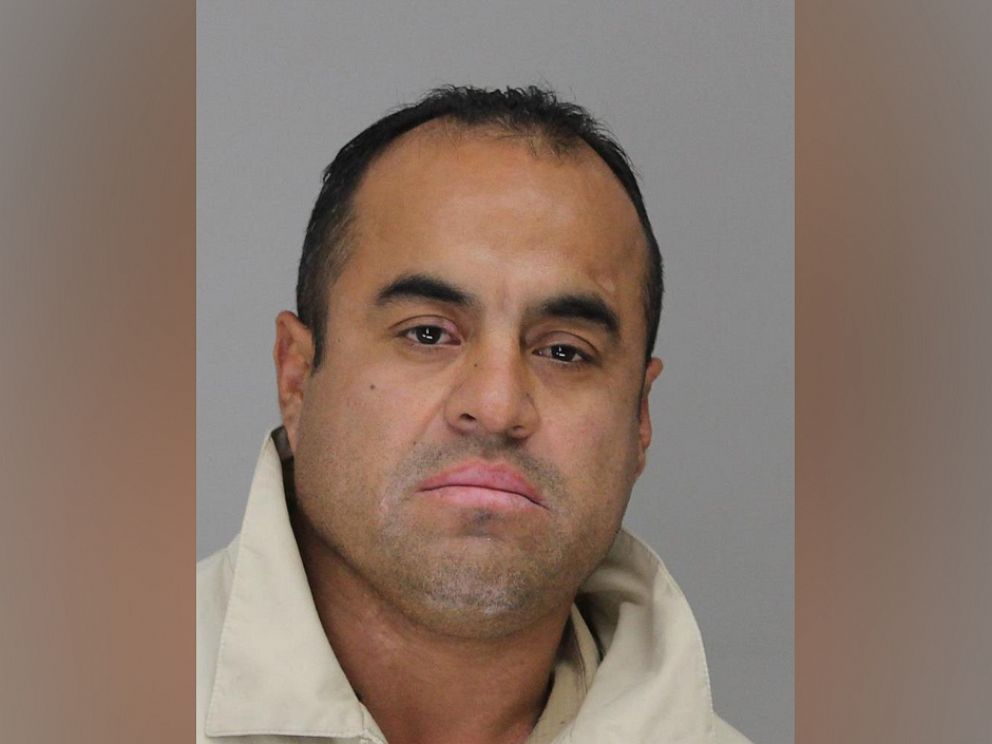
With witness statements pointing directly to him, the Dallas Police Department arrested Jose Sifuentes for the murder of Veronica Hernandez. During interrogation, Sifuentes confessed to raping and strangling her. As part of standard procedure, a DNA sample was collected from him. He was charged with murder and booked into the Dallas County Jail.
For the investigators and the victim's family, it seemed like justice would be swift. However, in a decision that would have long-lasting consequences, Sifuentes was granted bond. After just two months in custody, he paid the bond and was released. He immediately disappeared. Authorities soon realized he had fled the country, crossing the border into Mexico and becoming a fugitive. The case against him for Veronica Hernandez's murder stalled, and for the families of the other victims, justice seemed more distant than ever.
A Cold Case Breakthrough
While Sifuentes was beginning his new life as a fugitive, the DNA sample he provided upon his 2003 arrest was being processed. When it was entered into the Combined DNA Index System (CODIS), the national DNA database, it produced two shocking hits. Sifuentes's genetic profile was a perfect match for the DNA evidence recovered from the unsolved 1998 murders of Maria de Lourdes Perales and Erica Olivia Hernandez.
This forensic breakthrough officially linked the three killings and confirmed that Dallas police had arrested a serial killer. The revelation was bittersweet; they now knew who was responsible for the deaths of two other women, but their suspect was gone. In his absence, the Dallas County District Attorney's Office secured capital murder indictments against Sifuentes for the 1998 slayings. The challenge now was no longer identifying the killer, but finding him.
The International Manhunt
For years, the trail for Jose Sifuentes went cold. The case was eventually passed to the Dallas Police Department's Cold Case Unit and the Dallas County District Attorney's Cold Case Team. Detective Noe Camacho, in particular, was credited with relentlessly pursuing the fugitive. The investigators refused to let the case fade away.
The key to finding Sifuentes lay in international cooperation. In 2016, the Dallas Police and the DA's Office formally requested a provisional arrest warrant through the U.S. Department of Justice's Office of International Affairs. This was a critical step that allowed U.S. authorities to seek legal assistance from Mexico to locate and apprehend Sifuentes for the purpose of extradition.
The request set in motion a collaborative effort involving the FBI, the U.S. Department of State, and Interpol. Based on the evidence provided by Dallas authorities, a Mexican judge issued a warrant for Sifuentes's arrest in January 2019. The international dragnet began to close in. Investigators were eventually able to pinpoint his location to San Vicente de Gonzalez, a small town in the state of Nuevo Leon, Mexico.
Capture and Extradition
On April 25, 2019, after more than sixteen years on the run, Jose Sifuentes's time as a fugitive came to an end. Acting on the warrant, Mexican authorities, in coordination with Interpol, located and arrested him without incident. He was taken into custody and transported to Mexico City to face extradition proceedings.
The legal process of returning him to the United States took several months. Finally, on January 8, 2020, Sifuentes was handed over to U.S. authorities. FBI agents escorted him on a flight back to Dallas, where he was transferred to the custody of the Dallas Police Department. Detectives who had inherited the decades-old case files were finally able to question the man responsible. In a new interview, Sifuentes once again admitted his role in the murder of Veronica Hernandez and also confessed to killing Maria Perales and Erica Hernandez.
Confession and Guilty Plea
In May 2021, Jose Sifuentes, now 43 years old, stood before a Dallas County judge. To avoid a lengthy trial and a potential death sentence, he had reached an agreement with prosecutors. He pleaded guilty to three separate charges of murder for the deaths of all three women.
On May 13, 2021, he was formally sentenced to three concurrent life sentences. During the sentencing, Assistant District Attorney Leighton D'Antoni powerfully described Sifuentes as a predator who was "born to kill" and who "treated women as soulless objects." Dallas County Criminal District Attorney John Creuzot commended the unwavering dedication of the law enforcement teams that pursued Sifuentes for nearly two decades. "This case is a perfect example of the persistence and dedication of the Dallas Police Department and the prosecutors of the Dallas County District Attorney’s Office," Creuzot stated. "I am so proud of the work of our Cold Case Team." Sifuentes was transferred to the Texas Department of Criminal Justice to begin his sentence at the Clements Unit in Amarillo.
Aftermath and Legacy
The conviction of Jose Sifuentes brought a profound sense of relief and long-overdue closure to the families of Maria Perales, Erica Hernandez, and Veronica Hernandez. His case serves as a powerful testament to the importance of DNA evidence in solving cold cases and highlights the critical role of inter-agency and international cooperation in bringing fugitives to justice.
Following his sentencing, prosecutors made a public appeal for more information. They believe it is highly probable that Sifuentes had other victims. ADA D'Antoni noted that serial sexual predators often have a longer history of violence than what is officially known. Authorities urged anyone with information about unsolved disappearances or murders of young Latina women in the Dallas area between 1993 and 2003, particularly those who may have frequented "taxi clubs," to come forward. The full extent of Jose Sifuentes's violent crimes may never be known, but for three families, the certainty of his imprisonment finally delivered a measure of peace.