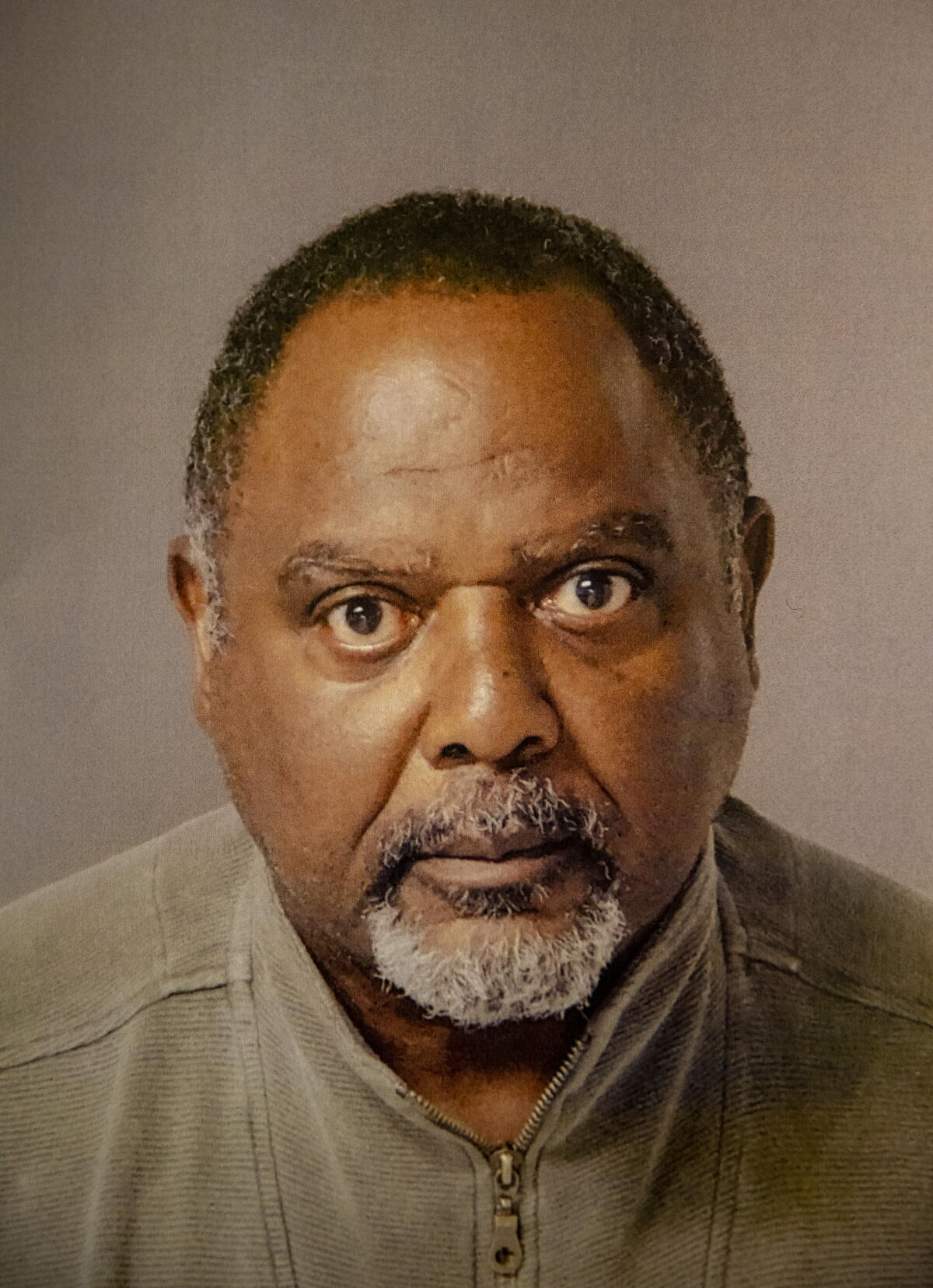
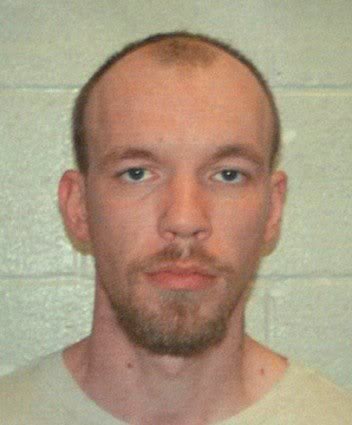
Horace Van Vaultz Jr.: The Cold Case Killer Caught by Genealogy
Overview
For more than three decades, Horace Van Vaultz Jr. lived as a free man, his violent past a collection of cold case files gathering dust in police departments across Southern California. Between 1981 and 1986, he sexually assaulted and murdered at least three young women, leaving behind a trail of grief and confounding investigators. His reign of terror was characterized by brutal strangulations and the targeting of vulnerable women. Vaultz nearly escaped justice, even being acquitted for one of the murders in the 1980s. However, the relentless march of forensic science and the advent of investigative genetic genealogy finally unmasked him. In 2019, a DNA match led to his arrest, and in 2022, he was convicted of two murders and sentenced to life in prison, at last bringing a measure of closure to the families of his victims.
Background and Early Life
Horace Van Vaultz Jr. was born on May 21, 1955. A former Marine, he presented a seemingly normal life to the public. However, his history was marked by violence against women. Court records show that Vaultz had been accused of domestic violence on several occasions in the decades following the murders. In 1996, he received probation in a plea deal after being charged with domestic abuse and assault. He faced similar charges in Kern County in 2006, though they were later dropped. In 2007, he was again charged with beating a spouse or cohabitant but was allowed to plead to a lesser charge of disturbing the peace. During his trial, his ex-wife, Diane Trevino, testified that Vaultz was physically abusive and had raped her multiple times. He also used aliases, including Randdi Stone, and had a nickname: "Horace the Horrible."
The Murder of Selena Keough
On July 16, 1981, the body of 20-year-old Selena Keough, a young mother, was discovered under bushes on a street in Montclair, San Bernardino County. She had been bound, sexually assaulted, and strangled. Witnesses reported seeing Keough, who was walking home from a nightclub, with a tall, heavily built man driving a gold or yellow Cadillac shortly before her death. One witness saw her crying and carrying her shoes. Despite these early leads, her case quickly went cold. Investigators collected biological evidence from the scene, but the forensic technology of the era was incapable of identifying a suspect. For 38 years, her killer remained a mystery, a ghost in the system, until a new investigative tool would finally point directly to Vaultz.
The Murder of Mary Duggan
Nearly five years later, on June 9, 1986, the violence surfaced again. The body of 22-year-old Mary Duggan was found in the trunk of her Ford Mustang, which was parked in an empty lot in Burbank. Duggan, a Reseda resident described by her family as the "life of the party" and a fixture on the Southern California music scene, had also been bound and sexually assaulted. The cause of death was asphyxiation; a tissue had been brutally stuffed down her throat. As with the Keough case, police collected biological evidence, but with no witnesses and no suspect, the investigation stalled. The DNA from both the Duggan and Keough crime scenes would later be linked, confirming they were murdered by the same man, but his identity remained unknown for decades.
The Murder of Janna Rowe
Just six months after Mary Duggan's murder, on December 27, 1986, 25-year-old Janna Kathleen Rowe was found strangled near the Ventura River. Vaultz was arrested for her murder in May 1987. He admitted to knowing Rowe, a waitress who had recently moved to the area, and being with her at a Ventura motel the day before her death. He provided an alibi that was later proven false, but in January 1988, before DNA evidence was a common tool in courtrooms, a jury acquitted him of the crime. He walked free, but the case was not truly over. In 2019, a re-examination of evidence from Rowe's body revealed sperm that was a DNA match to Horace Van Vaultz Jr., proving his guilt decades after his acquittal. Due to double jeopardy laws, he could not be retried for her murder, but prosecutors were allowed to present this powerful evidence of a pattern of behavior during his trial for the murders of Keough and Duggan.
The Victims
- Selena Keough, 20 — July 16, 1981, in Montclair, California. A young mother, she was walking home from a nightclub when she was abducted, sexually assaulted, and strangled.
- Mary Duggan, 22 — June 9, 1986, in Burbank, California. A vibrant and social woman who lived with her father, she was a regular in the local music scene before her life was cut short.
- Janna Kathleen Rowe, 25 — December 27, 1986, in Ventura, California. A waitress new to the area, she was befriended by Vaultz shortly before he strangled her.
Investigation and Capture
For years, the murders of Selena Keough and Mary Duggan remained unsolved. A significant break came in 2006 when DNA profiles from both crime scenes were entered into the CODIS law enforcement database and found to be from the same unknown male. This confirmed that a single serial killer was responsible, but his identity was still a mystery.
The case finally broke wide open more than a decade later with the use of investigative genetic genealogy, a new technique that had famously helped identify the Golden State Killer. In 2019, detectives in Los Angeles County, for the first time, used the process to solve a crime. They uploaded the killer's DNA profile to commercial genealogy websites, which led them to distant relatives of the suspect. By building out family trees, investigators narrowed their focus to Horace Van Vaultz Jr.
Police began surveillance on Vaultz, who was then living in Bakersfield. They obtained a sample of his DNA from an item he discarded in the trash. The sample was a perfect match to the DNA recovered from the bodies of both Selena Keough and Mary Duggan. On November 15, 2019, Horace Van Vaultz Jr., then 64 years old, was arrested during a traffic stop in Inglewood.
The Photographs
During a search of Vaultz's home in Bakersfield following his arrest, investigators discovered a disturbing collection of photographs of young women and teenage girls, many appearing to have been taken in the 1980s. Concerned that these individuals could be additional, unidentified victims, the Burbank Police Department released many of the photos to the public in March 2020, seeking help with identification.
The public appeal yielded some results. At least two of the women in the photographs were identified and confirmed to be alive and well. One of the women who came forward recognized herself and another person in the pictures. However, the identities of many others in the photos remain unknown, leaving open the chilling possibility that Vaultz's victim count could be higher than the three women he is proven to have killed.
Trial and Sentence
Horace Van Vaultz Jr. was charged with two counts of murder for the deaths of Selena Keough and Mary Duggan. The charges included the special circumstance allegations of multiple murders, lying in wait, and murder during the commission of rape and sodomy.
His trial took place in the summer of 2022. Prosecutors called him a "sexually motivated serial killer" and laid out the powerful DNA evidence connecting him to the three women. They also presented evidence of his 1988 acquittal for the murder of Janna Rowe, arguing the new DNA match in her case established a clear pattern of predatory violence. A woman named Cindy Wall also testified, recounting how Vaultz had attacked her in 1984, choking her with her purse strap and telling her, "I have killed before and I will kill again." She managed to escape.
Taking the stand in his own defense, Vaultz denied killing anyone. He claimed to have been a "swinger" who had sex with over 200 women and could not remember Keough or Duggan. Regarding the DNA evidence, he stated, "My semen means I may have had sex with the person. It doesn't mean I killed them."
On August 18, 2022, after deliberating for only a few hours, the jury found Horace Van Vaultz Jr. guilty of two counts of first-degree murder with all special circumstances found to be true. On September 19, 2022, he was sentenced to two consecutive terms of life in prison without the possibility of parole.
Aftermath and Appeals
Following his conviction, Horace Van Vaultz Jr. maintained his innocence. He filed an appeal, claiming ineffective assistance of counsel, judicial error, and prosecutorial and police misconduct. In April 2024, a state appeals court panel upheld his conviction, finding the evidence of his guilt to be "overwhelming." The justices noted, "When three women who were strangled to death were found to have the defendant's DNA inside them, his response of not remembering two of them, is not the most convincing evidence." A subsequent petition was denied in July 2024. Horace Van Vaultz Jr. is currently incarcerated at California State Prison, Corcoran.