Clarence Victor: The Omaha Parole Killer
Overview
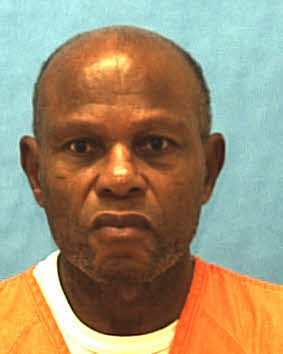
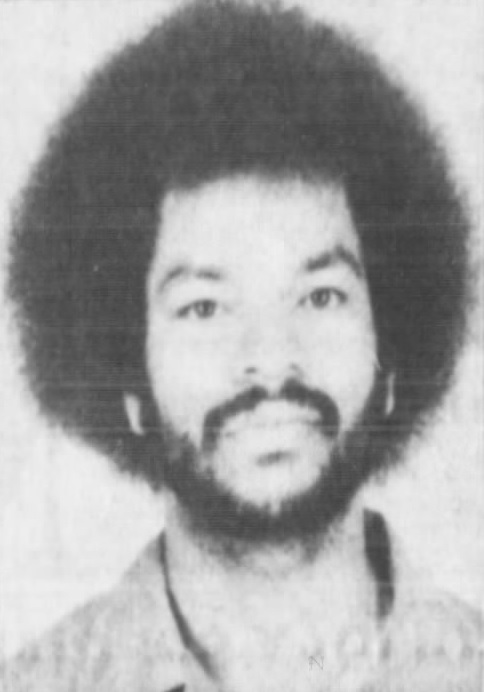
Clarence Victor’s criminal history spanned more than two decades, a grim chronicle of violence marked by the murders of three women in Omaha, Nebraska. His killings were not continuous; they were punctuated by periods of incarceration, with each release from prison preceding another death. Victor’s final two murders were committed while he was on parole, a fact that highlighted systemic questions about the state's penal and parole systems. His case culminated in a death sentence, which was later commuted to life imprisonment due to his low IQ. He died in prison at the age of 82, leaving behind a legacy of stolen lives and lingering questions about justice and rehabilitation.
Early Life and Background
Clarence Victor was born in Omaha, Nebraska, on November 1, 1932. Details about his childhood, family life, and education are scarce in public records. What is known is that later in life, psychological evaluations would place his IQ at 65, a score indicating intellectual disability. This impairment may have been present from an early age, potentially affecting his development and opportunities. His documented criminal life began at age 31, with no verifiable record of significant legal trouble before then. For the first three decades of his life, Victor lived in relative obscurity before embarking on a path of escalating violence.
The First Murder: Hilda Marian Williams
On March 20, 1964, Clarence Victor’s violent criminal history began. He got into an argument with 40-year-old Hilda Marian Williams over money. When she refused his demands, he attacked her, first hitting her and then strangling her to death. In a crude attempt to conceal his crime, Victor hid her body in a garbage can in his garage before later dumping it in Adams Park.
Hilda’s husband reported her missing that same day, but her fate remained unknown for about a week. The investigation quickly led police to Victor. Faced with a murder charge, he accepted a plea deal, and the charge was reduced to manslaughter. For the killing of Hilda Williams, Clarence Victor was sentenced to eight years in prison.
Parole and the Murder of Jerry Black
After serving just three years and three months of his sentence, Clarence Victor was granted parole in 1967 and returned to Omaha. For nearly a decade, he seemed to live a conventional life. He entered a relationship with a woman named Iona Chase, worked at a foundry, and they lived in an apartment with several children. Neighbors would later recall that he was quiet and rarely interacted with them.
This period of apparent calm ended violently on April 26, 1976. Victor broke into the home of his 24-year-old neighbor, Jerry Black. Black, a clerk for Northwestern Bell, was on the phone with a friend when Victor entered. When she told him to leave, he attacked her with a pocket knife, slitting her throat with a gash four inches deep.
After the murder, Victor threw the knife into a nearby yard and enlisted Iona Chase to help him clean the crime scene and conceal the evidence. Their efforts were futile. Police arrested both Victor and Chase the following day. The children in their care were placed into foster care. Held without bond, Victor once again avoided a first-degree murder trial by pleading guilty to second-degree murder. District Judge Donald Hamilton sentenced him to 20 years in prison. Iona Chase was charged as an accessory for her role in the attempted cover-up.
A Final Parole and the Murder of Alyce Singleton
After serving ten years and five months of his 20-year sentence, Clarence Victor was paroled for a second time in September 1986. Now in his mid-50s and a twice-convicted killer, he struggled to find steady employment and resorted to doing odd jobs, including gardening work. One of his clients was 82-year-old Alyce Singleton, a woman who lived alone in her home on Ohio Street.
On December 26, 1987, just over a year after his release, Victor drove to Alyce Singleton's house with the intent to burglarize it. When he encountered her in the kitchen, he launched into a savage attack. He beat her with a metal pipe, breaking several of her ribs, and then slashed her throat with a knife. After killing her, Victor ransacked her home and fled. The cause of death was determined to be a laceration of a branch of the left carotid artery. The medical examiner testified that it would have taken her three to five minutes to bleed to death, and that she was likely alive and conscious for most of the assault.
The Victims
- Hilda Marian Williams, 40 — a resident of Omaha who was killed on March 20, 1964. She was a wife whose life was cut short over a dispute about money, becoming the first known victim of Clarence Victor.
- Jerry Black, 24 — murdered on April 26, 1976. She was a young woman working as a clerk for the Northwestern Bell telephone company, attacked in her own home by her neighbor.
- Alyce Singleton, 82 — killed on December 26, 1987. She was an elderly widow living independently in her Omaha home, for whom Victor had previously done yard work.
Investigation and Capture
The investigation into Alyce Singleton's murder moved swiftly. Unlike his previous crimes, Victor had been noticed. Neighbors saw his car near Singleton's home on the day of the murder and, finding it suspicious, reported it to the police. This crucial lead pointed investigators directly at Victor, whose history of homicide was already known to law enforcement.
Three days after the murder, on December 29, 1987, Clarence Victor was arrested. During interrogation, his story changed. He initially denied being at the residence, but when confronted with inconsistencies and reminded of his 1964 homicide investigation by an officer whose father had been the original investigator, Victor admitted he had been there. He confessed to striking Singleton after an argument but offered a bizarre and unbelievable explanation for the fatal wound, claiming she had become entangled in a blue cord and he had "accidentally" cut her throat while trying to free her with his pocketknife. He claimed he then threw the pipe, knife, and cord away. His confession, along with the neighbor's testimony, formed the core of the case against him.
Trial and Sentence
This time, Clarence Victor would not be offered a plea deal for a lesser charge. He was charged with first-degree murder and use of a weapon to commit a felony. At his trial in Douglas County District Court, the evidence against him was overwhelming. The jury found him guilty.
Following the conviction, a three-judge panel was convened for the sentencing phase. The prosecution presented evidence of Victor's two prior homicide convictions as aggravating factors. The panel found the murder of Alyce Singleton to be "especially heinous, atrocious, and cruel," noting the extreme suffering she endured. In 1988, the panel sentenced Clarence Victor to death, making him, at age 56, the oldest person on Nebraska's death row at the time. He was also sentenced to a consecutive 20-year term for the weapons charge.
Appeals, Commutation, and Death
Clarence Victor's case entered a lengthy appeals process. His defense attorneys challenged the conviction and sentence on multiple grounds, including the validity of his confession and the constitutionality of Nebraska's jury instructions regarding "reasonable doubt." The case, *Victor v. Nebraska*, eventually reached the U.S. Supreme Court in 1994, which affirmed the conviction.
However, a significant change in Nebraska state law ultimately spared him from execution. In 1998, the legislature passed a law prohibiting the death penalty for individuals with "mental retardation," defined as having an IQ of 70 or below. Victor's previously recorded IQ of 65 made him eligible to have his sentence reviewed. In June 1999, a district court judge vacated his death sentence and re-sentenced him to life imprisonment. The Nebraska Attorney General's attempt to have the death sentence reinstated was denied by the Nebraska Supreme Court the following year.
Clarence Victor spent the remainder of his life at the Nebraska State Penitentiary in Lincoln. On May 5, 2015, he died in the prison's nursing facility at the age of 82. While an official cause of death was not released, it was reported to be related to a long-term medical condition.