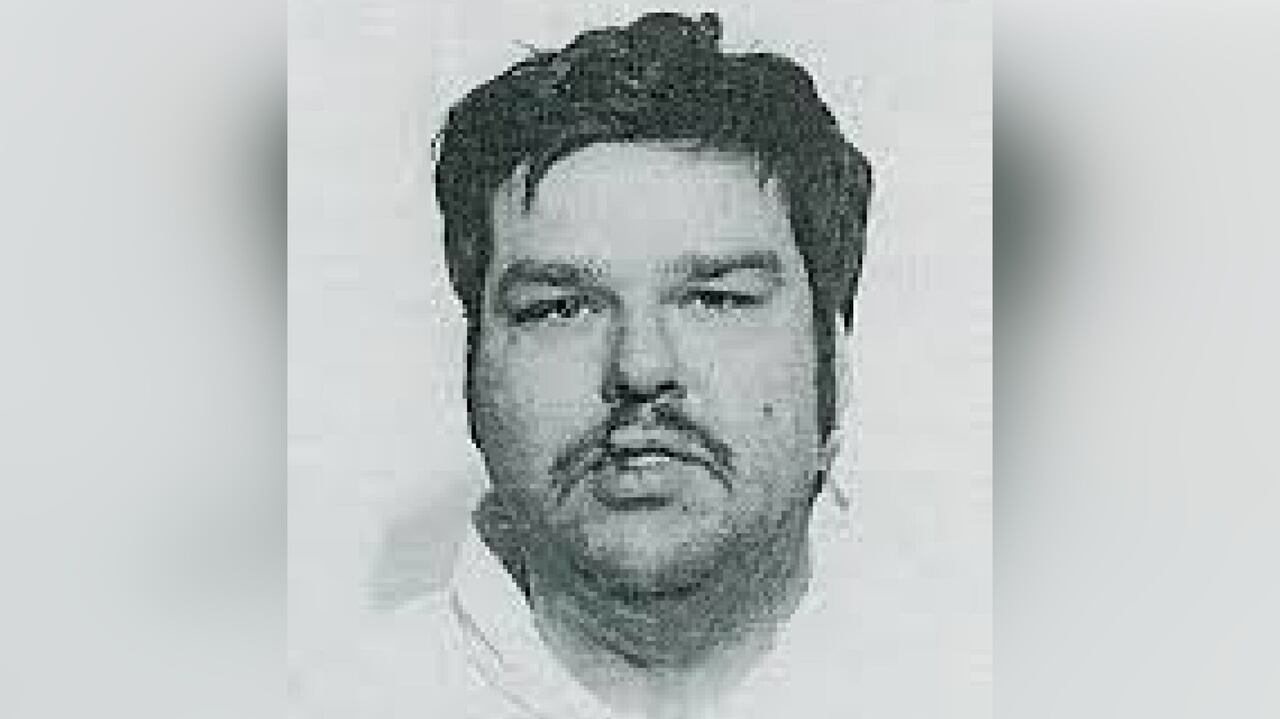
William "Kenny" Wagner: The Appalachian Outlaw
Overview
William Kenneth "Kenny" Wagner, also widely known as "Kinnie," was a notorious bootlegger and outlaw whose violent crime spree in the mid-1920s left a trail of dead across three Southern states. A skilled marksman turned ruthless killer, Wagner murdered five men, including three law enforcement officers, while evading capture. His repeated and often daring escapes from custody elevated him to the status of a folk anti-hero in some circles, his exploits immortalized in ballads and pulp magazines. Wagner's life of crime, however, was a grim reality for his victims and their families. After a series of captures and escapes, he was ultimately sentenced to life in Mississippi's notorious Parchman Farm, where he died in 1958.
Early Life and Path to Crime
Born in Scott County, Virginia, on February 18, 1903, William Kenneth Wagner was one of eight children. He grew up in the mountains and developed an extraordinary talent for shooting at a young age. At sixteen, he left home to join the Richard Brothers Circus, where his marksmanship and skill as a bronco buster earned him the nickname "The Texas Kid."
After leaving the circus life, Wagner settled in Mississippi and entered the lucrative but dangerous world of bootlegging during the Prohibition era. His turn to crime quickly led to his first serious brush with the law. In October 1924, he was arrested in George County, Mississippi, for allegedly stealing a watch. Wagner would later claim he was framed by a corrupt sheriff. Held in the jail in neighboring Greene County, he did not wait long to begin what would become a pattern of escaping custody. In November 1924, he broke out of the jail in Leakesville, Mississippi, becoming a fugitive for the first time.
The Murders
Deputy Sheriff Murdock McIntosh
Wagner's life as a fugitive escalated to that of a killer on Christmas Eve, 1924. A posse was formed to recapture him, and Greene County Deputy Sheriff Murdock McIntosh was part of the effort to bring him in. Accounts suggest the officers were attempting to ambush Wagner near a swamp when a gun battle erupted. Wagner, firing his weapon, shot and killed Deputy McIntosh. Following the murder, Wagner fled Mississippi, heading back toward the familiar territory of his native mountains in Virginia and Northeast Tennessee. The state of Mississippi offered a $1,000 reward for his capture, dead or alive.
Patrolman John F. Smith and Deputy Sheriff Hubert Webb
For several months, Wagner successfully hid from the law with the help of friends and family. In April 1925, authorities learned that Wagner planned to meet his sister on the Long Island of the Holston River near Kingsport, Tennessee. On April 13, 1925, a group of five lawmen converged on the location to capture the fugitive.
When the officers approached, Wagner opened fire. The ensuing shootout was a tragedy for law enforcement. Kingsport Police Patrolman John F. Smith, 35, and Sullivan County Deputy Sheriff Hubert Webb, 25, were both shot and killed. A third officer, Patrolman George Frazier, was seriously wounded in the gunfight. Wagner managed to escape the chaotic scene, first by swimming across the river and then stealing a horse.
Sam and Will Carper
After the Kingsport shootout, Wagner remained on the run. He eventually made his way to Texarkana, Arkansas. On the night of August 17, 1926, Wagner was involved in a violent altercation on a farm. During the fight, he shot and killed two brothers, Sam and Will Carper, and wounded their brother, Bob. The circumstances of the shooting were disputed, with Wagner later claiming self-defense, but the Carper brothers were reportedly unarmed.
The Victims
- Murdock McIntosh — A Deputy Sheriff in Greene County, Mississippi, killed on December 24, 1924, while attempting to apprehend Wagner.
- John F. Smith, 35 — A Patrolman with the Kingsport Police Department in Tennessee, he was killed on April 13, 1925, in a shootout with Wagner.
- Hubert Webb, 25 — A Deputy Sheriff with the Sullivan County Sheriff's Office in Tennessee, he was killed alongside Patrolman Smith on April 13, 1925.
- Sam Carper — Killed by Wagner in a dispute near Texarkana, Arkansas, on August 17, 1926.
- Will Carper — Sam Carper's brother, he was also shot and killed by Wagner during the same incident on August 17, 1926.
Investigation and Capture
The manhunt for Kenny Wagner intensified after the murders of the two Tennessee lawmen. The day after the Kingsport shootout, on April 14, 1925, Wagner, reportedly tired of being hunted, surrendered to a storekeeper near Waycross, Virginia.
He was taken to the Sullivan County Jail in Blountville, Tennessee, to await trial for the murders of Smith and Webb. However, Wagner's time in custody was short-lived. On July 10, 1925, before he could be retried after a successful appeal of his initial death sentence, Wagner orchestrated a mass escape from the jail with six other inmates, overpowering the guards.
Wagner's freedom lasted for over a year. He reportedly traveled to Mexico before returning to the United States. His time as a fugitive came to a surprising end on August 19, 1926. A few days after killing the Carper brothers, Wagner walked into the office of Miller County Sheriff Lillie Barber in Texarkana, Arkansas, and surrendered himself. He reportedly told the female sheriff, "I'm tired of being hunted."
Trial and Sentence
Following his surrender in Arkansas, authorities from Mississippi, Tennessee, and Arkansas all wanted custody of Wagner for the murders committed in their jurisdictions. Since his first murder was in Mississippi, he was turned over to authorities there to face trial for the killing of Deputy Murdock McIntosh.
In Tennessee, Wagner had already been tried for the murders of officers Smith and Webb. His trial began on April 21, 1925, and on April 26, he was convicted and sentenced to death by electrocution. However, he won an appeal for a new trial before his escape.
After being returned to Mississippi in 1926, Wagner was tried for the murder of Deputy McIntosh. He was convicted and sentenced to life imprisonment at the Mississippi State Penitentiary, better known as Parchman Farm. He was never tried for the murders of Sam and Will Carper in Arkansas.
Life in Prison, Escapes, and Death
Wagner's life at Parchman Farm was marked by periods of model behavior punctuated by audacious escapes. He was eventually made a trustee and put in charge of the prison's bloodhounds, a position he used to his advantage. He reportedly trained the dogs not to follow his scent, a skill he utilized in a 1940 escape. He remained at large for three years before being recaptured by the FBI in Virginia in 1943.
He escaped from Parchman again in 1948 but was eventually returned to the prison. His final years were spent in and out of the prison hospital due to a heart condition. On March 9, 1958, William "Kenny" Wagner, aged 55, collapsed and died from a massive heart attack while petting the prison's dogs. His body was returned to his native Virginia for burial.
Aftermath and Legacy
Kenny Wagner's violent life and repeated escapes from the law made him a legendary figure in Appalachian folklore. His story was captured in popular ballads of the era, such as "Kinnie Wagner" and "Kinnie Wagner's Surrender," which transformed the brutal facts of his crimes into a narrative of a defiant outlaw. While these songs and stories often romanticized his life on the run, the reality was a series of cold-blooded killings that left widows and orphaned children in their wake. For the communities he terrorized and the families of the men he murdered, his legacy is one of violence and loss, a stark contrast to the folk hero image. He remains a complex and dark figure in the history of American crime.