Billy Wayne Waldrop: The Alabama Killer
Overview
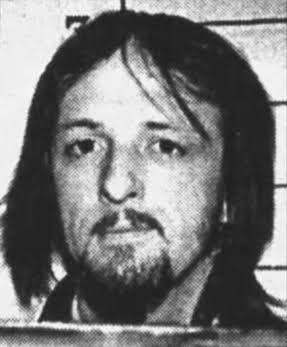
Billy Wayne Waldrop’s criminal career was a story of shocking brutality, a justice system’s failure, and a second chance that led only to more death. Over nine years, Waldrop murdered three elderly men in rural Alabama during two separate, savage crimes. The first, in 1973, was a double homicide marked by torture and mutilation. For this, he received a sentence so lenient that he was paroled in less than seven years. Free again, he quickly returned to violence. In 1982, he orchestrated the robbery and murder of another elderly man, a crime that finally led him to death row. His case became a chilling example of how a dangerous offender, once caught, was released to kill again. Waldrop was executed in 1997, his final moments a stark contrast to the terror he inflicted upon his victims.
Early Life and Criminal Beginnings
Billy Wayne Waldrop was born in Alabama on February 6, 1952. Little is publicly known about his upbringing, but his path into the criminal justice system began early. As a teenager, he started accumulating a police record that quickly escalated from minor offenses to serious felonies. Before committing his first murders, Waldrop had already been convicted of assault, auto larceny, and attempted murder, establishing a clear pattern of escalating violence.
In March 1972, he was sentenced to two years in prison for two counts of auto larceny. He was assigned to a work-release program in Mobile, a status that afforded him a degree of freedom. That trust was misplaced. On April 29, 1973, Waldrop escaped from the program, becoming a fugitive. His freedom would last only two months, but in that short time, he would commit the crimes that first defined him as a killer. By the time of his final crime spree in 1982, he was also a wanted man in Georgia, suspected in the kidnapping of a 10-year-old girl from Atlanta.
The 1973 Calhoun County Murders
On the night of June 26, 1973, the 21-year-old Waldrop, still on the run, broke into a small home in the Blue Mountain area of Calhoun County, Alabama. The house belonged to 60-year-old Clarence Ralph Snider. Also present was Snider's cousin, 58-year-old J. R. Carter. What followed was an act of extreme sadism. Waldrop bound and blindfolded both men before torturing them. He then stabbed them repeatedly, killing them both.
After the murders, Waldrop lingered over the scene. In a grotesque gesture of authorship, he used a knife to carve his initials, "B. W. W.," into the flesh of one of his victims. The bodies were discovered, and the brutality of the crime shocked the community.
The manhunt for the escaped convict now turned into a murder investigation. Two days later, on June 28, 1973, authorities located and arrested Waldrop. He was charged with two counts of first-degree murder and with escaping the work-release program. While held in the county jail, Waldrop displayed signs of instability, making two separate suicide attempts. In the first, he slit his wrists. In the second, he managed to acquire a razor and slashed his stomach and arms.
Despite the viciousness of the double homicide and the mutilation, Waldrop was spared the death penalty. His defense attorneys struck a plea bargain with the Calhoun County District Attorney's office. On October 3, 1973, Waldrop pleaded guilty to two counts of second-degree murder. The judge initially sentenced him to 20 years for Snider's murder and 15 years for Carter's, to be served consecutively. However, the 20-year sentence violated the terms of the plea agreement. After a successful appeal, the sentence was amended to 15 years. On January 3, 1981, after serving just over seven years, Billy Wayne Waldrop was granted parole and released from prison.
The 1982 Talladega County Murder
Less than two years after his release, Waldrop was again plotting a violent crime. He conspired with two acquaintances, William Eugene Singleton and Henry Leslie Mays, to commit a robbery. Their target was Thurman Macon Donahoo, a 72-year-old man who lived alone in a century-old house in the rural Alpine community of Talladega County. A rumor had circulated that Donahoo, a retired pipefitter, owned a valuable five-carat diamond ring.
On the night of June 2, stretching into the early morning of June 3, 1982, the three men drove to Donahoo's isolated home. Waldrop, the planner of the crime, stayed in the car as a lookout while Singleton and Mays broke into the house. They ambushed Donahoo, beating him severely. They stole the diamond ring, a wedding band, and approximately $130 in cash. During the assault, Donahoo was shot in the head.
To destroy evidence, the men set the old wooden house on fire before fleeing the scene. Firefighters who responded to the blaze later discovered Donahoo's body in the charred ruins. The corpse was so badly burned that it was almost unrecognizable. An autopsy later confirmed he had been shot, and the cause of death was determined to be a gunshot wound to the head.
The Victims
- J. R. Carter, 58 — Murdered on June 26, 1973, in Calhoun County. He was visiting his cousin, Clarence Snider, when Waldrop broke in, torturing and stabbing both men to death in a brutal and unprovoked attack.
- Clarence Ralph Snider, 60 — Murdered on June 26, 1973, in his home in Calhoun County. He and his cousin were the first known victims of Waldrop's murderous violence, subjected to torture before being killed.
- Thurman Macon Donahoo, 72 — Murdered on June 3, 1982, in Talladega County. A resident of the Alpine community, he was known to be a quiet man living in his family's old home. He was robbed, beaten, and shot before his house was set on fire.
Investigation and Capture
The investigation into the Donahoo murder quickly focused on Billy Waldrop, whose violent history was well known to law enforcement. After the murder, Waldrop and Mays fled to Tennessee, where they tried unsuccessfully to sell the stolen diamond ring. The trail eventually led investigators to Waldrop, who had since traveled to California.
In July 1982, Waldrop was arrested in California for driving under the influence. A routine background check revealed the outstanding warrants and suspicion connecting him to the Alabama murder. He was extradited and returned to Alabama on August 19, 1982, initially on a warrant from Calhoun County for receiving stolen property. He was soon transferred to the custody of Talladega County authorities.
While incarcerated, Waldrop gave two detailed statements to investigators on August 20 and August 23. He confessed to planning the robbery of Thurman Donahoo, providing Singleton and Mays with a pistol and driving them to the house. He admitted to his role as lookout and to helping the others flee after the crime. In his confession, Waldrop insisted that he had remained in the car and that William Singleton was the one who actually shot Donahoo. He claimed he did not know Donahoo would be killed. However, under Alabama law, his participation in a robbery that resulted in death made him equally culpable for capital murder.
Trial and Sentence
In December 1982, a Talladega County grand jury indicted Billy Wayne Waldrop on six counts of capital murder, covering murder during a robbery, murder during a burglary, and murder during arson. His trial commenced in February 1983.
The prosecution's case was built on Waldrop's own detailed confessions, which placed him at the center of the crime. The state also presented evidence of his two prior second-degree murder convictions from 1973, establishing his history of lethal violence. On February 18, 1983, after a short deliberation, the jury found Waldrop guilty on all six capital counts.
The trial immediately moved to the sentencing phase. The jury heard arguments from both sides but was ultimately swayed by the aggravating factors: the murder was committed during a robbery, a burglary, and an arson, and Waldrop had a significant history of prior violent felonies. That same day, the jury returned with a unanimous recommendation for the death penalty. On March 22, 1983, the trial judge formally accepted the jury's recommendation and sentenced Billy Wayne Waldrop to death by electrocution.
His accomplices received far less severe punishments. Henry Leslie Mays died in prison of natural causes while awaiting his trial. William Eugene Singleton, the man Waldrop accused of being the triggerman, was convicted of conspiracy and burglary. He was sentenced to life plus 175 years. In a second controversial parole decision connected to Waldrop's crimes, Singleton was released from prison in 1994 after serving only ten years of his sentence.
Even while facing a capital trial, Waldrop's violent tendencies continued. In January 1983, while in jail awaiting his trial for Donahoo's murder, he stabbed another inmate, Ray Anthony Thompson. He was later convicted of attempted murder for this attack.
Appeals and Execution
For nearly 14 years, Billy Wayne Waldrop resided on death row at Holman Correctional Facility near Atmore, Alabama. Through his attorneys, he filed numerous appeals, challenging his conviction and death sentence. His case moved through the Alabama Court of Criminal Appeals, the Alabama Supreme Court, and federal courts, including multiple petitions to the U.S. Supreme Court. In his appeals, he argued that his confession was coerced and that his trial counsel was ineffective. Every appeal was denied.
Throughout his time on death row, Waldrop maintained his innocence in the shooting of Thurman Donahoo, though he never denied his role in the robbery. Hours before his scheduled execution, he gave a final interview to a Christian radio station. "With Christ as my witness, I did not take this man's life," he insisted.
On the evening of January 10, 1997, Waldrop was led into the execution chamber. As the 44-year-old was being strapped into Alabama's electric chair, known as "Yellow Mama," he began to sing "Amazing Grace." He waved to a minister who was present as a spiritual advisor. He offered no final words. At 12:02 a.m., the first of two jolts of electricity was sent through his body. Billy Wayne Waldrop was pronounced dead at 12:13 a.m.
Aftermath and Legacy
Billy Waldrop's execution brought an end to a criminal saga that left three men dead and exposed critical weaknesses in the justice and penal systems. The decision to grant him parole after he had tortured and murdered two men in 1973 was a catastrophic failure that directly led to the death of Thurman Donahoo. The subsequent parole of his accomplice, William Singleton, after only a decade in prison for his role in the same murder, further compounded the sense of injustice for the victims' families and the community.
Waldrop's case remains a dark chapter in Alabama's criminal history. He was not a complex or mysterious figure but a violent predator whose danger was identified early. His story is a tragic illustration of what can happen when such a person is prematurely returned to society, a cautionary tale of a second chance that was not earned and was ultimately paid for with another innocent life.