The Essex County Prostitute Killings: A Reign of Terror in New Jersey
Overview
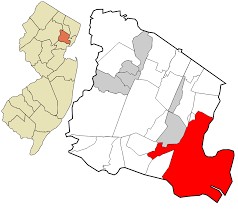
Between March 1993 and February 1998, a terrifying series of murders gripped Essex County, New Jersey, leaving a trail of fear and unanswered questions. At least fourteen women, all of whom were Black and most of whom were involved in sex work, were brutally killed across the cities of Newark, Irvington, and East Orange. The victims, ranging in age from 19 to 37, were found discarded in desolate locations—vacant lots, dumpsters, and abandoned buildings. The methods of murder were varied, including strangulation, stabbing, and suffocation, which led investigators to a chilling conclusion: this was likely the work of more than one predator operating in the same area and targeting the same vulnerable population.
The slayings prompted the formation of a special task force, but the investigation was fraught with challenges. While several individuals were scrutinized, only one man, Harrison Hogue, was ever convicted, and for only one of the murders. The other thirteen cases grew cold, leaving a painful legacy for the victims' families and a stark reminder of the dangers faced by marginalized women. The Essex County Prostitute Killings remain one of New Jersey's most disturbing unsolved serial murder sprees.
The Murders
The five-year reign of terror began on March 4, 1993, when 34-year-old Diane Floyd was found murdered in her Newark apartment. For years, her death was not publicly connected to a larger pattern. However, as the bodies of more women were discovered under violent circumstances, a horrifying trend emerged. The killings were concentrated in urban areas, with nine of the murders occurring in Newark, three in Irvington, and two in East Orange. The victims were often left in hidden, out-of-the-way places, their bodies disposed of with a chilling lack of ceremony.
The violence seemed to accelerate dramatically in 1997. On April 4, the body of 37-year-old Valerie Wilson was found in a weed-strewn lot behind an auto repair shop in Newark. An autopsy revealed she had been stabbed multiple times and strangled; her death was caused by a combination of sharp and blunt force injuries to her head, neck, and chest.
The fall and winter of that year brought a shocking spike in the killings. On November 22, 1997, the body of 28-year-old Sharon Smith was discovered in a dumpster. The very next day, November 23, another victim, 30-year-old Yolanda Earp, was found. The discovery of two victims in two days sent a wave of panic through the community and intensified the pressure on law enforcement to find who was responsible.
The last victim officially linked to the series was 30-year-old Yvonne Lee, whose body was found on February 11, 1998. The inconsistent methods used across the slayings were a major puzzle for investigators. While some law enforcement sources initially told the press that "all indication points to a serial killer," the differing modi operandi increasingly suggested the horrifying possibility of multiple predators hunting vulnerable women in the same territory.
The Victims
The fourteen women who lost their lives were mothers, daughters, and sisters, individuals whose struggles often left them vulnerable. Due to the passage of time and the nature of their lifestyles, public records have preserved the names of only a handful, leaving many to be remembered only as statistics in a tragic series of crimes. The known victims are:
- Diane Floyd, 34 — Found murdered in her Newark apartment on March 4, 1993. She is considered the first victim in the series.
- Valerie Wilson, 37 — Discovered in a lot in Newark on April 4, 1997. A mother and a woman known to struggle with addiction, her murder would be the only one in the series to be officially solved.
- Sharon Smith, 28 — Found in a Newark dumpster on November 22, 1997, during a period of rapid escalation in the killings.
- Yolanda Earp, 30 — Discovered on November 23, 1997, just one day after Sharon Smith was found. Her father was a retired Special Police Officer.
- Yvonne Lee, 30 — The last known victim connected to the spree, her body was found on February 11, 1998, in Newark.
Investigation and Task Force
As the body count rose through 1997 and into early 1998, public fear and media attention intensified. In February 1998, Newark Police Director Joseph Santiago publicly acknowledged the alarming pattern of murdered women. In response, on March 31, 1998, Essex County Prosecutor Patricia A. Hurt announced the formation of a special task force dedicated to investigating the killings. The multi-agency group included detectives from the Essex County Prosecutor's Office, the Newark Police Department, and other local jurisdictions affected by the crimes.
The investigation was complex from the outset. The victims' transient lives and work made it difficult for detectives to retrace their final hours or identify potential witnesses. The different causes of death also complicated efforts to create a single profile of a suspect. The task force pursued numerous leads and investigated several men, two of whom became primary suspects.
Suspects: Bharat Malde and Harrison Hogue
In July 1998, the task force made its first significant arrest. Bharat Malde, a 31-year-old from Roselle, was taken into custody. He was not charged with murder, but with a series of abductions and sexual assaults against five prostitutes between February and May of that year. Malde’s method was to pose as an undercover police officer to lure the women into his car before driving them to secluded areas and raping them. In August 1998, he was publicly named a suspect in the murder series, but investigators were never able to gather sufficient evidence to link him directly to any of the homicides. In June 1999, Malde was sentenced to six years in prison for the sexual assaults.
A more definitive breakthrough came in the murder of Valerie Wilson. On October 14, 1998, authorities arrested 59-year-old Harrison Hogue and charged him with her murder. Hogue was a known figure to sex workers in the area, some of whom had grown suspicious of him and had shared their concerns with police. The crucial break came when a friend of Hogue's, Freddie Dizly, came forward as an eyewitness. Dizly told police he had been with Hogue and Wilson and had seen Hogue strangle her. After his arrest, Hogue gave a formal statement in which he admitted to knowing Wilson and other local prostitutes. He also admitted that he routinely carried knives, including a "good knife and a good filet knife or ice pick," but denied seeing Wilson on the day she was killed.
Trial and a Single Conviction
Harrison Hogue's journey through the justice system was long and complex. Shortly after his arrest in October 1998, he was evaluated and found incompetent to stand trial, leading to his commitment to a psychiatric hospital. However, by January 1999, his condition was deemed to have improved, and he was declared competent to face the charges against him.
Hogue's trial for the murder of Valerie Wilson began in June 2000. On June 13, 2000, a jury found him guilty of purposeful or knowing murder and two related weapons offenses. The prosecution's case rested heavily on the eyewitness testimony of Freddie Dizly and Hogue's own incriminating statements to police. Forensic evidence, though contested, also played a part. A sample of Type A blood had been found underneath Wilson's fingernails. At trial, Hogue's defense sought to have his blood typed, but the court ruled the results would be inadmissible, arguing that even if Hogue had a different blood type, it wouldn't be exculpatory because the blood could have been Wilson's own.
On September 29, 2000, Harrison Hogue was sentenced to a term of 30 years to life in prison, with a mandatory minimum of 30 years before he would be eligible for parole. He later appealed his conviction, and in a notable 2003 decision, the New Jersey Supreme Court granted him the right to have DNA testing performed on the forensic samples from the crime scene. The DNA test report, completed on May 17, 2004, ultimately did not provide grounds for a new trial, and Hogue's conviction was affirmed.
Aftermath and Unsolved Cases
The conviction of Harrison Hogue brought a measure of justice for Valerie Wilson and her family, but it was a solitary victory in a much larger tragedy. Hogue was a suspect in other killings, but no evidence ever emerged to charge him in connection with them. The task force was eventually disbanded, and the investigations into the other thirteen murders went cold.
The Essex County Prostitute Killings stand as a grim testament to the extreme vulnerability of women in sex work, who are often targeted by predators confident that their crimes will go unnoticed or unpunished. For the families of Diane Floyd, Sharon Smith, Yolanda Earp, Yvonne Lee, and the ten other women whose names were never publicly released, there has been no closure and no justice. Their cases remain open but inactive, a collection of cold files in the archives of New Jersey law enforcement and a haunting reminder of the killers who walked the streets of Essex County and, for the most part, were never held accountable.