
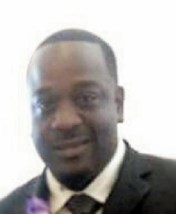
On Friday, June 24, 2016, 33-year-old Stephen Videl “Cheeze” Ragas Sr. was found dead from gunshot wounds inside a home in the Algiers section of New Orleans. The Orleans Parish coroner later identified Ragas among three people who had recently died from gunfire in the city. Contemporary reporting placed the discovery in the 1000 block of Pacific and stated that Ragas was found at approximately 3 p.m. Beyond those basic facts, however, remarkably little information about the circumstances of his killing appears in the publicly available record. No detailed narrative of what occurred inside the residence, what preceded the gunfire, or who might have been responsible was included in the contemporary report. Years later, case-tracking records continue to describe his death as an unresolved homicide, with no publicly identified suspect or reported arrest connected to his killing.
The clearest contemporary description of the crime scene is also one of the shortest. FOX 8 reported on July 5, 2016, that Orleans Parish Coroner Jeffrey Rouse had identified Ragas as a gunshot victim and that the 33-year-old had been killed in the 1000 block of Pacific. The report said he had been found at 3 p.m. on a Friday inside an Algiers home. The article did not identify the precise house number, describe how police were summoned, say whether another person was present when authorities arrived, or explain whether investigators believed Ragas had been specifically targeted. It likewise offered no description of witnesses, physical evidence, a possible weapon, or a suspected motive. Those omissions are significant because, in the public record, they leave almost no visible pathway between the discovery of Ragas and the person responsible for his death.
The homicide record is sparse, but surviving information about Ragas himself is considerably richer. Stephen Videl Ragas Sr., known by the nickname “Cheeze,” was born on September 1, 1982. His obituary described him as a native of Port Sulphur, specifically the Churchville community, who had lived in Algiers for many years. He was 33 when he died. The obituary identified Peggy Ragas Matthews as his mother and described him as the devoted father of two children, Serenity Virginia and Stephen Videl Ragas Jr. It also documented an extensive network of aunts, uncles, cousins, friends and other relatives. The sheer number of family members identified in his memorial notice illustrates something that a short crime report cannot: Ragas was not merely a name in a homicide count. He belonged to a large family and left children who would have to grow up with his absence.
Ragas's life connected two parts of southeastern Louisiana. He came from Port Sulphur in Plaquemines Parish and later became a longtime resident of Algiers, the portion of New Orleans located on the west bank of the Mississippi River. His obituary linked his family history to Port Sulphur while also showing how firmly his adult life had become connected to the New Orleans community. A later case profile states that he graduated with Edna Karr High School's Class of 2000 and attended Delgado Community College. The original obituary also specifically invited members of the Edna Karr Class of 2000 and classmates from Delgado Community College to his funeral, independently confirming those educational connections. These details establish a life anchored in local institutions and relationships long before his name became associated with an unsolved homicide.
Public accounts repeatedly emphasize Ragas's role as a father. His obituary identified Serenity Virginia and Stephen Videl Ragas Jr. as his children, while later memorial material contains messages describing how deeply he was missed. That distinction matters when looking back at a case whose surviving official details are so limited. Police and coroner records necessarily reduce events to times, locations and causes of death; family memorials preserve a different history. Ragas's relatives and friends remembered a person whose relationships continued far beyond the date of his death. The contrast between those personal records and the thin homicide record makes the unresolved nature of the killing particularly stark: there is abundant evidence of the people who cared about him, yet almost no public information identifying the person who killed him. Unlock the full case narrative for , all available source links, additional videos, and member discussions.
MEMBER ACCESS
Continue reading the complete case summary
Cancel anytime.
Already a member? Log in

February 24, 2025, 03:41
Comments:
0
February 19, 2025, 18:24
Comments:
0
April 10, 2025, 17:22
Comments:
0
April 11, 2025, 13:08
Comments:
0
April 28, 2025, 00:23
Comments:
0
February 22, 2025, 17:31
Comments:
0

March 10, 2025, 03:18
Comments:
0

April 28, 2025, 02:29
Comments:
0
April 12, 2025, 03:51
Comments:
0

July 7, 2025, 03:18
Comments:
0
LM
on Vanished Without a Trace: The Unsolved Disappearance of Silvia Menendez in Downtown Los Angeles
Silvia es mi hermana. Si en algún momento tu encuentras este post. Quiero que sepas que te busco, necesito saber que estás bien, segura y a salvo, yo estoy sufrurndo mucho con esta incertidumbre al no saber nada de ti y prnsar que puedas no estar bien.
July 3, 2026, 06:44
LM
on Vanished Without a Trace: The Unsolved Disappearance of Silvia Menendez in Downtown Los Angeles
She is my sister, and I am trying to locate her.
April 30, 2026, 04:53
HC
on Vanished Without a Trace: The Disappearance of Saidy Yolibeth Chirinos in Falfurrias, Texas
Te Xtraño muchooo mi lokitha bella te llevo presente cada día que Dios me presta de vida💔😪
January 31, 2026, 10:14
OT
on Vanished at Sea: The Mysterious Disappearance of Cameron Booth Off Chincoteague's Coast
He was a criminal, an abuser, likely who didn't want to face justice of his actions and took his own life because he could not face the consequences of what he did. The victims have told the family his crimes, with evidence. The family knows he was arrested and convicted of possession of CSAM. They know who and what he was. And they're all so equally sick they live in comfort that the victims don't want to retraumatize themselves over everything he put them through. Dont support this families sick parade of using a monster to get sympathy. He was never ashamed of who he was. He loudly boasted his crimes and justified them. The family shouldn't sit there and pretend, how far from reality are they to sit and post this man publicly on news outlets, websites, knowing who he is. Do they need attention that badly? They don't want the attention from the truth. The victims will never get justice. Do not pray for him o
January 22, 2026, 22:01