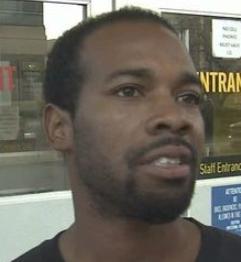
Deontae Johnson, a 25-year-old Black man from Detroit, Michigan, was born on January 12, 1992. His life came to an end on Wednesday, October 4, 2017, but the circumstances surrounding his death remain shrouded in an unnerving silence. In the years since he passed, no public accounts or news reports have emerged to explain what happened to him, leaving a void for his family and community. The public record of his death is so sparse that it consists of little more than his name and the date he was lost.
Ten days after his death, on Friday, October 13, 2017, a public visitation was held for Deontae at a funeral home on Rosa Parks Boulevard. The following day, his family and friends gathered for a funeral service at the Oakland Avenue Missionary Baptist Church on Harper Avenue to say their final goodbyes. Beyond these funereal events, which mark the end of a young life, there is no official narrative. Details regarding the specific location, manner, or cause of his death have never been released by law enforcement or reported in the media.
The absence of information is a heavy burden. It is unknown if Deontae was the victim of a violent crime, a tragic accident, or a medical emergency. Without a statement from the Detroit Police Department or any investigating body, his case exists outside the public discourse that often accompanies a homicide investigation. There has been no mention of detectives assigned, evidence collected, or persons of interest sought. This lack of a public footprint leaves critical questions unanswered and prevents community members from coming forward with potential information.
Detroit is a city that has long contended with a high number of homicides, and many of these cases grow cold, their files gathering dust as new tragedies demand immediate attention. According to data from nonprofit organizations that track unsolved cases, thousands of homicides in Detroit dating back decades remain unresolved. These cold cases represent a quiet epidemic of unresolved grief and justice denied, affecting families across generations. Factors such as a lack of physical evidence or witnesses willing to speak can stall an investigation before it ever truly begins, leaving cases like Deontae's in a state of perpetual uncertainty.
For the loved ones of Deontae Johnson, the years have passed without answers, without closure, and without justice. The silence from official sources means the story of his final moments has never been told. The case of Deontae Johnson, as of late 2024, is a stark reminder of the many unsolved deaths in Detroit and across the country. With no active investigation publicly noted, no suspects identified, and no arrests made, his death remains an unwritten final chapter. The path to understanding what happened to the young man in the autumn of 2017 remains unclear, his memory preserved by those who knew and loved him, while the questions surrounding his death linger in the city's heavy air.