Crime Solvers Central
302 Cases Solved. Advancing justice for missing persons, unsolved homicides, unidentified and unclaimed remains.

Case Description

Any updates on this case? Let us know!
Summary based on 6 sources
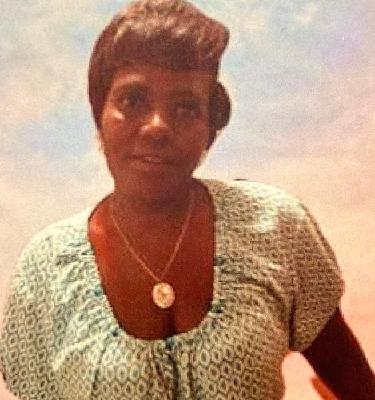
In the spring of 1959, a wave of fear gripped Baltimore as a serial killer dubbed "The Dawn Strangler" preyed on women in the city's east side. The final victim in this terrifying series of attacks was Pearl Weiss, a 38-year-old African American woman whose life was brutally cut short. Her death marked the culmination of a string of similar slayings and led to the capture of the man responsible.

On the morning of Thursday, April 9, 1959, Pearl's body was discovered in an alleyway in East Baltimore. She had been manually strangled, and the bruises on her neck and bloodied fingers showed she had fought fiercely for her life. In a peculiar detail that would become a signature of the killer, her shoes were missing from the scene. The location of her death was just five blocks from where another victim had been found months earlier, cementing the terrifying pattern of the attacks.

Pearl's murder was the third in a series that began in late 1958. The first victim was Mae Hall, 38, found strangled in a neighbor's yard on December 9, 1958. Only five days later, 57-year-old Lottie Kight, a practical nurse, was also strangled and left in an alley two doors from her home. All the attacks occurred in the pre-dawn hours, and the victims were left in alleys or yards near their residences. The city was on edge, and the Baltimore police were under immense pressure to find the person responsible for the killings.

The breakthrough in the case came less than two weeks after Pearl's murder. On April 21, 1959, police officers patrolling an East Baltimore neighborhood heard a woman's screams in the early morning. Investigating the sound, they found a man lurking in an alley. The man was identified as Nathaniel Lipscomb, a 38-year-old laborer. A search of his pockets revealed four pairs of women's underwear, which he claimed to have stolen from clotheslines.

Investigators soon connected Lipscomb to the stranglings. His past included a 1951 arrest in North Carolina for the murder of a woman, a crime to which he had confessed before later recanting. During interrogation for the Baltimore crimes, Lipscomb eventually provided a written confession to the murder of Lottie Kight, and his statements also implicated him in the deaths of Pearl Weiss and Mae Hall. As he had before, he later retracted the confession and insisted he was innocent.

Despite his recantation, Nathaniel Lipscomb was indicted for the rape and murder of all three women. He stood trial in the Criminal Court of Baltimore, where he pleaded not guilty and not guilty by reason of insanity. In a series of bench trials, a judge found him guilty of first-degree murder and rape in all three cases. His defense attorneys argued that he was insane at the time of the murders, but the court found him to be sane. On February 26, 1960, he was sentenced to death for the murder of Lottie Kight.

Lipscomb's lawyer, Robert B. Watts, who would later become a judge, recalled that there was no doubt about his client's guilt, stating, "He told me right off." An appeal to the Maryland Court of Appeals was rejected in December 1960. On June 9, 1961, Nathaniel Lipscomb was executed in the gas chamber at the Maryland Penitentiary. His was the last execution carried out in the state for more than 30 years. The case is now considered solved, with the primary suspect deceased.