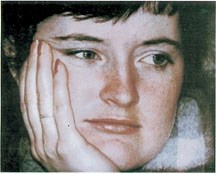
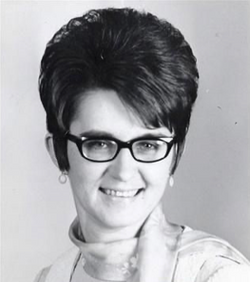
Lorraine McNab, a 47-year-old woman and kindergarten teacher at Canyon School in Pincher Creek, was killed on the night of December 13, 1997, in a carefully executed double homicide that has remained unsolved for decades. McNab was the mother of two teenagers and had been dating RCMP Sgt. Peter Sopow, the 52-year-old commander of the Fort Macleod detachment, for about six months. Both were divorced.
That evening, the couple had been visiting McNab's family near Twin Butte before heading back to her rural acreage south of Pincher Creek.
At approximately 10:30 p.m., McNab and Sopow arrived at the acreage. Investigators believe someone was already waiting for them. The couple had barely reached the area outside McNab's mobile home when they were shot with a. 22-calibre firearm. Later accounts described the attack as an ambush, with the shooter apparently lying in wait for their return. The bodies were then dragged away from the front of the residence and placed inside a horse trailer on the property, which was locked. Investigators also believed the person or people responsible made an effort to clean up the scene before leaving.
Nothing about the property suggested that robbery was the motive. Police found no evidence of a break-in, valuables had not apparently been stolen, and Sopow's wallet had not been emptied. Investigators also reported no evidence of sexual assault. Sopow's red 1993 Ford pickup remained outside. Those circumstances contributed to the belief that the couple had been deliberately targeted rather than encountering a burglar or opportunistic attacker. The murder weapon, believed to have been a. 22-calibre firearm, was not recovered.
The killings went undiscovered for roughly a day and a half. On Monday, December 15, both McNab and Sopow failed to report for work, prompting concern. Police went to McNab's property, and shortly before noon investigators discovered the two bodies inside the locked horse trailer. By that point, severe weather had complicated the scene. The investigation eventually became enormous, involving physical-evidence specialists, extensive searches and hundreds of interviews and tips. An FBI-trained metal-detection specialist examined the property in December 1997, and a Winnipeg police officer with expertise in soil-site examinations was brought in during January 1998.
Investigators became particularly interested in an older red or maroon two-door automobile resembling an early-1970s Mercury Cougar that had been seen in the area. Police publicly sought information about the vehicle, and reports placed a similar car around Lundbreck near the time of the killings. The automobile became one of the most discussed clues in the investigation. Searches were also conducted through fields and bodies of water around southern Alberta in an attempt to locate the missing. 22-calibre murder weapon, but those efforts did not recover it.
Two days after the bodies were found, on December 17, RCMP arrested and questioned Wally Sparks, a local elementary schoolteacher who had known McNab when they worked at the same school. Contemporary reporting stated that Sparks was transferred the following day under Alberta's Mental Health Act to the psychiatric unit at Lethbridge Regional Hospital for assessment. He was eventually released, and no murder charge was filed against him. Later reporting said the vehicle associated with the man arrested after the killings matched the general description of the early-1970s maroon Mercury Cougar investigators were interested in. Reports also said McNab and the teaching colleague had gone on one date. He has never been convicted or charged with the murders, and his involvement was never established in court.
McNab's family later described troubling events in the period before her death. Her daughter said the teaching colleague had persistently sought McNab's attention after their single date and that the family received repeated telephone calls in which the caller would remain silent. She also recalled flowers and other items being left at the house. These details contributed to suspicions within McNab's family, but they did not result in criminal charges and remain allegations and circumstances considered during the investigation rather than proof identifying the killer.
Another potentially significant development involved a. 22-calibre rifle reported missing from the Cowley area. RCMP questioned the firearm's owner about its disappearance but would not publicly establish that the missing rifle, the suspicious automobile and the individual questioned in the homicide investigation were connected. The actual firearm used to kill McNab and Sopow has never been publicly identified or recovered.
The investigation generated an extraordinary volume of information. By mid-January 1998, police had already opened 685 tip files involving people, events and possible leads. Over time, the total grew to approximately 1,000 public tips, with investigators accumulating about 15 banker boxes of evidence, witness statements and other material. In later reviews, RCMP investigators went back through those files looking for overlooked evidence or information that could be tested using newer investigative techniques.
In 2001, investigators received two anonymous handwritten letters mailed from somewhere in southern Alberta. Police believed the writer possessed information about the murders and publicly encouraged that person to make further contact, even offering assurances of anonymity. The writer apparently never contacted investigators again, and authorities did not disclose what was written in the letters.
RCMP officials have repeatedly indicated that investigators developed a suspect or investigative focus without obtaining enough evidence to lay charges. In 2004, an RCMP major-crimes investigator said police continued to believe the same suspect was responsible. A later investigator acknowledged in 2009 that RCMP had a suspect but still needed a crucial additional piece of evidence. A renewed investigative team was assembled in subsequent years to re-examine the extensive file and compare newly recovered firearms with evidence from the murders. None of those efforts resulted in an arrest leading to prosecution.
More than 25 years after the killings, the case remained open. In 2023, an RCMP spokesperson said there was nothing new to announce but confirmed the investigation was still active and had been placed with the historical crimes unit. No one has been charged, tried or convicted of murdering Lorraine McNab and Peter Sopow, and the. 22-calibre weapon used in the ambush remains missing.