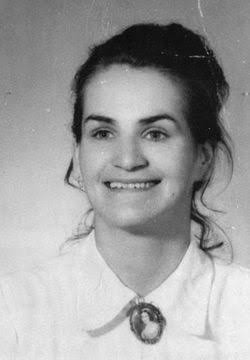
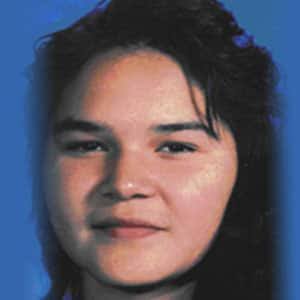
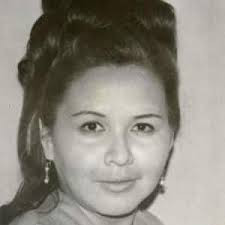
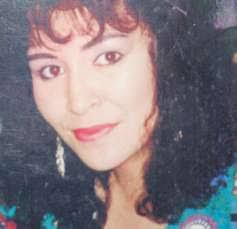
On a spring day in British Columbia, 12-year-old Monica Jack was joyfully riding her brand-new bicycle. It was May 6, 1978, and the bike was an early birthday present from her father. Monica, a member of the Lower Nicola Indian Band, was a kind-hearted and helpful girl, known for her distinctive laugh and a budding artistic talent. That afternoon, she rode from her home on the Quilchena reserve toward the nearby town of Merritt. Her mother, Madeline Lanaro, passed her on the highway, honking in greeting. Monica waved back, choosing to continue her ride rather than accept an offer to put her bike in the car. It was the last time her mother would see her alive.
When Monica failed to return home, her family was immediately alarmed and reported her missing to the Royal Canadian Mounted Police (RCMP). The next morning, her brother Glen began his own search along the highway.
He soon made a heartbreaking discovery down an embankment near Nicola Lake: Monica’s new bicycle, tossed aside just a few feet from the water. Witnesses later reported seeing a truck with a camper in the area and hearing a cry for help, but at the time, the leads went nowhere. For seventeen agonizing years, Monica’s family lived in a state of uncertainty, holding onto the hope that she might one day come home.
The painful mystery of Monica's whereabouts came to a somber end on June 2, 1995. Forestry workers clearing brush after a controlled burn on Swakum Mountain, about 20 kilometers from where her bike was found, discovered human skeletal remains in a remote ravine. It took another eight months for dental records and DNA testing to officially confirm the family's worst fears: the remains belonged to Monica Jack. The discovery brought a new wave of grief but also a renewed determination for justice.
The investigation into Monica's murder had largely gone cold for years. However, her case was eventually included in Project E-PANA, an RCMP task force created to investigate a string of unsolved murders and disappearances of women and girls along three major highways in British Columbia, a region tragically known as the "Highway of Tears." Monica, the youngest of the 18 official victims on the E-PANA list, was last seen on Highway 5A. Investigators re-examined old files and applied new forensic techniques, which eventually led them back to a man who had been a person of interest from the very beginning.
Garry Taylor Handlen, who had a prior conviction for rape and was a suspect in another child murder, was identified and interviewed just a month after Monica vanished. Decades later, in 2014, the RCMP launched an undercover "Mr. Big" sting operation targeting the then 67-year-old Handlen. Believing he was confiding in members of a criminal organization, Handlen confessed to abducting Monica, sexually assaulting her, and strangling her to death before burning her clothes and hiding her body. He was arrested in December 2014 and charged with the first-degree murders of both Monica Jack and 11-year-old Kathryn-Mary Herbert, who was killed in 1975.
In January 2019, more than 40 years after Monica was killed, a jury found Garry Taylor Handlen guilty of her first-degree murder. The courtroom filled with cheers from her family, who had attended the trial every day, sitting directly behind the man who had stolen their daughter and sister. Handlen was sentenced to life in prison. His subsequent appeal was dismissed in 2022, solidifying the long-awaited legal conclusion to the case.
For Monica's mother, Madeline Lanaro, the verdict was the culmination of a four-decade fight for justice, a fight she waged despite her feeling that early investigators were dismissive because of her Indigenous heritage. She praised the later E-PANA investigators for their dedication. Monica's sister spoke in court of the life her sister never got to live—the graduations, the marriage, the children she never had. While the legal battle is over, the family's loss remains. Monica's case is the only one of the 18 official Highway of Tears investigations to have resulted in a murder conviction, a stark reminder of the many other families still waiting for answers.