Crime Solvers Central
302 Cases Solved. Advancing justice for missing persons, unsolved homicides, unidentified and unclaimed remains.

Case Description

Any updates on this case? Let us know!
Summary based on 4 sources
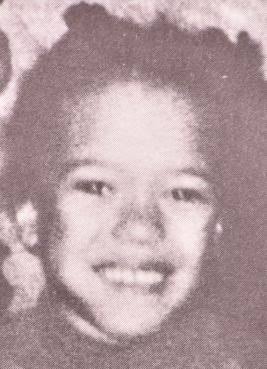
Sharmini Anandavel was a bright and vivacious 15-year-old girl with an infectious smile, just weeks away from her Grade 9 graduation. Having arrived in Canada with her family from Sri Lanka five years earlier, she had settled into life in the Don Mills neighborhood of Toronto. Friends and teachers at Woodbine Junior High School remembered her as intelligent, kind, and opinionated, a loving person who was never mean to anyone. That spring of 1999, Sharmini was excited about the upcoming graduation dance and was determined to earn her own money to buy a mauve dress and matching shoes for the celebration. Her desire for a bit of independence and a new outfit led her to seek a part-time job.

On the morning of Saturday, June 12, 1999, Sharmini told her family she was heading to the first day of a new job. Around 9 a.m., she left her family’s apartment building for the last time. Her younger brother recalled joking with her about laundry as she walked toward the elevator. Later that day, witnesses reported seeing her at the nearby Fairview Mall and later at Peanut Plaza. She never came home. Her family, knowing she was not the type to run away, immediately worried. She was a steady, responsible teenager who was close to her parents and looking forward to her future.

The initial investigation by Toronto police quickly uncovered a strange and sinister element. In Sharmini’s bedroom, they found a phony job application for a non-existent organization called the "Metro Search Unit." The poorly worded document, which only asked for basic personal details, was believed to be a ruse created by her killer to lure her. Police theorized that the person responsible had approached Sharmini with the fake job offer, possibly playing on her youthful earnestness by suggesting she would be working undercover for an anti-drug operation. Investigators believe she willingly went with someone she knew and trusted.

For four agonizing months, her family and community waited for answers. The search came to a tragic end on October 12, 1999, when hikers discovered Sharmini’s skeletal remains in a shallow grave in a wooded ravine near Finch Avenue and Leslie Street, not far from where she was last seen. The discovery confirmed everyone's worst fears and turned a missing person case into a homicide investigation. The serene parkland where she was found became a place of profound sadness for those who knew her.

From the beginning, police focused on a prime suspect: Stanley Tippett, a 23-year-old man who lived one floor below the Anandavel family in the same apartment building. Investigators interrogated him, searched his apartment and car, and placed him under surveillance. While police believed he was responsible for luring Sharmini with the fake job application and killing her, they were never able to gather enough evidence to lay a charge in her murder. Tippett was later convicted of other crimes and designated a dangerous offender, but the link to Sharmini's death could not be proven in court.

Over two decades later, Sharmini Anandavel’s murder remains unsolved. The Toronto Police Service's cold case unit continues to work on the file. As of January 2026, investigators were still re-examining physical evidence from the case, hoping that advances in DNA technology might finally provide the breakthrough needed to secure a conviction. For detectives, the case is a frustrating one, with one investigator noting the difference between knowing who committed a crime and being able to prove it in a court of law. For Sharmini’s family and friends, the years have not erased the pain of her loss or their desire for justice. They remember a sweet, smiling girl, full of promise, whose life was stolen by a predator's cruel deception.