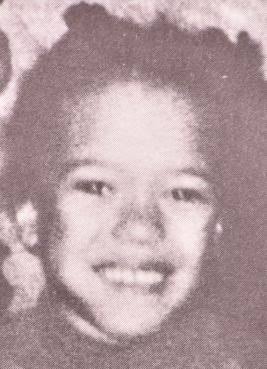
Lizzie Tomlinson, a polite and shy 6-year-old girl, spent the afternoon of Saturday, May 24, 1980, playing with friends at a small parkette in her Toronto, Ontario, neighborhood. The park, located at the corner of Shuter and Sumach Streets, was known to local children as “Stinky’s Park.” Around 3:30 p.m., witnesses saw Lizzie walking away from the playground, hand-in-hand with an unknown man. She was never seen alive again.
The man was described by numerous witnesses as being between 25 and 35 years old, approximately five feet seven inches tall, with a tanned complexion, long dark hair, a beard, and blue eyes. He was reportedly wearing a tan tank top, blue jeans, and brown shoes. In the days leading up to the abduction, other children in the area had reported being approached by a man matching this description who offered them ice cream.
An intensive search for the little girl began immediately after she was reported missing.
Two days later, on the morning of May 26, 1980, Lizzie’s body was discovered in a desolate industrial area, hidden under weeds and a pair of long boards near railway tracks at Bayview Avenue and Front Street. The location was roughly a kilometer from the park where she was last seen, and it is believed she and her killer walked the entire distance. An autopsy revealed that she had been beaten, sexually assaulted with a weed stalk, and strangled. The brutality of the crime sent a shockwave of fear and anger through the city of Toronto.
The investigation, handled by the Toronto Police Service, initially focused on Lizzie’s 26-year-old cousin, Gregory Guerin, who was described as mentally handicapped. Despite Guerin having served as a pallbearer at Lizzie’s funeral and his family, including Lizzie’s mother, providing an alibi, he was arrested and charged with first-degree murder on June 5, 1980. The evidence against him was circumstantial, reportedly including cigarette butts of the same brand he smoked found near the scene. In December 1980, a provincial court judge dismissed the charge, citing a lack of evidence.
Over the decades, the investigation has explored other potential suspects, but no further arrests have been made. Police considered a possible link to a man who had committed a rape the previous year just a few blocks from where Lizzie was taken. Another man, Michael Clarence Murray, was also looked at in connection with the case. In 2010, a woman named Kathy Norris came forward, telling authorities that her father, Dave Norris, who had a history of violence and child molestation, matched the suspect's description and lived in the area at the time. She also alleged that her father was responsible for the disappearances of her mother and brother.
The parkette from which Lizzie was abducted, officially named Sumach-Shuter Parkette, was recently redesigned and, in July 2025, was renamed Louis March Park in honor of a local community advocate. For those who remember 1980, however, it remains the place where a little girl’s life was tragically cut short.
As of December 2025, the murder of Lizzie Tomlinson remains an unsolved cold case. The crucial evidence, including a cigarette butt left at the scene, holds the potential for DNA analysis that was not available at the time of the initial investigation. The Toronto Police Service Homicide and Missing Persons Unit continues to seek information that could lead to the identification and arrest of the person responsible for this devastating crime. Anyone with information is urged to contact the Toronto Police or Crime Stoppers.