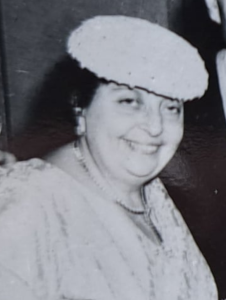
In the spring of 1973, Delores Ersula Hurt was a 28-year-old female living in Boston. To some, she was also known by the name Delores Dean. Little is publicly known about the life she led, the family who loved her, or the dreams she held. Her story, like so many others that end in unresolved violence, is now primarily told through the stark and limited details of her final day, a day that left a permanent scar on the city's history. Her life was cut short in an act of violence that also claimed a second victim, leaving behind decades of unanswered questions.
On Friday, May 11, 1973, officers from the Boston Police Department were dispatched to an apartment in the city’s Dorchester neighborhood. Inside Apartment 5 at 104 Columbia Road, they discovered a grim scene. Delores and a man named James Wilder, aged 45, had both been shot to death.
The Office of the Chief Medical Examiner was called to the scene, and after autopsies were performed, the deaths of both Delores and James were officially ruled homicides. The connection between Delores and James, and what might have brought them together in that apartment, has never been publicly clarified by investigators.
The investigation into the double homicide was launched by the Boston Police Department. In 1973, Boston was a city grappling with social change and periods of intense unrest. The Dorchester neighborhood, where the crime occurred, was a sprawling, diverse community. Originally a separate town founded by Puritans in 1630, it was annexed by Boston in 1870 and had grown rapidly with the advent of streetcar lines, leading to the construction of many of the iconic triple-decker homes and brick apartment buildings that still line its streets. By the 1970s, it was a densely populated area facing many of the same challenges as other American urban centers.
Detectives in the 1970s relied on traditional methods of investigation: interviewing neighbors, chasing down leads from informants, and meticulously examining the physical evidence left at a crime scene. Without the benefit of modern forensic technologies like widespread DNA databasing, solving a case often depended on finding a talkative witness or a clear motive. The detectives assigned to the murders of Delores Hurt and James Wilder would have canvassed the area around Columbia Road, a major thoroughfare that had been part of landscape architect Frederick Law Olmsted's vision for an "Emerald Necklace" of parks and parkways connecting the city.
Despite the efforts of the initial investigators, the trail went cold. No arrests were ever announced, and no suspects have ever been publicly named in connection with the killings. The reasons why Delores and James were targeted, and by whom, remain locked in the silence of the past. The case file has remained open, passed down through generations of homicide detectives.
Decades have passed, but the murders of Delores Ersula Hurt and James Wilder are not forgotten. Their names are listed on the Boston Police Department's roll of unsolved homicides from 1973, a silent testament to two lives violently ended and a case that still awaits a conclusion. As of May 2024, the investigation is still considered active by the Boston Police Department's Unsolved Homicide Unit. The department continues to ask for the public's help, emphasizing that even a small, seemingly insignificant piece of information could be the key to finally bringing justice for Delores and James.