Crime Solvers Central
302 Cases Solved. Advancing justice for missing persons, unsolved homicides, unidentified and unclaimed remains.

Case Description

Any updates on this case? Let us know!
Summary based on 3 sources
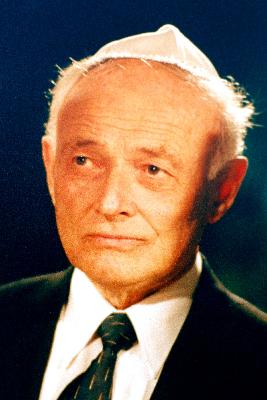
Liviu Librescu was a man who had already faced down the darkest forces of the 20th century and survived. A brilliant academic and a beloved professor, he was born in 1930 to a Jewish family in Ploiești, Romania. During World War II, as Romania aligned with Nazi Germany, Liviu and his family were deported first to a labor camp and later to a ghetto. He survived the Holocaust and went on to study aerospace engineering at the Polytechnic University of Bucharest, eventually earning a Ph.D. and becoming a respected researcher. However, his career was stifled under the communist regime of Nicolae Ceaușescu when he refused to swear allegiance and sought to emigrate to Israel. After being fired and waiting for years, direct intervention from Israeli Prime Minister Menachem Begin finally secured his family's exit in 1978. He taught at Tel Aviv University before accepting a position at Virginia Polytechnic Institute and State University in 1985, where he became a distinguished and prolific professor in the Department of Engineering Science and Mechanics. His colleagues and family remember a man of rare modesty, profound courage, and a deep love for his work and students.

On the morning of April 16, 2007, Liviu Librescu, a 76-year-old White male, was teaching a solid mechanics class in Room 204 of Norris Hall on the Virginia Tech campus in Blacksburg, Virginia. Just after 9:40 a.m., the sounds of gunshots began echoing through the building. A 23-year-old undergraduate student, armed and moving from room to room, had begun a rampage. As the gunman tried to force his way into Room 204, Professor Librescu immediately acted to protect the more than 20 students in his class. While he yelled for them to escape, he used his own body to barricade the classroom door, preventing the shooter from entering.

His courageous stand bought precious time. Students frantically kicked out the window screens and began jumping from the second-story windows to safety. Some suffered leg injuries from the fall, but they escaped. While his students fled, Professor Librescu held the door against the gunman's efforts to push it open. The shooter then fired multiple shots through the door, striking and fatally wounding the professor. Of the students in his classroom, all but one managed to escape. After finally forcing his way in and seeing most had fled, the gunman shot Professor Librescu again, killing him. The attack, which unfolded over about nine minutes in Norris Hall, was the second part of a campus-wide shooting spree that day which claimed the lives of 32 people and wounded many others.

The perpetrator died by suicide as police closed in, ending the deadliest mass shooting in modern U.S. history at the time. Because the killer took his own life, there was no arrest or trial. The investigation, led by the Virginia Tech Police Department with support from state and federal agencies, confirmed the sequence of events and the heroism of individuals like Professor Librescu.

His selfless act, which occurred on Holocaust Remembrance Day (Yom HaShoah), drew worldwide attention and praise. Students he saved spoke of his bravery. "I don't think I would be here if it wasn't for him," one student recalled. His son, Joe Librescu, said his father blocked the door and told the students to flee. President George W. Bush paid tribute to his heroism at the United States Holocaust Museum, saying, "this brave professor blocked the door with his body while his students fled to safety."

Liviu Librescu was laid to rest in Israel. He was posthumously awarded the Order of the Star of Romania, his native country's highest civilian honor, presented to his widow, Marlena. His sacrifice has been commemorated in numerous ways. Virginia Tech's Engineering Science and Mechanics Department established the Liviu Librescu Scholarship. He has also been honored with awards from organizations including the Anti-Defamation League and the Simon Wiesenthal Center. His name is etched on the April 16 Memorial on the Virginia Tech campus, a permanent tribute to a man who, having survived one genocide, gave his life to save others from a senseless act of violence.