Stacey Lee Drake: The Multi-State Crime Spree Killer
Overview
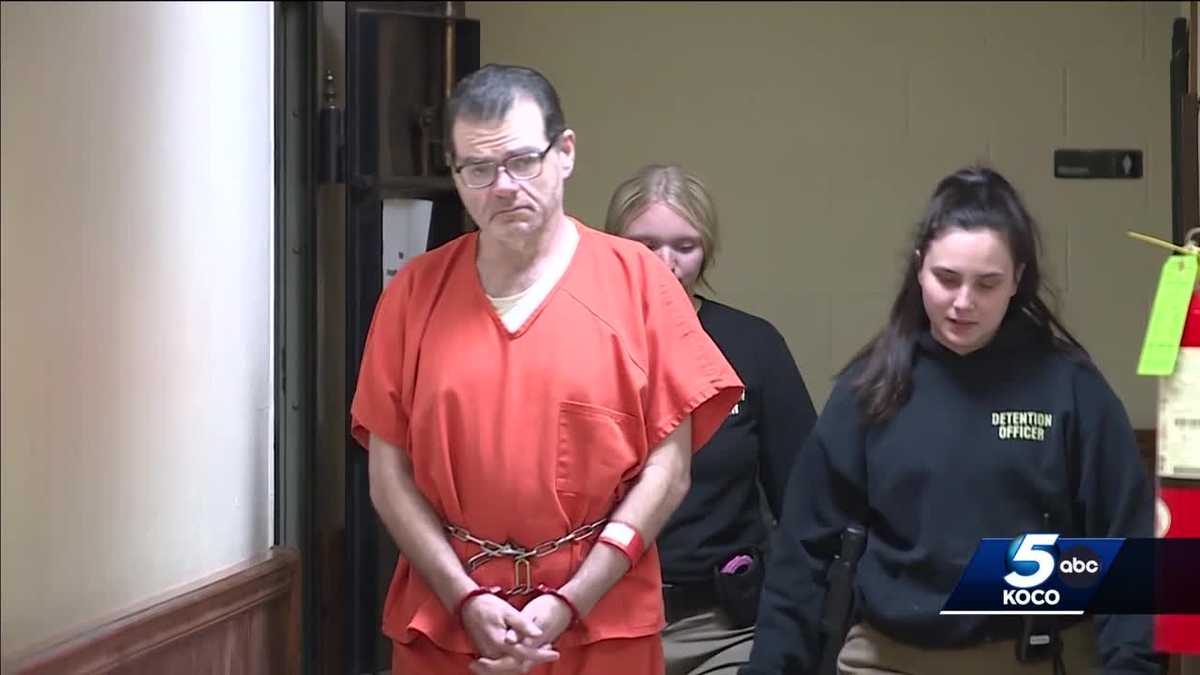
In the late spring of 2024, a violent, multi-state crime spree left a trail of terror and tragedy across Alabama and Oklahoma. Authorities allege that 50-year-old Stacey Lee Drake, a transient with an extensive and violent criminal history, embarked on a month-long rampage of carjackings and murder. The spree resulted in the deaths of four people, sparking a massive manhunt that culminated in his capture in the woods of Arkansas. Now facing multiple counts of first-degree murder, Drake is at the center of a capital case that has left communities shaken and raised profound questions about the justice system's ability to handle career criminals.
A Lifetime of Violence
Stacey Lee Drake's journey through the criminal justice system began decades before the 2024 crime spree. His record, stretching across multiple states, paints a picture of escalating violence. In 1994, he was convicted of armed robbery in Arizona, his first felony. This was followed by a 2003 conviction in the same state for aggravated assault on a peace officer.
By 2010, Drake was in Alabama, where his violent tendencies continued. On February 21, 2010, he held a man at gunpoint with a .45 caliber pistol outside a store, robbing him of his wallet and truck. This led to a federal indictment for carjacking, brandishing a firearm during a violent crime, and being a felon in possession of a firearm. Given his prior felony convictions, he was classified as an Armed Career Criminal. Facing a sentence of 22 to 27 years, he pleaded guilty and received a 22-year prison sentence.
However, a landmark 2015 Supreme Court decision, *Johnson v. United States*, narrowed the definition of what constituted a "violent felony" under the Armed Career Criminal Act. In 2016, Drake successfully petitioned the court, arguing one of his Arizona convictions no longer qualified as a violent felony. A judge granted his motion in March 2017, vacating the enhanced sentence. He was resentenced to just over 11 years and, with credit for time served since his 2010 arrest, was soon released. Following his release, he was in and out of custody for various offenses, including parole violations. In March 2022, for a robbery charge connected to the 2010 incident, he accepted a plea deal and received three years of unsupervised probation. It was after this that he began the series of violent acts that would put him on a path to becoming a suspected serial killer.
The Alabama Murder
The deadly spree allegedly began in Tuscaloosa, Alabama. Drake had been in the area for only a few weeks, living as a transient and using the false name "J.P." He frequented the Alconon Club, a local Alcoholics Anonymous meeting place, where he met 62-year-old Russell Thomas "Rusty" Andrews, a beloved figure in the local recovery community.
On May 14, 2024, Andrews was found dead inside the club. He had been killed by what authorities described as either a gunshot or stabbing. Investigators from the Tuscaloosa County Sheriff's Office Violent Crimes Unit quickly determined Andrews' vehicle was missing and identified the man known as "J.P." as a person of interest. Surveillance footage later captured the stolen vehicle traveling near the Arkansas-Oklahoma border, providing a critical lead that Drake had fled the state.
The Oklahoma Murders
One month later, the violence resurfaced more than 500 miles away in central Oklahoma. On June 14, 2024, the family of 56-year-old Phillip Emerson grew worried when they couldn't reach him. A family member went to his home in El Reno and found him dead. Police determined Emerson had been shot and his vehicle had been stolen. Investigators soon learned that Emerson and Drake were acquainted; they had been seen together on more than one occasion, and Drake had even attended an AA meeting in El Reno where he received a seven-month sobriety chip. Emerson's stolen vehicle was later found abandoned in Sequoyah County, near the site of the next murders.
The crime spree reached its violent climax four days later in the small eastern Oklahoma town of Gans. On the evening of June 18, deputies from the Sequoyah County Sheriff's Office were dispatched to LaFerry's Propane, a local business just off State Highway 64. Inside, they made a grim discovery: the bodies of two employees, 35-year-old Tara Underwood and 30-year-old Taylor Sharp. Both had been shot and killed. Authorities alleged that Drake murdered the pair in the process of stealing another vehicle to continue his flight from the law.
The Victims
- Russell Thomas "Rusty" Andrews, 62 — May 14, 2024, Tuscaloosa, Alabama. A U.S. Air Force veteran and the successful owner of Black Label Game Calls, Rusty was a champion turkey caller. More importantly, he was a devoted father, grandfather, and a compassionate force in the local recovery community, known for his willingness to help anyone struggling with addiction. Friends said he would have given his killer his car and money if he had just asked.
- Phillip Emerson, 56 — June 14, 2024, El Reno, Oklahoma. Remembered as a free spirit who loved his family fiercely, Phillip was a skilled welder and a fan of the Cincinnati Bengals and Reds. He was a loving father and grandfather who enjoyed cooking for his family.
- Tara Nicole Underwood, 35 — June 18, 2024, Gans, Oklahoma. A loving fiancée and the dedicated mother of three children, Tara worked as the office administrator at LaFerry's Propane. Her family described her as a "true ray of sunshine" whose smile and infectious laughter could light up any room.
- Taylor Ross Sharp, 30 — June 18, 2024, Gans, Oklahoma. A hardworking truck driver for LaFerry's Propane, Taylor was a devoted single father to his three young sons. His mother described him as an old soul who would talk to anyone. He enjoyed fishing and being outdoors, but his greatest love was spending time with his boys.
Investigation and Capture
The brutal double homicide in Gans triggered an immediate and massive multi-state manhunt. The Oklahoma State Bureau of Investigation (OSBI) took the lead, joined by Arkansas State Police, the U.S. Marshals Service, and numerous local agencies. Drake was quickly identified as the suspect.
The vehicle he allegedly stole from the propane business was found abandoned at a motel in Morrilton, Arkansas, about 125 miles east of the crime scene. Surveillance footage showed Drake in the motel parking lot. Further investigation revealed he had purchased camping supplies, leading authorities to believe he was hiding out nearby. An alert was issued to the Morrilton community, warning residents that Drake was armed and dangerous.
The search intensified, with law enforcement establishing a heavy presence in the area. The Arkansas National Guard deployed a Black Hawk helicopter to provide air support. On the morning of June 20, 2024, after a tense 24-hour search, law enforcement officers found Drake in a wooded area south of an intersection near a local school and a Walmart. He was taken into custody at approximately 10:00 a.m. without incident by a team from the Morrilton Police Department, Arkansas State Police, and the Conway County Sheriff's Office.
Trial and Sentence
Following his capture, Drake was held briefly at the Conway County Detention Center before being extradited to Oklahoma to face charges. He was booked into the Sequoyah County Jail.
In July 2025, Stacey Lee Drake pleaded not guilty to three counts of first-degree murder for the deaths of Tara Underwood, Taylor Sharp, and Phillip Emerson. Prosecutors also charged him with three counts of robbery with a dangerous weapon, possession of a stolen vehicle, and one count of engaging in a pattern of criminal offenses. During a preliminary hearing, an investigator testified that after Drake's charges were read to him, he responded, "There was only two people in the place."
District Attorney Jack Thorp announced that the state would be seeking the death penalty. Drake also faces a fourth murder charge in Alabama for the killing of Russell Andrews. The legal process has been complex, with numerous pre-trial motions filed by the defense. Citing the need for adequate preparation for a capital case, Drake's attorneys requested a later trial date, which the court granted over the prosecution's desire for an earlier one. Jury selection and the trial for the Oklahoma murders are scheduled to begin on February 1, 2027.
Aftermath and Legacy
The violent crime spree attributed to Stacey Lee Drake left four families devastated and sent shockwaves through communities in three states. The seemingly random nature of the attacks, coupled with the brutality of the crimes, instilled a sense of fear and loss. For the families of Rusty Andrews, Phillip Emerson, Tara Underwood, and Taylor Sharp, the aftermath has been a painful journey of grief and a long wait for justice. The case has also cast a harsh spotlight on the complexities of the criminal justice system, particularly the sentencing laws and post-release supervision that allowed a man with a long history of violent crime to be free to allegedly kill again. As the legal proceedings slowly move forward, the memory of the four lives cut short remains at the heart of a tragic story that will not be fully closed until a final verdict is rendered.