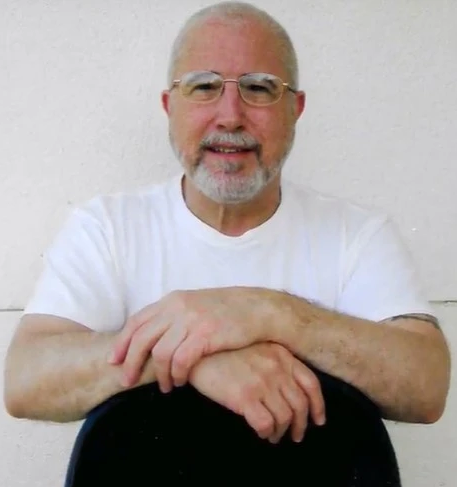
Muhammad Syed: The Albuquerque Serial Killer
Overview
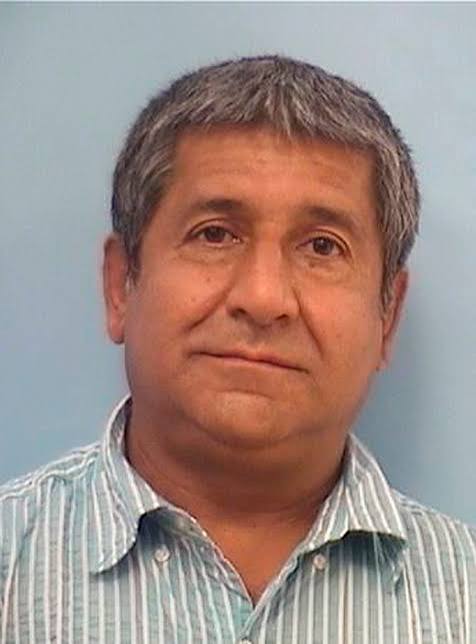
In the summer of 2022, a series of ambush-style shootings plunged the Muslim community of Albuquerque, New Mexico, into a state of terror. Between July 26 and August 5, three Muslim men of South Asian descent were shot and killed, their murders following a similar unsolved homicide from November 2021. The killings drew national attention, including a statement from President Joe Biden, and sparked a massive law enforcement response. The investigation culminated in the arrest of Muhammad Syed, a 51-year-old Afghan refugee who, to the shock of many, was a member of the same Muslim community his victims belonged to. Syed was ultimately convicted of all three 2022 murders and sentenced to life in prison. While authorities also named him the primary suspect in the 2021 killing, he was never charged. The motive behind the violent spree remains a mystery, leaving a legacy of fear and unanswered questions.
Background and Early Life
Muhammad Syed, a Sunni Muslim, arrived in the United States from Afghanistan with his family several years before the killings. Those who knew him described a man with a history of violence. Court records show Syed had faced several misdemeanor charges for domestic violence, though those cases were ultimately dropped. The brother of one of the victims later alleged that Syed had harassed his family and slashed his wife's car tires years before the murders. In an interview with police after his arrest, Syed claimed he had served in the Afghan Special Forces and fought against the Taliban. He and his family were part of a small Afghan refugee community in Albuquerque. Some community members speculated that Syed was enraged by his daughter's marriage to a Shia Muslim, a different branch of Islam. His daughter acknowledged her father's unhappiness with the union but denied he was capable of murder, stating he had begun to accept the relationship.
The Murders
The series of killings began on November 7, 2021, with the death of Mohammad Ahmadi. Ahmadi, a 62-year-old Afghan immigrant, was found with a gunshot wound in the parking lot behind the grocery and cafe business he ran with his brother. The case remained unsolved for months.
The violence resumed with terrifying frequency in the summer of 2022. On the night of July 26, 41-year-old Aftab Hussein was ambushed and killed. After parking his car in his usual spot near his home, a gunman who had been lying in wait behind bushes fired on him repeatedly. Prosecutors later said Syed used an AK-47 in the attack.
Less than a week later, on August 1, Muhammad Afzaal Hussain, 27, was shot and killed while on his evening walk near his home. The attack was another ambush, with Hussain gunned down on the sidewalk.
The final murder occurred on August 5. Naeem Hussain, 25, had just attended the funeral services for Aftab Hussein and Muhammad Afzaal Hussain. Hours later, just before midnight, he was shot and killed as he sat in his vehicle in the parking lot of Lutheran Family Services, a refugee resettlement agency.
The Victims
The men targeted by Muhammad Syed were integral members of their community, remembered for their kindness, ambition, and dedication to their new lives in America.
- Mohammad Ahmadi, 62 — Killed on November 7, 2021, in the parking lot of the business he co-owned. He was an immigrant from Afghanistan. Police have named Muhammad Syed as the primary suspect in his death, but no charges have been filed.
- Aftab Hussein, 41 — Killed on July 26, 2022, outside his Albuquerque home. Originally from Pakistan, he worked at a local cafe. He was remembered by a community leader as a kind man who often helped his blind roommate with daily tasks like cooking.
- Muhammad Afzaal Hussain, 27 — Killed on August 1, 2022, while on his evening walk. A talented and driven young man from Pakistan, he had earned a master's degree from the University of New Mexico and served as president of the graduate student association. He worked as the city planning director for Española, New Mexico, where he was praised as a "brilliant public servant" committed to improving conditions for disadvantaged communities.
- Naeem Hussain, 25 — Killed on August 5, 2022, in his car after attending the funeral for the two previous victims. He was a refugee from Pakistan who had fled persecution for his Shia beliefs and had recently become a U.S. citizen. He was focused on building his own trucking business and was described as outgoing and religious.
Investigation and Capture
The rapid succession of murders in the summer of 2022 created widespread fear in Albuquerque's Muslim community, with many residents becoming afraid to leave their homes. The Albuquerque Police Department, assisted by the FBI, quickly established a connection between the killings of Aftab Hussein and Muhammad Afzaal Hussain. They then began investigating a potential link to the earlier murder of Mohammad Ahmadi and the most recent killing of Naeem Hussain, noting the victims were all Muslim men from South Asia who had been ambushed.
The major breakthrough came when police released surveillance images of a vehicle of interest: a dark silver, four-door Volkswagen sedan. A crucial tip from the public identified the car and its owner, Muhammad Syed. On August 9, 2022, as police were preparing to search his home, they spotted Syed driving away in the Volkswagen Jetta. Officers followed him for more than 100 miles before pulling him over and taking him into custody near Santa Rosa, New Mexico.
Syed told officers he was on his way to Texas to find a new home for his family because he was concerned about the killings in Albuquerque. A search of his home and car uncovered multiple firearms. Ballistics evidence became central to the case. Shell casings found at the scenes of Aftab Hussein's and Muhammad Afzaal Hussain's murders were matched to a rifle found in Syed's home. Casings from a handgun found in his car were linked to one of the scenes.
Trial and Sentence
A grand jury indicted Muhammad Syed on three counts of first-degree murder for the deaths of Aftab Hussein, Muhammad Afzaal Hussain, and Naeem Hussain, as well as four counts of tampering with evidence. He was not charged in the 2021 murder of Mohammad Ahmadi, though he remained the primary suspect. Syed pleaded not guilty.
The first trial, for the murder of Aftab Hussein, took place in March 2024. Prosecutors presented evidence including cellphone data showing Syed was in the area at the time of the shooting and ballistics testimony linking a rifle found under his bed to the shell casings from the crime scene. The defense argued that prosecutors had no direct evidence, such as a witness, proving Syed was the shooter and suggested others in his home had access to his car and weapons. Syed tearfully declined to testify in his own defense. After deliberating for less than two hours, the jury found him guilty of first-degree murder.
Facing separate trials for the other two murders, Syed changed his plea. In September 2024, he pleaded no contest to two counts of second-degree murder for the killings of Muhammad Afzaal Hussain and Naeem Hussain.
On November 8, 2024, Muhammad Syed was sentenced. He spoke in court, denying responsibility for the killings and calling the accusations against him unjust. The judge sentenced him to life in prison for the first-degree murder conviction, plus additional time for the other charges. He will be eligible for parole after serving 30 years, at which point he would be 83 years old. In May 2026, the New Mexico Supreme Court unanimously upheld his murder conviction, rejecting an appeal from his legal team that argued there was insufficient evidence.
Aftermath and Legacy
The arrest and conviction of Muhammad Syed brought a sense of justice to the victims' families and relief to the terrified community. However, the lack of a clear motive has left a painful void. Prosecutors themselves acknowledged the "why" might never be known, with one suggesting it could be "a random, serial killer-type of mentality we'll never understand." The brother of victim Muhammad Afzaal Hussain expressed the family's frustration, stating that even a long prison sentence could not bring satisfaction without knowing why his brother was killed.
The case also highlighted complex dynamics within the local Muslim community. Initial fears of an outside hate crime gave way to the disturbing reality that the killer was one of their own. Speculation about sectarian motives, with Syed being a Sunni and three of the four victims being Shia, raised concerns about old-world conflicts manifesting in America, though this was never proven in court. The murders left an indelible scar on Albuquerque, a tragic reminder of the devastating impact of targeted violence, even when the reasons behind it remain shrouded in mystery.