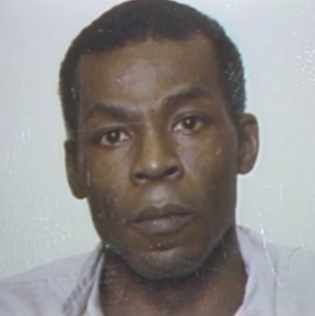
Steven David Catlin: The Paraquat Poisoner
Overview
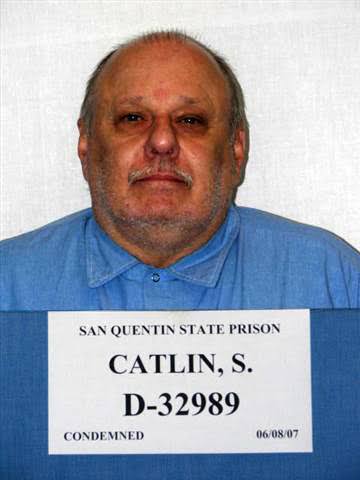
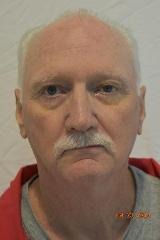
Steven David Catlin is a California serial killer convicted of murdering two of his wives and his adoptive mother between 1976 and 1984. Over an eight-year period, Catlin used his knowledge of agricultural chemicals to commit murders that were initially difficult to diagnose, poisoning his victims with the highly toxic herbicide paraquat for financial gain. He collected insurance money and inheritances from his victims, using the funds to support a lifestyle beyond his means. Catlin was the subject of two separate murder trials in the late 1980s and early 1990s. He was first sentenced to life in prison for the murder of his fifth wife, and later sentenced to death for the murders of his fourth wife and his mother. He currently resides on death row in California.
Early Life and Background
Steven David Catlin was born in 1944 and adopted as an infant by Glenn and Martha Catlin of Kern County, California. The family lived in Bakersfield, where Catlin grew up. He did not take to school, dropping out of high school, and showed little interest in steady work. His adult life began with a pattern of crime and instability. At age 19, he was arrested for forgery and served nine months in a California Youth Authority camp.
Catlin’s personal life was chaotic. His first marriage was described as stormy and violent, made worse by his drug abuse. In 1966, while still married to his first wife, he married a second woman using a pseudonym on the marriage license. A few months later, he was arrested for stealing a credit card from the gas station where he worked. A judge, calling Catlin an addict, sentenced him to three years in the state prison at Chino. By the time he began his killing spree, Catlin had been married multiple times and had a well-established criminal record. His work as a mechanic for an agricultural company and his involvement with a racing pit crew gave him access to and knowledge of various chemicals, including the one he would use as a murder weapon.
The Murder of Joyce Catlin
In the spring of 1976, Catlin was on his fourth marriage, to a woman named Joyce. In April, Joyce was admitted to Mercy Hospital in Bakersfield with what appeared to be a severe case of the flu. Her symptoms included back pain, vomiting, and a sore throat. After an initial period of seeming improvement, her condition took a dramatic turn for the worse. She developed severe respiratory distress and was moved to the intensive care unit.
Doctors, including a lung specialist, were baffled. They treated her for various viral and bacterial infections, but she did not respond to antibiotics. Her lungs grew progressively fibrotic, hardening and losing their ability to function. On May 6, 1976, after three weeks in the hospital, Joyce Catlin died of acute respiratory failure. Though an autopsy was performed, the cause remained a mystery. The death certificate listed the cause as "acute respiratory failure due to unknown microorganisms." However, some of her physicians suspected she had been poisoned with paraquat, a highly toxic herbicide known to cause catastrophic lung damage. At the time, however, no test existed that could detect the poison in tissue samples more than 72 hours after ingestion.
Following Joyce's death, Steven Catlin quickly had her body cremated. He then collected payments from two of her life insurance policies. The couple's vehicle loan was also paid off by their credit union's death benefit program. Years earlier, Catlin had reportedly told a witness that paraquat was an ideal tool for a "perfect murder" because it was undetectable.
The Murder of Glenna Kaye Catlin
A year after Joyce’s death, in May 1977, Catlin married for the fifth time, to Glenna Kaye. They moved to Fresno, where he found work at an auto garage and was quickly promoted to a management position overseeing 40 employees. Despite his professional success, his expensive tastes kept him short on cash. In 1981, he was forced to resign after his employers discovered he had a criminal record and suspected him of stealing auto parts.
The marriage between Steven and Glenna Kaye was troubled. Catlin was unfaithful, and the couple had a public argument on February 16, 1984. Just days later, while visiting Las Vegas with her mother, Glenna Kaye suddenly became ill. She returned to Fresno and was hospitalized with fluid in her lungs. For weeks, doctors struggled to diagnose her illness as her condition deteriorated. On March 14, 1984, after 22 days in the hospital, Glenna Kaye died.
This time, the cause of death was not a mystery. Toxicological testing on tissue samples confirmed that Glenna Kaye had been killed by paraquat poisoning. After her death, Catlin collected approximately $56,000 from her life insurance policy. The confirmation of poisoning triggered a criminal investigation.
The Murder of Martha Catlin
With police now investigating him for the murder of Glenna Kaye, Catlin’s past came under new scrutiny. His third ex-wife, Edith Ballew, had long been suspicious of the series of deaths surrounding him and repeatedly urged the Kern County Sheriff's department to investigate. The death of Glenna Kaye gave her concerns new weight.
Investigators revisited the 1976 death of Joyce Catlin. While her body had been cremated, they discovered that Mercy Hospital in Bakersfield had retained some of her tissue samples from the autopsy. In November 1984, those samples were sent for analysis using newly developed techniques.
As the net was closing, Catlin committed his final murder. On December 8, 1984, his 79-year-old adoptive mother, Martha Catlin, collapsed and died in Bakersfield shortly after a visit from Steven and his new fiancée. Her death was initially attributed to a stroke. Catlin had been complaining about the burden of caring for his aging mother and traveling from Fresno to visit her. He had also expressed fears that she might change her will to leave her estate to the African Violet Society instead of to him. At the time of her death, he was still the sole beneficiary of her will. He ordered her body to be cremated immediately, but authorities intervened and postponed the cremation to perform an autopsy. The autopsy and subsequent toxicological tests revealed that Martha Catlin, like Glenna Kaye, had died of paraquat poisoning.
The Victims
- Joyce Catlin, age unknown — Died on May 6, 1976, in Bakersfield, California. She was Steven Catlin's fourth wife, whose death from a mysterious respiratory illness was only confirmed as a poisoning years later.
- Glenna Kaye Catlin, age unknown — Died on March 14, 1984, in Fresno, California. Catlin's fifth wife, her confirmed death by paraquat poisoning launched the investigation that would ultimately expose all of his crimes.
- Martha Catlin, 79 — Died on December 8, 1984, in Bakersfield, California. She was Steven Catlin's adoptive mother, murdered for her inheritance as investigators were closing in on him.
Investigation and Capture
The confirmation that Glenna Kaye Catlin died from paraquat poisoning was the key that unlocked the entire case. At the urging of law enforcement, Glenna Kaye’s father searched a business space he had shared with Catlin and found a bottle of paraquat with Catlin's fingerprint on the cap.
Shortly thereafter, the results from the tissue samples of Joyce Catlin came back, confirming she too had ingested the herbicide. The autopsy on Martha Catlin provided the third positive result for paraquat. With evidence that three women in his life had died of the same rare poison, and a clear financial motive for each death, authorities had a strong case. A bottle of paraquat, bearing Catlin's fingerprints, was also found in his garage.
Steven David Catlin was arrested on December 23, 1985. He was charged in Kern County with the murders of his fourth wife, Joyce Catlin, and his mother, Martha Catlin. He was also indicted in Monterey County for the murder of his fifth wife, Glenna Kaye Catlin.
Trial and Sentence
Due to extensive pretrial publicity, Catlin’s cases were tried separately. The first trial, for the murder of Glenna Kaye Catlin, was held in Monterey County in 1986. In April 1986, a jury found him guilty of first-degree murder. The jury recommended a sentence of life in prison without the possibility of parole, which the judge formally imposed in June 1986.
The second trial, for the murders of Joyce Catlin and Martha Catlin, began in Kern County on April 23, 1990. The prosecution presented evidence from all three poisonings to establish a common plan and motive. Experts testified about the lethal effects of paraquat and confirmed its presence in the victims. The prosecution argued that Catlin killed the women for financial gain. A jailhouse informant also testified that Catlin had admitted to him, "I killed the bitches."
On June 1, 1990, the jury found Steven Catlin guilty of two counts of first-degree murder. They also found true several special circumstances for the murder of Martha Catlin: murder for financial gain, murder by poison, and multiple murders. These findings made him eligible for the death penalty. During the penalty phase, Catlin admitted to his prior conviction for murdering Glenna Kaye. On June 6, 1990, the jury returned a verdict of death. He was sentenced to death for the murder of Martha Catlin and to life imprisonment for the murder of Joyce Catlin, as her death occurred before California reinstated the death penalty.
Aftermath and Legacy
Steven Catlin was sent to California's death row at San Quentin State Prison and was later moved to California State Prison, Corcoran. He has filed numerous appeals over the decades, all of which have been denied. The California Supreme Court upheld his convictions and death sentence in 2001, and federal courts have repeatedly denied his habeas corpus petitions, with the most recent denial by the Ninth Circuit Court of Appeals in late 2024.
The case drew significant media attention and was the subject of a 1993 television movie, "Poisoned by Love: The Kern County Murders," in which actor Harry Hamlin portrayed Catlin. The story of Steven Catlin serves as a chilling example of a poisoner who operated for years, using a rare and agonizing method to murder those closest to him for money. His crimes highlighted the importance of forensic toxicology and the persistence required by investigators and family members to bring a cunning killer to justice.