Daniel Lee Corwin: The Huntsville Strangler
Overview
Daniel Lee Corwin was a Texas serial killer responsible for the sexual assault and murder of three women in 1987. His crimes were characterized by their brutal, opportunistic nature, spreading fear across multiple counties. A violent predator hiding in plain sight, Corwin had a history of sexual violence that predated his killing spree by more than a decade. He was ultimately brought to justice by the remarkable courage of a surviving victim whose detailed description led to his capture. Corwin holds the distinction of being the first person tried and convicted under Texas's "serial killer statute," a law designed to prosecute individuals who commit multiple murders in different jurisdictions as part of the same course of conduct. He was executed for his crimes in 1998.
Early Life and Background
Daniel Lee Corwin was born on September 13, 1958, in Orange County, California, to Phil and Nancy Corwin. He had a sister named Debbie. The family later moved to Temple, Texas, where Corwin presented the facade of a well-adjusted young man. He was a Boy Scout, a Sunday School teacher, and was considered a good student. This clean-cut image, however, masked a disturbing reality.
There were early warning signs of a troubled mind. As a child, he reportedly killed his sister's cat after a fight. He also suffered two severe head injuries from accidents, which some psychologists later suggested might have caused brain damage that contributed to his violent tendencies.
Corwin's violent impulses escalated dramatically in his teenage years. In 1975, at just 16, he abducted a high school classmate, Brenda Evans, at knifepoint from their school parking lot. He drove her to a secluded gravel pit, raped her, and then brutally attacked her, slashing her throat and stabbing her near the heart. Believing she was dead, he partially buried her in a dirt pit and fled. Miraculously, she survived. Corwin was convicted of aggravated rape and sentenced to forty years in prison. Despite the severity of the crime, he was paroled after serving only nine years.
The 1987 Murders
After his release from prison, Corwin's violence escalated to murder. Over a nine-month period in 1987, he abducted, sexually assaulted, and killed three women across three different Texas counties.
His first victim was Alice Faye Martin, 72, on February 13, 1987. Martin, a well-respected retired postmistress and the wife of a local commissioner in Normangee, was on her routine daily walk when Corwin abducted her. He drove her to a remote field in neighboring Robertson County, where he raped, gagged, strangled, and stabbed her. Her body was discovered the next day, leaving the small community in shock. With no clear motive or suspect, the case quickly went cold.
On July 10, 1987, Corwin struck again. He kidnapped 26-year-old Debra Lynn Ewing at gunpoint from her job at the Huntsville Vision Center. He forced her into his vehicle and drove to a construction site in Montgomery County, where he raped and stabbed her to death. Although a witness provided a description of the abductor, authorities were unable to identify Corwin.
His third and final murder occurred on Halloween night, October 31, 1987. Mary Carrell Risinger, 36, was at a car wash in Huntsville with her young daughter. Corwin attempted to abduct her, but she resisted. In the ensuing struggle, he stabbed her in the throat, killing her in front of her child. The horrific scene was discovered by passersby who alerted the nearby sheriff's office.
The Victims
- Alice Faye Martin, 72 — February 13, 1987, in Normangee, Texas. A retired postmistress and the wife of a Madison County commissioner, she was a beloved and respected member of her community who enjoyed taking daily walks.
- Debra Lynn Ewing, 26 — July 10, 1987, in Huntsville, Texas. She was working at an insurance office inside the Huntsville Vision Center when she was abducted at gunpoint and taken to another county, where her life was tragically cut short.
- Mary Carrell Risinger, 36 — October 31, 1987, in Huntsville, Texas. A mother who was washing her car in preparation for her daughter's baptism the next day, she fought back against her attacker and was murdered in front of her child.
Investigation and Capture
For nearly a year after Mary Risinger's murder, the cases remained unsolved, and the killer's identity was unknown. The breakthrough came from an act of incredible resilience. On October 20, 1988, Corwin abducted 21-year-old Texas A&M student Wendy Gant from a university parking lot. He forced her to drive to an isolated park, where he bound, raped, beat, and stabbed her. He then tied her to a tree and slit her throat, leaving her for dead.
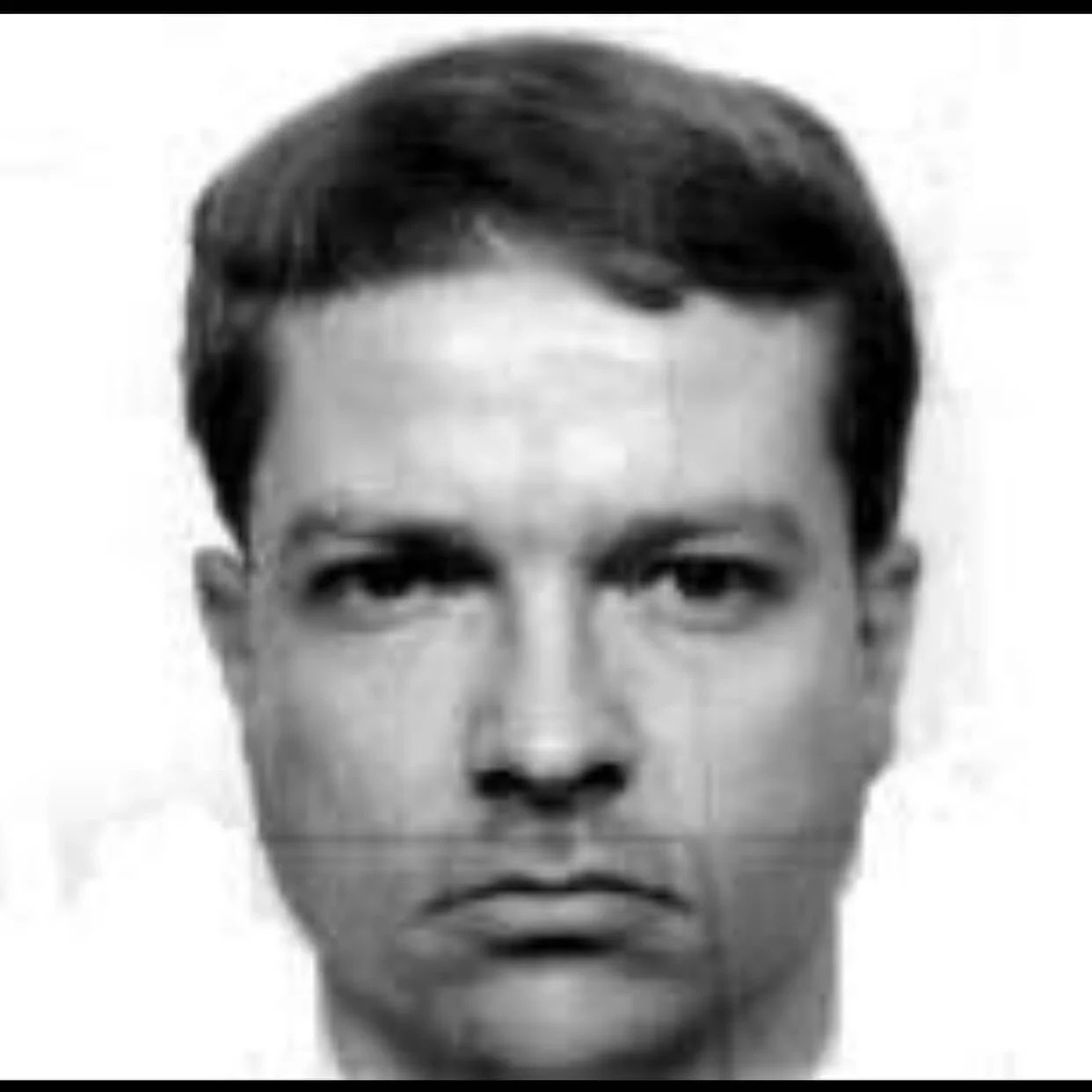
Despite her catastrophic injuries, Gant survived by pretending to be dead until Corwin left. She managed to free herself, stumble to a road, and find help. In the hospital, unable to speak due to the severe damage to her throat, she requested a forensic artist. By writing notes and pointing to features in a catalog, she painstakingly communicated the details of her attacker's face to artist Karen T. Taylor.
The resulting composite sketch was remarkably accurate. When it was circulated by the media, a corrections officer who knew Corwin from his previous prison term immediately recognized him and contacted police. Investigators quickly linked Corwin, who was on parole, to the attack. A fingerprint found on Gant's car door further solidified the case. Daniel Lee Corwin was arrested shortly thereafter.
Trial and Sentence
In 1989, facing overwhelming evidence, Corwin pleaded guilty to the attempted capital murder of Wendy Gant and was sentenced to 99 years in prison. While incarcerated, investigators began questioning him about the unsolved 1987 murders. Within months, Corwin confessed to killing Debra Ewing and Mary Risinger, and later admitted to the murder of Alice Martin.
He claimed the killings were spontaneous and that he was in a trance-like state, driven by violent sexual fantasies. In March 1990, prosecutors in Montgomery County took the unprecedented step of charging him with capital murder under Texas's new "serial killer statute." This law, formally V.T.C.A. Penal Code, § 19.03(a)(6)(B), allowed for the prosecution of multiple murders committed in different criminal transactions but as part of the "same scheme or course of conduct."
On March 17, 1990, a jury convicted Daniel Lee Corwin of the capital murders of Martin and Risinger, making him the first person to be convicted under the new law. The jury deliberated for only 35 minutes before recommending a sentence of death. His subsequent appeals were denied.
Aftermath and Execution
Daniel Lee Corwin spent eight years on death row at the Huntsville Unit in Texas. On December 7, 1998, he was executed by lethal injection.
In his final statement, he addressed the families of his victims, expressing remorse. "I regret what happened and I want you to know that I'm sorry," he said. "I just ask and hope that sometime down the line that you can forgive me." He also spoke about the death penalty, noting, "It's two sided. There's pain on both sides."
The case left a lasting impact on the communities he terrorized and on Texas law. The successful use of the serial killer statute provided a new legal tool for prosecutors dealing with offenders who cross jurisdictional lines. The case is also remembered for the extraordinary bravery of Wendy Gant, whose determination to survive and bring her attacker to justice was the key to ending Corwin's reign of terror. Her actions ensured that he could never harm another woman again.