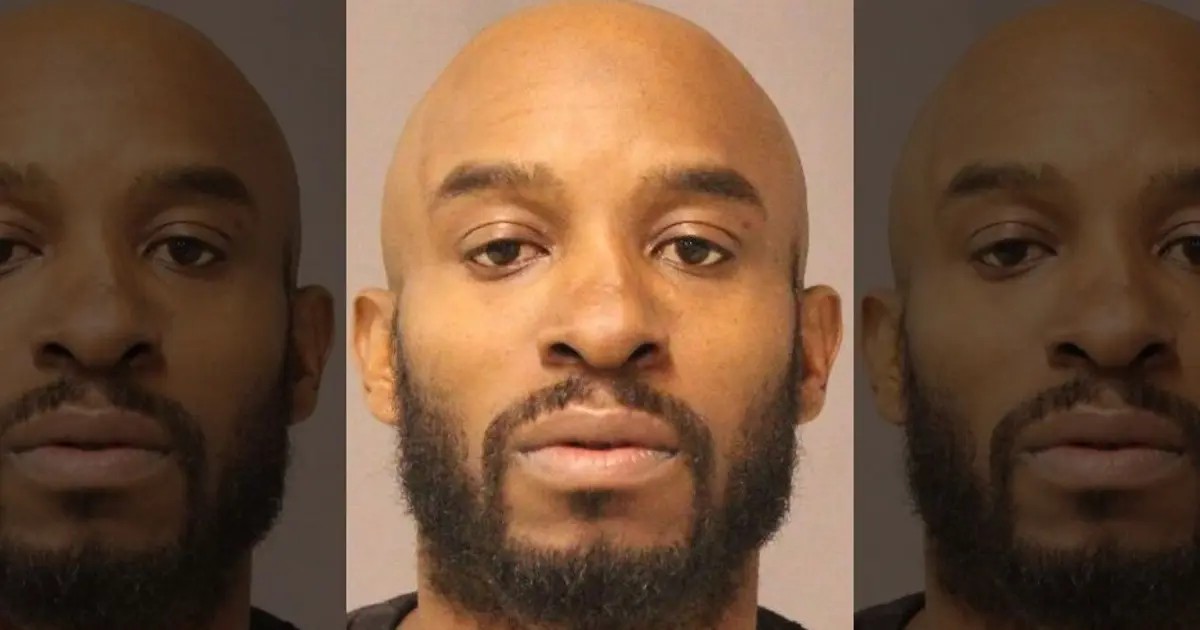
Roberto Wagner Fernandes: The Suitcase Killer
Overview
For more than twenty years, the families of three murdered women in South Florida lived without answers, their cases growing cold as investigators struggled to identify a phantom killer. The victims, found discarded in bags or floating in a bay, were linked by forensic evidence to a single, unknown assailant. In 2021, authorities finally unmasked the killer: Roberto Wagner Fernandes, a Brazilian pilot and flight attendant who had lived a double life in Miami. By the time his name was announced, however, Fernandes had been dead for 16 years. He perished in a 2005 plane crash in South America while on the run, not from American justice, but from the consequences of a separate murder he was accused of in his home country. The final confirmation of his guilt, achieved through international cooperation and the exhumation of his remains, closed a chilling series of cold cases that haunted three different police jurisdictions for two decades.
Early Life and Violence in Brazil
Roberto Wagner Fernandes was born on April 26, 1965, in Londrina, a city in southern Brazil. He grew into a charismatic man who pursued a career in aviation, becoming a licensed pilot. His life took a dark and public turn in 1996 when, at the age of 31, he was charged with the murder of his wife, Danyelle Amaral Bouças Fernandes. On November 15, 1996, following a heated argument in their apartment, Fernandes shot Danyelle multiple times, killing her. He then fled the scene with their young daughter.
Police apprehended him shortly after, but Fernandes claimed he had acted in self-defense. He was tried for the murder, and in a verdict that stunned the community and enraged his late wife's family, he was acquitted. Despite the acquittal, Fernandes felt he was a marked man. He told friends and family that he feared Danyelle's relatives would seek revenge and hire someone to kill him. Citing these fears, he left Brazil and relocated to Miami, Florida, seeking anonymity and a new start.
In Miami, Fernandes blended in. He worked various jobs, including driving a tour bus and, fittingly for a licensed pilot, working as a flight attendant for Trans-Brasil, an airline that frequently flew between Miami and Brazil. To his neighbors and colleagues, he appeared to be a normal, functioning member of society. But beneath the surface, he harbored a violent rage that would soon be unleashed on vulnerable women in his new home.
The Florida Murders
The terror began in the summer of 2000. On June 22, a road crew worker in Cooper City, a suburb in Broward County, made a gruesome discovery. Left on the side of a rural road near a construction site was a large suitcase. Inside were the badly beaten remains of a woman. The victim was later identified as 35-year-old Kimberly Dietz-Livesey. An autopsy revealed she had been bludgeoned and strangled.
Less than two months later, on August 9, 2000, the killer struck again in Broward County. Another roadside discovery, this time in the city of Dania Beach, yielded a second victim. The body of 21-year-old Sia Demas was found stuffed inside a duffel bag. Like the first victim, she had suffered a brutal beating. The similar method of disposal—a body concealed in a bag and dumped—immediately led investigators to believe the two murders were connected.
A year passed before the final murder known to be linked to Fernandes occurred. On August 30, 2001, the body of 24-year-old Jessica Good was found floating in the Biscayne Bay, near the Julia Tuttle Causeway in Miami. Her body showed signs of extreme violence; she had been stabbed multiple times. Unlike the previous two victims, her body was not placed in a bag, and the murder occurred in a different jurisdiction, Miami-Dade County. Despite these differences, all three women shared a similar profile: they had struggled with drug addiction and were known to engage in sex work, a vulnerability the killer ruthlessly exploited.
The Victims
- Kimberly Dietz-Livesey, 35 — Found June 22, 2000, in Cooper City. A mother who was battling addiction, she was remembered by friends as a kind person. Her ex-husband, Michael Livesey, never gave up hope for justice, waiting over two decades for her killer to be identified. He described the long wait for answers as an agonizing period of uncertainty.
- Sia Demas, 21 — Found August 9, 2000, in Dania Beach. Her life was cut tragically short. Her body was discovered discarded in a duffel bag, a detail that highlighted the killer's callous disregard for his victims.
- Jessica Good, 24 — Found August 30, 2001, in Miami. She was last seen by her boyfriend, who told police she was going to meet a man she referred to as a "regular." This piece of information would later prove crucial in identifying Fernandes.
Investigation and Identification
The investigations in Broward and Miami-Dade counties initially proceeded on separate tracks. In Broward, detectives from the Sheriff's Office linked the murders of Dietz-Livesey and Demas due to the "suitcase killer" signature, but they had no suspect. In Miami, the investigation into Jessica Good's murder produced an immediate person of interest. Good's boyfriend gave detectives a description of the man she was last seen with and a partial license plate number from his vehicle. This information led Miami police directly to Roberto Wagner Fernandes.
When detectives went to question Fernandes at his Miami apartment, they found he had already fled. Just days after Good's body was discovered, he had boarded a flight and returned to Brazil. The timing was deeply suspicious. Because Brazil has a constitutional policy of not extraditing its own nationals, Fernandes was effectively beyond the reach of American law enforcement. The case stalled, and for years, the identity of the killer remained a public mystery.
The first major breakthrough came a decade later. In 2011, advances in forensic technology allowed investigators to make a crucial connection. DNA evidence recovered from the crime scene of Jessica Good in Miami was uploaded to a national database and matched with DNA from the scenes of the two Broward County murders. This was the first definitive proof that all three women were killed by the same man. Furthermore, fingerprints found on the suitcase containing Kimberly Dietz-Livesey's body were matched to prints on file for Fernandes, which had been taken by Brazilian authorities following his 1996 murder charge. With both DNA and fingerprint evidence pointing to him, Roberto Wagner Fernandes was officially named the prime suspect in all three murders.
The International Manhunt
Armed with this new evidence, U.S. authorities, including detectives from the Broward Sheriff's Office and Miami Police, along with the U.S. Marshals Service, traveled to Brazil to confront Fernandes. They intended to interview him, obtain a new DNA sample to confirm the match, and pursue charges. However, upon their arrival, they were met with shocking news: Roberto Wagner Fernandes was dead.
Brazilian authorities informed the American investigators that Fernandes had died in a plane crash in 2005. According to the official account, Fernandes remained convinced that his deceased wife's family was trying to kill him. In an apparent attempt to flee the country and escape this perceived threat, he was piloting a small aircraft from Brazil to Paraguay when the plane went down near the border, killing him and another passenger.
The American detectives were deeply skeptical. Given Fernandes's history of evading justice, they feared he might have faked his own death to throw them off his trail permanently. "There was a lot of skepticism," recalled Broward Sheriff's Detective Zach Scott. The investigators needed absolute proof. For nearly a decade, however, their efforts were stymied by international red tape and bureaucratic hurdles. They could not get official confirmation of his death or access to his remains to prove his identity.
Confirmation and Closure
The stalemate finally broke thanks to renewed cooperation between U.S. federal agencies and the Brazilian government. After years of diplomatic efforts, a Brazilian judge granted a request from American authorities to exhume the body buried under the name Roberto Wagner Fernandes in a cemetery in his hometown of Londrina.
In late 2020, the exhumation took place. Forensic investigators carefully extracted DNA from the remains. The sample was sent back to a lab in the United States for comparison against the genetic profile of the unknown killer from the 2000 and 2001 crime scenes. The results were unequivocal.
On August 31, 2021, at a joint press conference, Broward County Sheriff Gregory Tony announced the conclusion of the 21-year-old investigation. "The DNA from the exhumed body is a match to the DNA profile of the killer," he stated. "This suspect, Roberto Fernandes, was indeed responsible for the brutal murder of all three of these women." The cases of Kimberly Dietz-Livesey, Sia Demas, and Jessica Good were officially closed. For the detectives who had pursued the case for years, it was a moment of profound relief. "We can now say that Roberto Wagner Fernandes is deceased and he was the person who committed these murders," said Miami Police Sgt. Nikolai Trifonov.
Legacy
Roberto Wagner Fernandes was a serial killer who operated across two continents, leaving a trail of death and unanswered questions. He was acquitted of murdering his wife in Brazil and died before he could ever face a jury for the three women he murdered in Florida. His ability to evade justice for so long was a combination of luck, cunning, and the complexities of international law.
Investigators in both countries believe it is highly probable that Fernandes had more victims. His work as a flight attendant gave him the means and opportunity to travel extensively. "There is no limit as to where he could travel," Detective Scott noted, urging law enforcement agencies worldwide to review unsolved murders of women from the late 1990s and early 2000s that might fit his pattern. The final identification of Fernandes brought a painful but necessary closure to the families of his known victims, but it also opened the haunting possibility that other families, in other cities or countries, are still waiting for answers about a killer they never knew had a name.