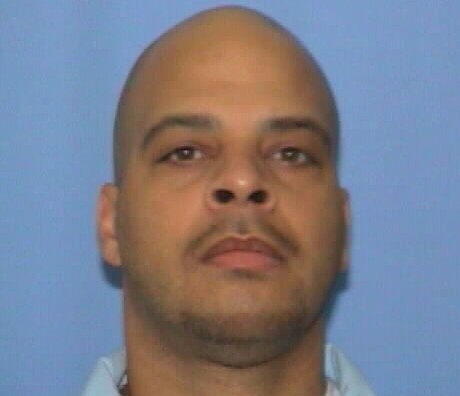
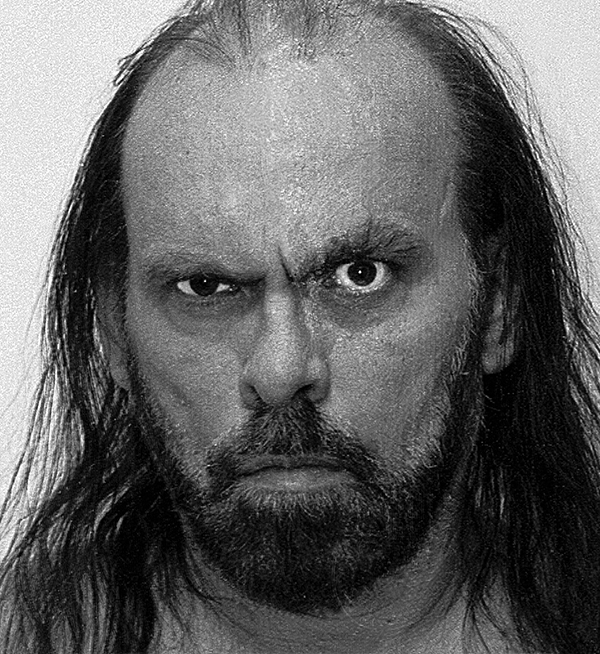
Harry Edward Greenwell: The I-65 Killer
Overview
For more than three decades, a series of brutal crimes targeting female motel clerks along the Interstate 65 corridor haunted communities in Kentucky and Indiana. The perpetrator, dubbed the "I-65 Killer" and the "Days Inn Killer," was a ghost, leaving behind a trail of terror, a composite sketch, and a DNA profile, but no name. The attacks, which included sexual assault, robbery, and murder, occurred between 1987 and 1990. The killer preyed on women working the vulnerable night shift alone.
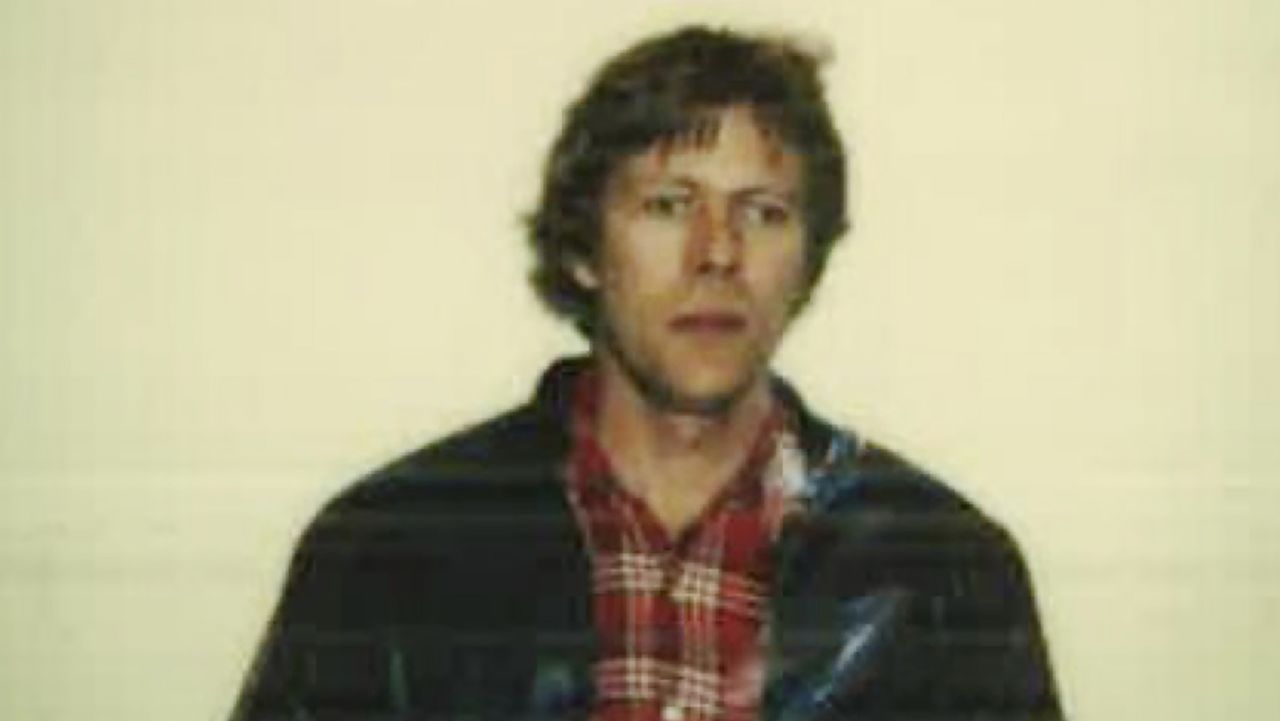
In a stunning breakthrough announced on April 5, 2022, law enforcement officials from Indiana and Kentucky, alongside the FBI, revealed they had finally identified the man responsible: Harry Edward Greenwell. The resolution came not through a traditional tip or arrest, but through the modern science of investigative genetic genealogy. By uploading crime scene DNA to a genealogy database, investigators found a familial match that led them to Greenwell. The probability of Greenwell being the killer was determined to be more than 99.999 percent.
The identification, however, was posthumous. Greenwell had died of cancer in Iowa in January 2013 at the age of 68, taking the full story of his violent crimes to the grave. While his death meant he would never face a jury, the definitive identification brought a measure of closure to the victims' families who had waited decades for answers.
Early Life and Criminal History
Harry Edward Greenwell was born in Louisville, Kentucky, on December 9, 1944. His life was marked by frequent encounters with the law, beginning long before the I-65 murders. His criminal history was extensive, dating back to at least 1963 when he was arrested for armed robbery in Louisville. For that crime, he was sentenced to two years in a reformatory and five years of probation.
Over the next two decades, Greenwell was in and out of prison. In 1965, he faced a sodomy charge in Jefferson County, Kentucky. He was paroled from the Kentucky State Penitentiary in 1969. In 1982, he was arrested for burglary in Iowa, but his time in custody was short-lived as he managed to escape and was recaptured twice. He served time in the Anamosa State Penitentiary and the Kentucky State Reformatory before being released in 1983.
Greenwell worked for the Canadian Pacific Railway for 30 years, a job that kept him traveling throughout the Midwest. He was married and had children. To those who knew him in his later years in a small Iowa town, he presented a facade of a kind and generous man who enjoyed organic gardening and selling produce at the local farmers' market. His obituary described him as "a man with many friends who loved his straight-up attitude." This public persona starkly contrasted with the violent predator he was.
The I-65 Murders
The reign of the I-65 Killer began on February 21, 1987. Vicki Lucille Heath, a 41-year-old mother of two, was working the night shift at the Super 8 Motel in Elizabethtown, Kentucky, just off I-65. The killer sexually assaulted and shot her before leaving her body behind a trash dumpster in the motel's back lot. The lobby showed signs of a violent struggle, with a telephone ripped from the wall. For years, her murder was treated as an isolated incident.
Two years later, the killer struck again with terrifying speed and brutality. In the early morning hours of March 3, 1989, he targeted two different Days Inn motels in Indiana. The first victim was Margaret "Peggy" Gill, a 24-year-old night auditor at the Days Inn in Merrillville. She was sexually assaulted and shot to death. Her body was found in a back hallway or unoccupied wing of the motel. The killer stole $179 from the register.
Just hours later and about 50 miles south along I-65, 34-year-old Jeanne Marie Gilbert disappeared from the Days Inn in Remington where she was working as a clerk. She had taken the shift to allow a coworker to attend a basketball game. The killer abducted her, robbed the motel of $247, and drove her miles away. Her body was later found by a passing motorist in a ditch along a rural road in White County. She had been sexually assaulted and shot. Ballistics would later confirm that the same .22 caliber handgun was used to kill both Peggy Gill and Jeanne Gilbert.
The Victims
- Vicki Lucille Heath, 41 — February 21, 1987, in Elizabethtown, Kentucky. A recently engaged mother of two, she was attacked while working at the Super 8 Motel. Her sister remembered her as someone who would have put up a strong fight.
- Margaret Mary "Peggy" Gill, 24 — March 3, 1989, in Merrillville, Indiana. A night auditor at a Days Inn, she was remembered by her family for her love of baking, painting, and cross-stitching.
- Jeanne Marie Gilbert, 34 — March 3, 1989, near Remington, Indiana. A divorced mother of two teenagers, a son and a daughter, she worked as a bookkeeper and a part-time motel clerk to support her family.
Surviving Victim and Other Suspected Crimes
The I-65 Killer is known to have left one victim alive. On January 2, 1990, a 21-year-old clerk at a Days Inn in Columbus, Indiana, was sexually assaulted and stabbed. The brave woman survived the attack and was able to provide investigators with the first detailed physical description of her assailant. She described a man with greasy graying hair and a lazy or green-colored right eye, which led to a composite sketch that would be the public face of the killer for decades. DNA evidence later linked this attack to the murders of Heath and Gilbert.
Investigators have long believed that Greenwell may be responsible for other violent crimes across the Midwest. His pattern of targeting women, often in connection with robberies, and his frequent travel for his railroad job, suggest there could be other victims. Law enforcement agencies have stated that it is a "distinct possibility" and that they are actively working with other departments to review unsolved cases. One such case mentioned is a 1991 sexual assault in Rochester, Minnesota, where the survivor gave a similar description of the attacker.
Investigation and Identification
For years, the separate investigations in Kentucky and Indiana made slow progress. The cases were linked over time through forensic evidence. In 2010, Kentucky State Police announced that DNA had connected the murder of Vicki Heath to the two Indiana murders, officially confirming they were hunting a serial killer. Ballistics had already linked the murders of Peggy Gill and Jeanne Gilbert. The DNA profile was also matched to the 1990 sexual assault in Columbus, Indiana.
Despite having a DNA profile and a composite sketch, the killer's identity remained unknown, and the cases went cold. The break came in 2019 when the Indiana State Police enlisted the help of the FBI's Gang Response Investigative Team to apply new techniques. They turned to investigative genetic genealogy, a method that involves uploading a crime scene DNA profile to public genealogy databases to find relatives of the unknown suspect.
The process successfully identified a close family member of the killer, which ultimately led investigators directly to Harry Edward Greenwell. The Indiana State Police Laboratory conducted a direct comparison, confirming a near-certain match. On April 5, 2022, authorities held a press conference to announce that after 35 years, they had finally put a name to the I-65 Killer.
Aftermath and Legacy
The identification of Harry Edward Greenwell brought a bittersweet resolution to a series of crimes that had terrorized communities for decades. For the families of Vicki Heath, Peggy Gill, and Jeanne Gilbert, the news provided long-awaited answers, though it was coupled with the knowledge that the killer had lived out his life without being brought to justice. At the press conference, Jeanne Gilbert's daughter, Kimberly Gilbert Wright, expressed gratitude to the generations of detectives who never gave up, but also noted the lingering pain: "We'll never learn what the killer was thinking. We'll never learn the whys behind his actions."
Law enforcement officials expressed both relief at solving the case and regret that it could not have been done while Greenwell was alive. Indiana State Police Superintendent Douglas Carter, refusing to say the killer's name, addressed the families directly: "I hope that today might bring a little bit of solace to you, to know that the animal who did this is no longer on this Earth."
The case stands as a powerful testament to the evolution of forensic science and the tenacity of law enforcement. Detectives kept the case alive for generations, preserving evidence that would one day be key. The use of investigative genetic genealogy, which has solved a growing number of cold cases, was the critical tool that finally unmasked a killer who had remained a phantom for more than three decades. The investigation into Greenwell's life and travels continues, as police seek to determine if he was responsible for other unsolved violent crimes in the Midwest.