Andreas Hall: The Petersburgh Murderer
Overview
Andreas Hall was a 19th-century American serial killer whose brief but brutal crime spree instilled fear in the rural communities of Rensselaer County, New York. Between 1847 and 1848, Hall, a laborer with a history of theft and arson, committed three murders driven by robbery. His crimes went unsuspected until he slaughtered an elderly couple, Noah and Amy Smith, in their isolated Petersburgh farmhouse. The shocking nature of this final act led to his swift capture and trial. Just before his execution, Hall issued a full confession, not only admitting to the murders for which he was convicted but also revealing a previously unknown killing and a lifetime of criminality. His case, culminating in a public hanging in 1849, stands as a grim chapter in the annals of early American crime, notable for its stark brutality and the detailed confession that brought his hidden atrocities to light.
Early Life and Criminal Beginnings
Born around 1824 in Petersburgh, New York, Andreas Hall, also known as Andrus, grew up in the same quiet, rural landscape he would later terrorize. His life, as detailed in a confession published shortly before his death, was one of poverty and escalating crime. He claimed his descent into lawlessness began in childhood with petty thefts, often targeting family and neighbors. By his own account, he started drinking at a young age and quickly developed a reputation for dishonesty.
At sixteen, the idea of killing for material gain first took root in his mind. While working for a man, he contemplated murder as a means to acquire his employer's money but ultimately lacked the resolve to act. This period was followed by what Hall described as a brief moral turnaround. Influenced by a religious revival, he claimed to have reformed his ways for about two years, living an honest life. This repentance, however, proved to be short-lived.
As he moved into his late teens and early twenties, Hall reverted to his criminal habits, his schemes becoming more audacious. He engaged in numerous burglaries and acts of arson throughout the county, crimes that largely went unsolved. He recounted a specific incident where a quarrel with a man nearly ended in murder, but again, he hesitated. This pattern of violent ideation, followed by temporary restraint, defined his progression from a local thief to a killer. Before committing his first murder, Hall had married and was working as a farm laborer, presenting a facade of normalcy to the community that was unaware of the dark thoughts he harbored.
The Murder of Franklin Brown
In the autumn of 1847, Andreas Hall committed his first murder, a crime that would remain his secret for over a year. He was traveling near Troy, New York, with a young man named Franklin Brown. Little is known about Brown, who appears in the historical record only through the lens of his tragic death. According to Hall's confession, a dispute arose between the two men. In a sudden explosion of violence, Hall killed Brown, though the exact method was not specified.
After the murder, Hall’s primary concern was concealing the crime. He stole Brown's money and personal effects before dragging his body into a thicket of brush, hiding it from view. The disappearance of Franklin Brown seemingly raised no immediate alarm, and Hall was never considered a suspect. He returned to his life, but the act weighed heavily on him. He confessed to being tormented by guilt and paranoia, frequently imagining he was being pursued. At one point, he contemplated suicide but was reportedly talked out of it by his sister. Despite his internal turmoil, he continued his life, marrying soon after the murder and attempting to settle down. The secret of what he had done to Franklin Brown remained buried, both literally and figuratively.
The Murders of Noah and Amy Smith
On the evening of Saturday, July 1, 1848, Hall set his sights on a vulnerable and lucrative target: the home of Noah and Amy Smith. The Smiths were an elderly, well-respected couple living in a secluded farmhouse in Petersburgh. Noah, 80, and Amy, 72, were known to be hardworking and frugal, and local rumor held that they kept a considerable sum of money, perhaps as much as $1,000 in silver and gold, hidden within their home. Hall was intimately familiar with both the couple and their property, having worked for them as a farmhand on previous occasions. This knowledge gave him a deadly advantage.
Driven by a desire for their rumored fortune, Hall planned the crime with cold precision. He armed himself with a heavy wooden handspike, a tool used for leverage, and made his way to the Smiths' isolated residence under the cover of dusk. Finding the door bolted, he devised a ruse to draw Noah out of the house. He knocked and told the old man that some of his cattle had broken through a fence and wandered into a nearby meadow.
Noah, unsuspecting, took the bait. He unbolted the door and walked with Hall toward the fields to check on the non-existent problem. As they moved away from the house and into a grassy area near the barn, Hall raised the handspike and delivered a crushing blow to the back of Noah's head, killing him instantly. He left the body where it fell and calmly walked back to the farmhouse.
Inside, Amy Smith remained unaware of her husband's fate. Hall entered the house and, to maintain his composure and her trust, asked for a glass of water. After she gave it to him, he asked for a hatchet, claiming he needed it to fix the fence. When she turned to get it for him, he attacked her with unimaginable brutality. He struck her repeatedly with the axe, ending her life as she sat in her chair. With both occupants dead, Hall ransacked the house, searching for the hidden money. He found a trunk containing cash and other valuables, stealing what he could carry before fleeing the scene. He made his way to Troy and then onward to New York City, hoping to sell the stolen goods and disappear.
The Victims
- Franklin Brown, age unknown — Murdered in the autumn of 1847 near Troy, New York. Described in Hall's confession as a traveling companion, almost nothing is known of his life, and his death remained a mystery until his killer confessed.
- Noah Smith, 80 — Murdered on July 1, 1848, in Petersburgh, New York. He was a respected farmer who had lived a long and peaceful life with his wife, known in the community for his industry and quiet demeanor.
- Amy Smith, 72 — Murdered on July 1, 1848, in Petersburgh, New York. Born Amy Reynolds, she was the wife of Noah Smith and the aunt of Gideon Reynolds, a prominent lawyer and politician who was serving as a New York State Representative at the time of her death.
Investigation and Capture
The bodies of Noah and Amy Smith were discovered the following day, on Sunday, July 2, 1848. When the couple failed to appear at church, concerned neighbors went to check on them and stumbled upon the horrific scene. Amy's body was found inside the house, seated in a chair, while Noah's body was discovered in the field near the barn. The news of the double homicide sent shockwaves through the small, tight-knit community of Petersburgh and the wider Rensselaer County. The brutality and the respected status of the victims prompted an immediate and intense investigation.
Suspicion quickly fell upon Andreas Hall. His reputation as a thief and his prior employment with the Smiths made him a person of interest. Authorities learned that he had been seen in the vicinity around the time of the murders and had since disappeared. A warrant was issued for his arrest. The investigation was spurred on by Amy Smith’s influential nephew, Gideon Reynolds, who used his resources and standing to press for justice.
A manhunt ensued, and on July 7, 1848, just six days after the murders, Hall was located and arrested in Troy. He was taken into custody along with another man, described as a peddler, who was later questioned and released. Hall was charged with the murder of Amy Smith and transported to the Rensselaer County Jail. Despite the evidence mounting against him, he staunchly proclaimed his innocence, pleading not guilty to the charges.
Trial and Sentence
The trial of Andreas Hall began in January 1849 at the Rensselaer County Courthouse in Troy. It was a major event, drawing immense public interest and press coverage. The courtroom was packed daily with spectators eager to catch a glimpse of the man accused of the heinous Petersburgh murders. The case was prosecuted by District Attorney Robert A. Lottridge, while Hall was defended by a team of lawyers led by Job Pierson.
The prosecution built a compelling circumstantial case. They presented witnesses who placed Hall near the Smith farm on the night of the murders. Evidence was introduced showing that Hall had been in possession of items stolen from the Smith residence and had been spending money freely after the crime. His sudden trip to New York City immediately following the killings was portrayed as the flight of a guilty man.
The defense, faced with a mountain of evidence and intense public animosity toward their client, argued that the case was purely circumstantial and lacked a confession or a direct witness to the crime itself. However, they were unable to provide a credible alibi for Hall or explain his possession of the stolen property. After a trial lasting over a week, the case went to the jury. They deliberated for only a short time before returning with a verdict: guilty of first-degree murder. The judge subsequently sentenced Andreas Hall to death by hanging.
Confession and Execution
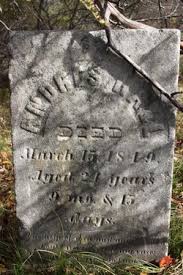
Following his conviction, Andreas Hall was returned to his cell on death row, where he continued to maintain his innocence for several weeks. However, as the date of his execution, March 15, 1849, drew near, his resolve crumbled. Under the counsel of clergymen, he underwent a final, dramatic change of heart and agreed to make a full confession.
His confession, transcribed and later published as a pamphlet, was a stunning document. In it, Hall laid bare a lifetime of crime, admitting to dozens of burglaries, thefts, and arsons that had plagued the county for years. He then provided a chilling, step-by-step account of the murders of Noah and Amy Smith, confirming the prosecution's theory of the crime in every detail.
Most shocking of all was his admission to a third, previously unknown murder. He confessed to killing Franklin Brown near Troy in 1847, a crime for which he had never been suspected. To prove his story, he provided Franklin's grieving father with a hand-drawn map detailing the location where he had hidden the body. Following the map, a search party led by Mr. Brown went to the location Hall had described and unearthed the skeletal remains of his long-lost son.
On the morning of March 15, 1849, Andreas Hall was led to the gallows in the jail yard in Troy. He was not alone; he was to be executed alongside another convicted murderer, an Irishman named Barney O'Donnell. A massive crowd gathered to witness the public hanging. On the scaffold, Hall spoke briefly, bidding farewell to his friends and family. At the appointed time, the traps were sprung, and both men were launched into eternity, bringing a grim end to a violent saga.
Aftermath and Legacy
The execution of Andreas Hall brought a sense of closure to Rensselaer County, but the memory of his crimes lingered for decades. The brutal slaying of the elderly and defenseless Smith couple served as a stark reminder of the vulnerability of rural life and shattered the peace of the small town of Petersburgh. Hall's detailed confession, while horrifying, provided answers for a community that had been plagued by unsolved property crimes and, most importantly, brought resolution to the family of Franklin Brown.
The case became a local legend, a cautionary tale passed down through generations. The publication of Hall's confession fit a popular 19th-century genre, serving as both a morbid curiosity and a moral warning against a life of sin. For legal historians, the trial stands as an example of 19th-century justice, where a conviction could be secured on strong circumstantial evidence, and the ultimate punishment was carried out as a public spectacle. Today, Andreas Hall is remembered not as a criminal mastermind, but as a callous and brutal predator whose greed led him to commit a series of unforgivable acts against his own community.