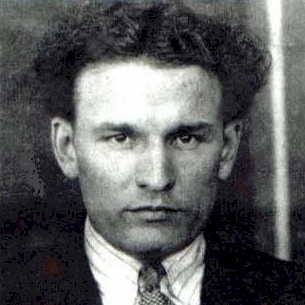
Corey Johnson: The Newtowne Gang Killer
Overview
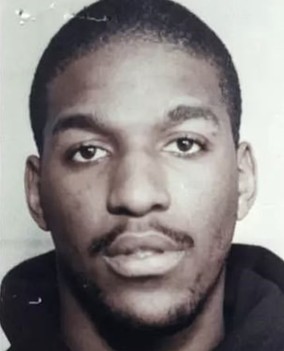
Corey Johnson was a co-founder of the Newtowne Gang, a violent drug trafficking organization that terrorized Richmond, Virginia, in the late 1980s and early 1990s. In a brutal 45-day span in early 1992, Johnson and his accomplices embarked on a killing spree to eliminate rivals, silence informants, and consolidate their control over the city's crack cocaine trade. Johnson was directly responsible for seven of the eleven murders committed by the gang during this period. The sheer violence of the crimes led to a major federal prosecution under a statute targeting drug kingpins. Johnson, along with two other high-ranking gang members, was sentenced to death. After nearly three decades on death row, during which his lawyers persistently argued he was ineligible for execution due to an intellectual disability, Johnson was executed by the federal government in January 2021.
Early Life and Background
Corey Johnson was born in New York City on November 5, 1968. His childhood was marked by trauma, instability, and neglect. His mother was addicted to drugs, and he suffered physical abuse at the hands of her boyfriends. At the age of 13, his mother abandoned him to the foster care system, and he was subsequently moved between various residential and institutional facilities.
Academically, Johnson struggled significantly. He could only read and write at an elementary school level and repeated several grades in school. His lawyers would later state that he remained in the second grade for three years. An IQ test administered when he was 16 placed his score at 69, within the range of intellectual disability, and another assessment later in life recorded an IQ of 77. This intellectual disability would become a central issue in the final years of his life as his legal team fought to prevent his execution. In 1989, having aged out of the foster care system, Johnson turned to a life of crime and co-founded the Newtowne Gang.
The Newtowne Gang
Johnson, along with Richard Tipton and James H. Roane Jr., established the Newtowne Gang, named after a Richmond neighborhood where they operated. The gang built a formidable drug trafficking enterprise, bringing cocaine from New York, converting it to crack, and distributing it through a network of street-level dealers. Their methods were ruthless, and they used violence and intimidation to protect their territory and eliminate competition. In early 1992, this violence escalated into a period of extraordinary bloodshed that gripped the city of Richmond in fear.
The Murders
In a span of just 45 days between January and February 1992, the Newtowne Gang was responsible for at least eleven murders. Corey Johnson was personally convicted of committing seven of them.
Peyton M. Johnson: On January 14, 1992, Johnson, accompanied by James Roane and another gang member, confronted Peyton M. Johnson, a rival drug dealer, at a local tavern. Corey Johnson fatally shot him.
Louis Johnson: Fifteen days later, on January 29, Johnson, Roane, and another accomplice, Vernon Lance Thomas, targeted Louis Johnson. He was the bodyguard for another rival dealer. They cornered him in an alley and shot him to death.
Torrick L. Brown: On February 1, 1992, Johnson, Roane, and Thomas went to an apartment looking for Torrick Brown, with whom Roane had an ongoing dispute. When Brown came to the door, the three men opened fire with semi-automatic weapons, killing him. Brown's half-sister was also critically wounded in the attack.
The Triple Homicide: Dorothy Armstrong, Anthony Carter, and Bobby Long: Later that same day, Johnson acted alone, going to the home of Robert Lee "Bobby" Long to settle a drug debt. When Long failed to pay, Johnson murdered him. Tragically, Long's sister, Dorothy Armstrong, and a male acquaintance, Anthony Carter, were also in the house. Neither was involved in the drug trade, but Johnson shot and killed them as well to eliminate witnesses.
Linwood Chiles and Curtis Thorne: On February 19, Johnson suspected that an associate named Linwood Chiles was cooperating with the police. Johnson and Richard Tipton arranged a meeting with Chiles. Chiles, along with Curtis Thorne and two sisters, met with Johnson. Johnson ordered Chiles to place his head on the steering wheel of his car and then shot him twice at close range. In the ensuing gunfire, Curtis Thorne was also killed, and the two women were critically injured but survived.
The Victims
The seven people murdered by Corey Johnson came from different walks of life, but their lives were all violently cut short by the Newtowne Gang's reign of terror.
- Peyton M. Johnson, 26 — Killed on January 14, 1992, he was targeted as a rival in Richmond's drug trade.
- Louis Johnson — Murdered on January 29, 1992, he was working as a bodyguard for another drug dealer considered a competitor by the Newtowne Gang.
- Torrick L. Brown, 26 — Shot to death on February 1, 1992, he was killed as a result of a personal dispute with one of Johnson's accomplices.
- Dorothy Armstrong — Killed on February 1, 1992, she was tragically murdered simply for being present when Johnson came to collect a drug debt from her brother.
- Anthony Carter — Murdered on February 1, 1992, he was a friend visiting the home of Bobby Long and was killed alongside Long and Dorothy Armstrong.
- Linwood Chiles — Killed on February 19, 1992, he was murdered because Johnson wrongly believed he was providing information to the police.
- Curtis Thorne — Murdered on February 19, 1992, he was in the car with Linwood Chiles and was killed during the ambush meant to silence the suspected informant.
Investigation and Capture
The unprecedented wave of violence in early 1992, with nearly a dozen homicides linked to one group, triggered a massive law enforcement response. A joint task force of local Richmond police and federal agents was formed to dismantle the Newtowne Gang. Investigators, led by homicide detective C.T. Woody Jr., meticulously built a case against the gang's leadership. By April 1992, a federal grand jury indicted Johnson, Tipton, Roane, and other members of the gang. The U.S. Attorney General personally approved seeking the death penalty, a rare move against multiple defendants in a single drug case. Johnson and his key associates were arrested, ending their bloody reign.
Trial and Sentence
The federal trial of Corey Johnson, Richard Tipton, and James H. Roane Jr. began in U.S. District Court in Richmond. Prosecutors presented a mountain of evidence detailing the gang's extensive drug enterprise and the brutal murders committed to protect it. In February 1993, the jury found all three men guilty of a litany of federal crimes. Johnson was convicted on 27 counts, including seven counts of murder in furtherance of a continuing criminal enterprise.
Following the guilty verdicts, the jury recommended the death penalty for Johnson on all seven murder counts. The judge formally imposed the seven death sentences. Richard Tipton and James Roane also received death sentences for their roles in the murders. The case was the first time the federal death penalty for drug-related offenses had been used in Virginia.
Appeals and Execution
Corey Johnson spent the next 28 years on federal death row at the United States Penitentiary in Terre Haute, Indiana. His legal team filed numerous appeals, primarily focusing on the claim that he was intellectually disabled and therefore constitutionally ineligible for the death penalty under the Supreme Court's 2002 ruling in *Atkins v. Virginia*. They presented evidence of his low IQ scores, his struggles in school, and his difficult childhood. However, courts repeatedly rejected these claims, often on procedural grounds, ruling that they should have been raised sooner.
In November 2020, the Department of Justice scheduled Johnson's execution as part of a series of federal executions carried out at the end of the Trump administration. A final legal battle ensued, complicated by Johnson contracting COVID-19 on death row. His lawyers argued that the lethal injection would cause him excruciating pain due to lung damage from the virus, amounting to cruel and unusual punishment. The courts denied this final stay.
On January 14, 2021, Corey Johnson was executed by lethal injection. He was pronounced dead at 11:34 p.m. In a final written statement, he apologized for his crimes and listed the names of his seven victims, as well as Bobby Long, stating he wanted them to be remembered. "I would have said I was sorry before, but I didn't know how. I hope you will find peace," the statement read.
Aftermath and Legacy
Corey Johnson was the 12th federal inmate executed following the resumption of federal executions in 2020. His case highlighted the ongoing debate over the death penalty, particularly concerning defendants with claims of intellectual disability. His accomplices, Richard Tipton and James H. Roane Jr., who also received death sentences, had their sentences commuted to life in prison without parole by President Joe Biden in December 2024, making Johnson the only member of the Newtowne Gang to be executed for the 1992 killing spree. The brutal 45-day crime wave remains one of the most violent chapters in the history of Richmond, Virginia.