George Lamar Jones: The Milwaukee Strangler
Overview
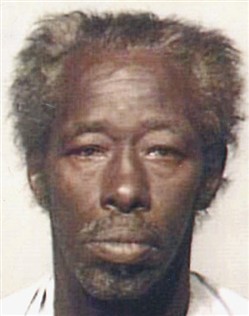
George Lamar Jones, also known by the nickname "Mule," was a serial killer whose violent crimes spanned decades and crossed state lines. His criminal history began with a manslaughter conviction in Mississippi in 1972. After serving a short sentence, he relocated to Milwaukee, Wisconsin, where his drug addiction and violence against women escalated. In the 1990s, he murdered at least two women, strangling them in fits of rage often connected to his use of crack cocaine. For years, one of his victims remained a cold case, but advances in DNA technology ultimately linked him to the crime while he was already serving a life sentence for another murder. Jones died of natural causes in prison in 2012, leaving behind a legacy of violence that unfolded even as another, more prolific serial killer, Walter E. Ellis, was active in the same city.
Early Life and First Murder
Little is publicly known about George Lamar Jones's early life in Mississippi, where he was born in 1945. His criminal record began on June 10, 1972, with the killing of a woman named Correne Jones in Greenwood, Mississippi. Initially indicted for murder under the alias 'George Lee Jones,' he faced a potential 20-year prison sentence. However, his defense attorney argued that Jones suffered from epilepsy, which affected his behavior at the time of the crime. This led to a plea bargain, allowing him to plead guilty to the lesser charge of manslaughter. He was sentenced to five years in prison and, after serving his full term, was released.
Following his release, Jones moved to Milwaukee, Wisconsin. There, he developed an addiction to crack cocaine and began accumulating numerous convictions for a variety of offenses. When not incarcerated, he worked odd jobs as a handyman and was known to associate with prostitutes.
Murder of Shameika Carter
On November 19, 1997, the body of 24-year-old Shameika Carter, a prostitute, was found dumped on a pile of garbage in Milwaukee. The discovery came at a time when local police and the FBI were investigating a series of similar killings, fearing a serial killer was at large. Five days later, on November 24, 1997, authorities identified George Lamar Jones as the prime suspect in Carter's death and arrested him. Police initially withheld his identity as they investigated his possible connection to other unsolved murders.
During interrogation, Jones's story evolved. He first denied any involvement, but later claimed he had a blackout and awoke to find Carter dead beside him. Eventually, he confessed to the killing. Jones told investigators he had met Carter at a drug dealer's house and they returned to his residence to smoke marijuana and crack cocaine. He claimed that after he was unable to become sexually aroused, Carter mocked him. This, he said, caused him to "snap" and choke her to death for approximately 15 minutes. Following his confession, Jones was charged with first-degree intentional homicide, with bail set at $500,000. Investigators also learned that in the few days between his most recent release from prison on November 14 and the murder of Carter, Jones had assaulted two other women.
The Cold Case Murder of Mary Lee Harris
For years, Jones was a suspect in other unsolved homicides, but denied involvement. One of these cases was the September 1993 murder of Mary Lee Harris. Her body was discovered by sanitation workers in the back of their truck after they had emptied a garbage cart in the 2400 block of North 10th Street. An autopsy determined she had been strangled. During the initial investigation, Jones denied ever meeting Harris.
The case went cold for over a decade. In March 2009, a detective with the Milwaukee Police Department's cold case unit submitted fingernail clippings taken from Harris's body to the state crime lab for analysis. In March 2010, the DNA profile developed from the clippings was matched to George Lamar Jones. When detectives interviewed him in prison, Jones recanted his previous denials and confessed to killing Harris. He stated that they were smoking crack cocaine at his home when he told her she was smoking too fast. An argument ensued, which escalated into a physical fight. Jones admitted to choking Harris for about 15 minutes, then panicked. He rolled a garbage cart into his house, placed her body inside, and wheeled it to a nearby apartment building. He was subsequently charged with first-degree reckless homicide.
The Victims
- Correne Jones, age unknown — Killed on June 10, 1972, in Greenwood, Mississippi. Jones pleaded guilty to manslaughter in her death.
- Mary Lee Harris, age unknown — Murdered in September 1993 in Milwaukee, Wisconsin. Her body was found in a garbage truck, and she was later identified as a victim of Jones through a DNA match.
- Shameika Carter, 24 — Murdered on November 19, 1997, in Milwaukee, Wisconsin. Jones confessed to strangling her after she allegedly mocked him.
Investigation and Capture
The investigation into the murder of Shameika Carter led directly to George Lamar Jones's final capture in November 1997. Police quickly identified him as a suspect and, during a series of interrogations over several days, broke down his initial denials. His evolving story—from denial to a claim of a blackout to a full confession—was a key part of the case against him.
While he was being investigated for Carter's murder, police considered him a person of interest in several other cases involving women who had been killed in a similar manner. These included the February 1990 murder of Vernell Jeter and the 1992 murder of Joyce Mims. Jones admitted to sexual encounters with both Jeter and Mims but denied killing them. He was also questioned about Mary Lee Harris, whose body was found near his house, but he denied knowing her.
The crucial breakthrough in the Harris case came years later with the application of DNA technology. The cold case review by the Milwaukee Police Department provided the evidence needed to definitively link Jones to the 1993 murder, securing a confession for a crime he had long denied.
Trial and Sentence
In July 1998, George Lamar Jones pleaded no-contest to the charge of first-degree intentional homicide for the murder of Shameika Carter. He reportedly told the court he did not believe he would "make it through trial" and wanted to get it over with. The court sentenced him to life in prison without the possibility of parole.
In 2001, Jones appealed his conviction, arguing that his confession was improperly obtained because police had detained him for an unreasonable length of time following his arrest. The court dismissed the appeal, finding that the detention was justified and that his statements were voluntary.
Following his 2010 confession to the murder of Mary Lee Harris, Jones was convicted of first-degree reckless homicide. For this crime, he was given an additional 30-year sentence to be served concurrently with his life term.
Death in Prison
George Lamar Jones served his sentences at the Dodge Correctional Institution in Waupun, Wisconsin. He died there of natural causes on April 30, 2012, at the age of 67. For a brief period, his death was erroneously reported in some media as that of Walter E. Ellis, another Milwaukee serial killer who was active during the same time frame and became known as "The Milwaukee North Side Strangler."
Aftermath and Legacy
The crimes of George Lamar Jones highlighted a period of intense fear in Milwaukee, where multiple serial predators were active. His case, particularly the eventual resolution of the Mary Lee Harris murder, demonstrated the growing importance of DNA evidence in solving cold cases and securing justice for victims long after the crimes were committed. His history of escalating violence, from manslaughter to serial murder, punctuated by periods of incarceration for lesser offenses, serves as a grim example of a career criminal who repeatedly slipped through the cracks of the justice system until his final capture.